



Adjustable Art Stand
An adjustable art stand offers mechanical flexibility for displaying and working on pictures, leaning towards floor-standing mahogany studios and telescopic brass standard lamps.
Adjustable Art Stand
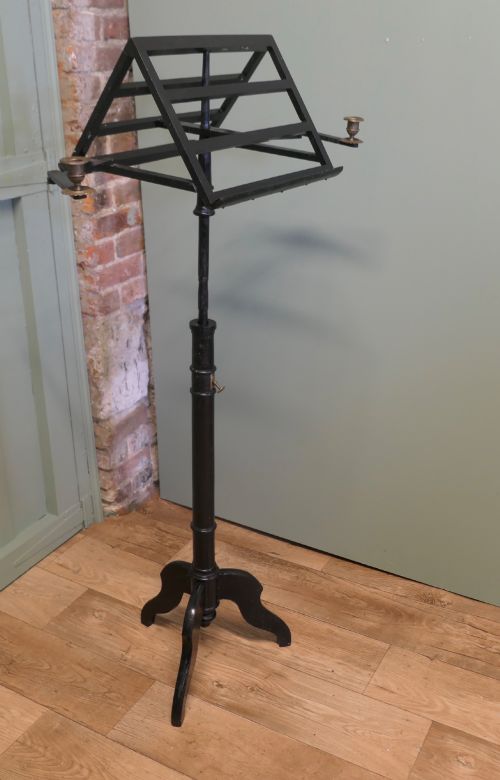
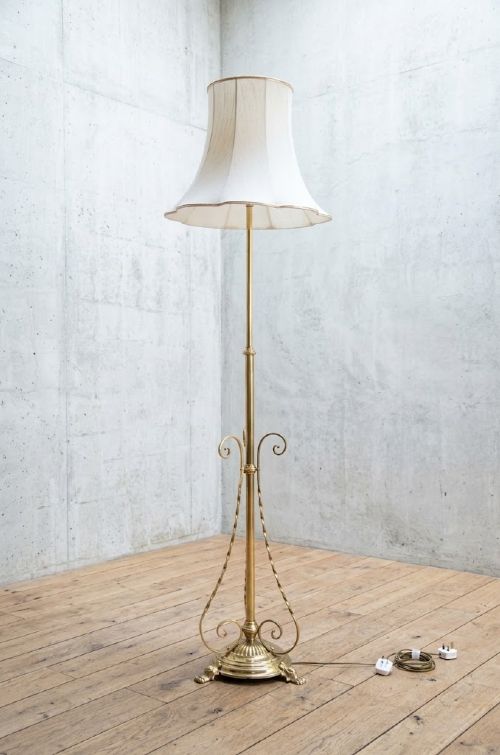
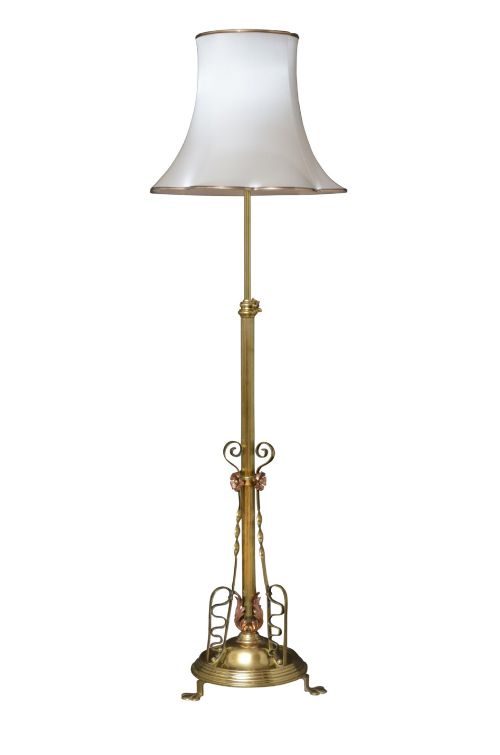
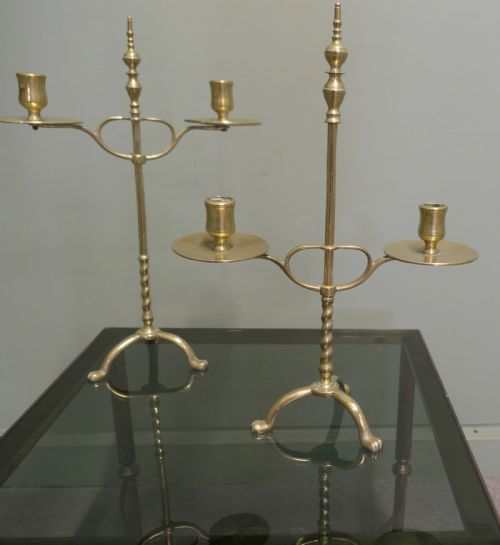
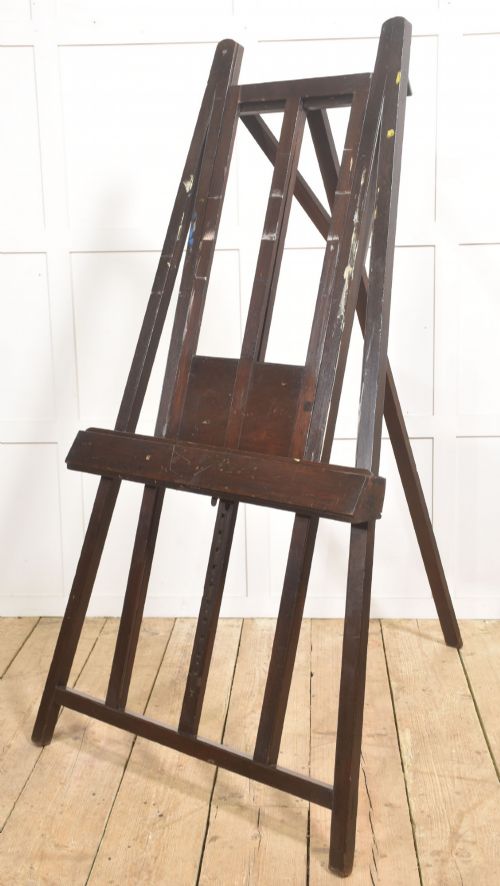
When you search for an adjustable art stand, you find pieces designed to hold canvases, books, and lighting at working heights. The selection includes tall studio easels in mahogany, oak, and pitch pine alongside telescopic brass standard lamps and reading stands.
The most common forms on this page are upright floor-standing and tabletop easels from the nineteenth and early twentieth centuries. Alongside these are standard lamps and folio stands featuring movable arms and extending shafts.
Origins span the Victorian, Edwardian, Arts and Crafts, Art Nouveau, and Art Deco periods. Makers utilised timber, brass, iron, and chrome to build pieces that adapt to the user's physical reach and task.
Materials and construction
Makers integrated mechanical adjustment through screws, ratchet mechanisms, and sliding counterbalances. Joints are pegged, screwed, or blacksmith-forged to bear the weight of heavy canvases and books without slipping.
Adjustable Art Stand Retail Price Guide 2026
Typical asking prices for adjustable art stand among the pieces listed under this phrase on Sellingantiques today, from the lower quarter to the upper quarter. They describe what is for sale here now, not the wider market.
One nineteenth-century easel arrived accompanied by a swan design.
Evaluating quality and execution
Quality rests in the precision of the mechanical adjustments and the integrity of the materials. Fine examples maintain smooth movement in their telescopic actions and secure locking mechanisms without structural wobble.
Superior execution shows in hand-hammered copper, detailed brass castings, and carefully chosen timber grains with stable joinery. Lesser pieces rely on simpler fixings and softer woods that show wear at the stress points.
W A S Benson·J. Shoolbred
The Adjustable Art Stand Glossary
- Telescopic
- An assembly designed to slide within itself to alter height. This mechanism appears on standard lamps and floor stands.
- Folio stand
- A rack or table designed to hold large sheets of paper, prints, or drawings. These pieces often feature adjustable folding supports.
- Studio easel
- A large, heavy floor-standing wooden frame for holding canvases during painting. They include winding handles and pegs to alter the working height.
- Arts and Crafts
- A design movement valuing handcraft, natural materials, and visible construction. Pieces from this style frequently use brass and wrought iron.
Adjustable Art Stand: Frequently Asked Questions
What is an adjustable art stand used for?
These pieces serve primarily to hold paintings, drawings, or reading material at variable heights and angles for practical use.
Floor lamps and reading stands also provide adjustable illumination and surface placement for domestic spaces.
How do I identify an Arts and Crafts standard lamp?
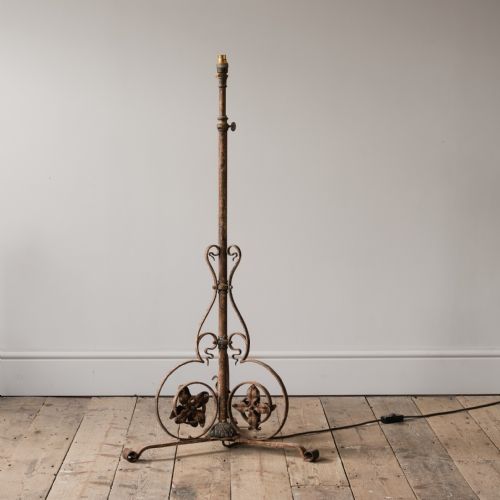
Arts and Crafts standard lamps typically feature hammered brass, copper, or wrought iron construction with visible fixings and simple geometric lines.
Many incorporate telescopic shafts or adjustable arms designed to direct oil or electric light downward.
What woods are common in antique easel stands?
Nineteenth-century and early twentieth-century studio easels commonly use dense hardwoods like mahogany and oak to provide stability under heavy canvases.
Pitch pine and walnut also appear in domestic tabletop and gallery formats from the same periods.
Are these stands suitable for modern lighting?
Many standard lamps and student lights from the Victorian and Edwardian eras have been electrified for contemporary use while retaining their adjustable brass frames.
Original oil-burning components are frequently adapted to house modern bulb fittings safely.