






Academic Genre Painting
Academic genre painting captures domestic scenes and historical moments with meticulous detail, offering a glimpse into nineteenth-century life through oil on canvas.
Academic Genre Painting
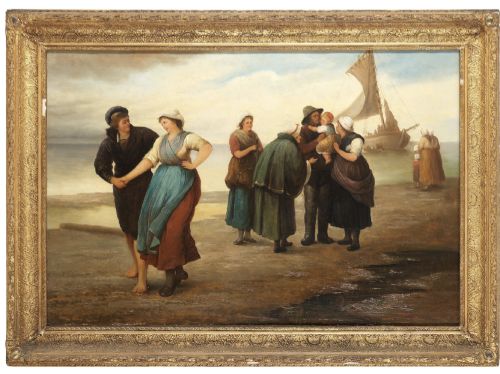
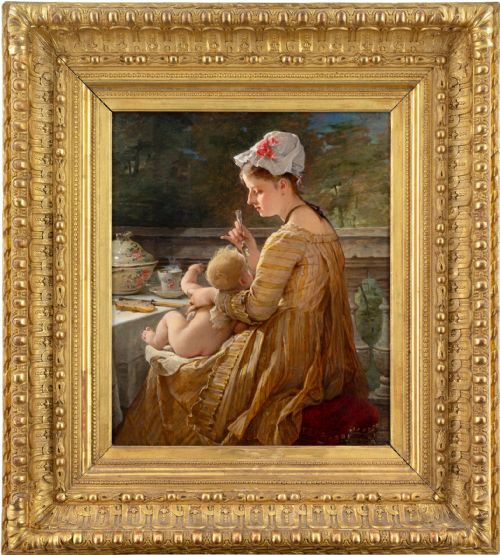
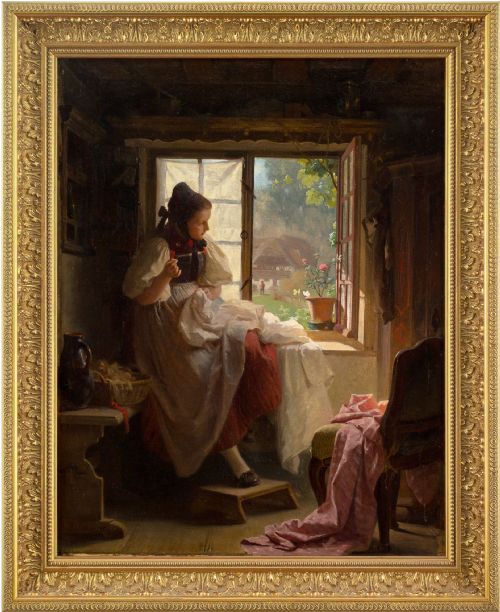
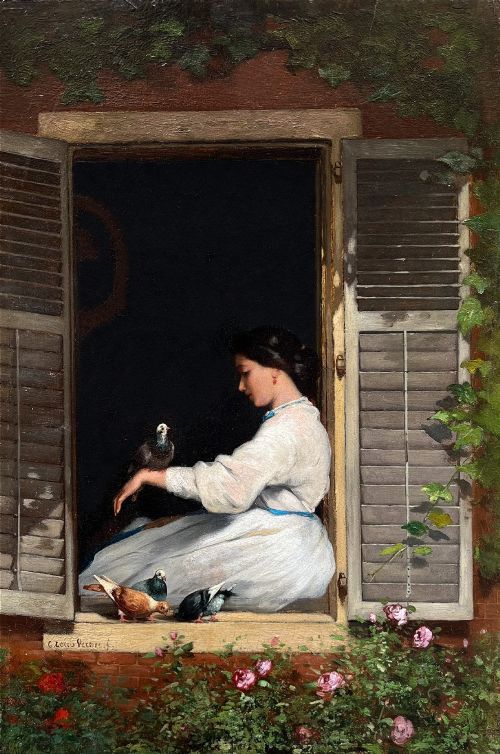
Academic genre painting portrays everyday narratives, domestic interiors, and historical episodes created by artists trained in official academies. These works record intimate moments, from card games and sewing to quiet indoor studies of figures.
The pieces on this page stem largely from the nineteenth century and early twentieth century. Common formats include oil on canvas and oil on panel, frequently housed in giltwood frames.
Materials and Technique
These works rely on oil paint applied to prepared canvas or wooden panels. Artists utilised layered glazes and fine brushwork to achieve realistic textures in fabrics, skin, and interior furnishings.
Surviving pieces often retain their original gilt wood or gesso frames, which provide structural support and complement the academic style of the artwork.
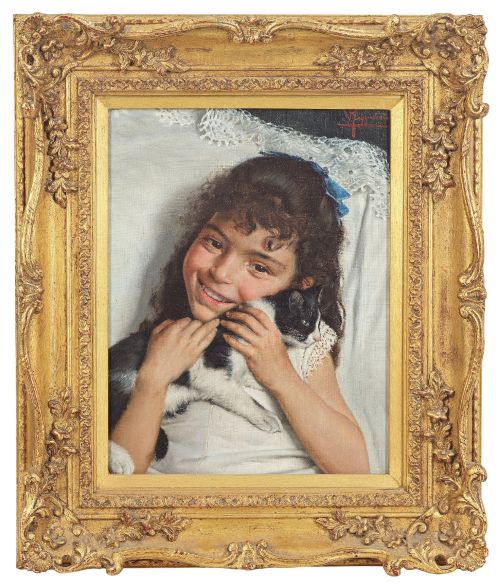
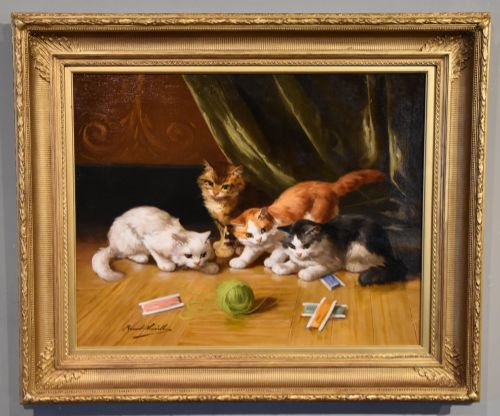
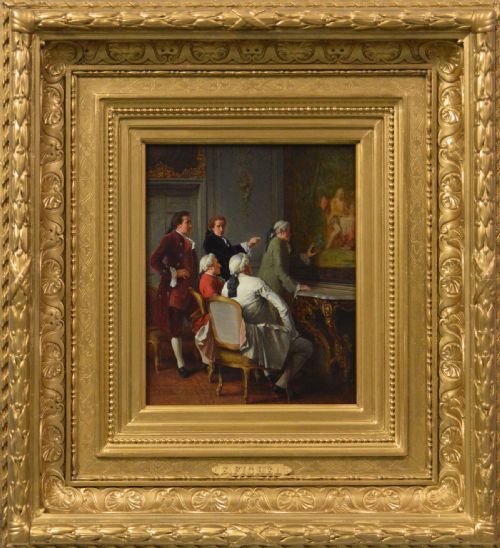
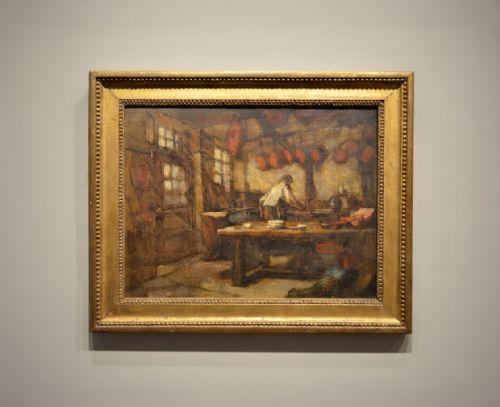
Monks inspecting fish and kittens at play share the academic canvas with card-playing gentlemen.
Evaluating Quality
Quality rests upon the artist's ability to render light, expression, and texture convincingly across the canvas. Works by listed academic painters demonstrate superior anatomical accuracy and composition.
The preservation of the paint surface and the originality of the mounting frame contribute significantly to the standing of an individual painting.
Vittorio Reggianini·Adelaïde Salles-Wagner·Max Kaltenmoser·Louis Charles Verwee·Alfred Arthur Brunel de Neuville·Johann Hamza·Benjamin Eugene Fichel·Charles Zacharie Landelle·Alfred Holst Tourrier·Hermann Armin Kern·Frank Hyde·Thomas Couture·Paul Leon Jazet·Théophile Emmanuel Duverger·Paul Viry·Pierre Louis Joseph De Coninck·Federico Andreotti·Willem Johannes Martens·Marcel Brunery·Pompeo Massani·Edmund Alphonse Andre·Pauline Delacroix Garnier·James Bertrand·Adolphe Alexandre Lesrel·Jules Girardet
The Academic Genre Painting Glossary
- Academic
- Pertaining to the style and standards taught by official European art academies of the nineteenth century. This approach prioritises technical precision and traditional composition.
- Genre Painting
- Art depicting scenes from everyday life, typically involving ordinary people in domestic or social settings. These subjects range from quiet reading to card games.
- Giltwood
- Wood carved and coated with gold leaf or a gold-coloured finish. This material is standard for framing nineteenth-century fine art.
- Oil on Panel
- A painting executed on a wooden board rather than stretched canvas. Panels offer a rigid support favoured by many nineteenth-century artists.
Academic Genre Painting: Frequently Asked Questions
What is academic genre painting?
Academic genre painting refers to nineteenth-century artworks created by formally trained artists depicting everyday narratives and historical moments.
These pieces focus on human interaction, domestic interiors, and character studies rendered with high technical skill.
How were these paintings framed?
Many of these artworks are housed in their original giltwood or gesso frames.
These ornate wooden surrounds were designed to complement the academic style and protect the edges of the canvas or panel.
Which periods do these paintings cover?
The available selection spans the nineteenth century through the early decades of the twentieth century.
Most examples date from the height of academic realism between eighteen-sixty and nineteen-hundred.
What surfaces were used?
Artists used traditional supports consisting primarily of oil paint applied to woven canvas or rigid wooden panels.
Canvas allowed for larger compositions, while panels provided a smooth, stable surface for intricate detail work.