




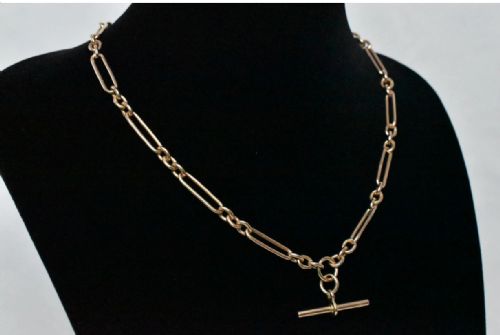
9ct Gold T Bar
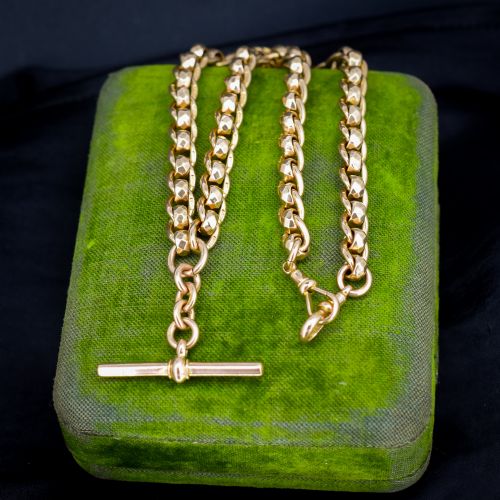
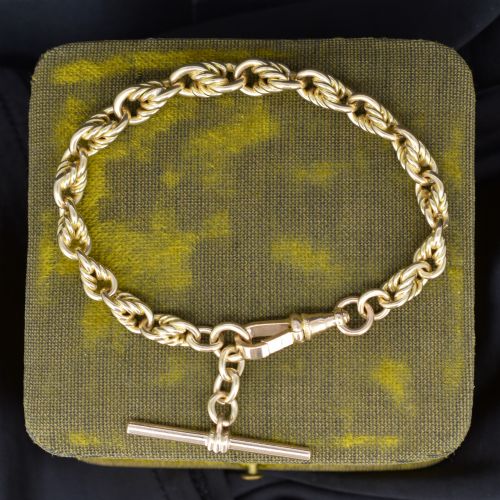
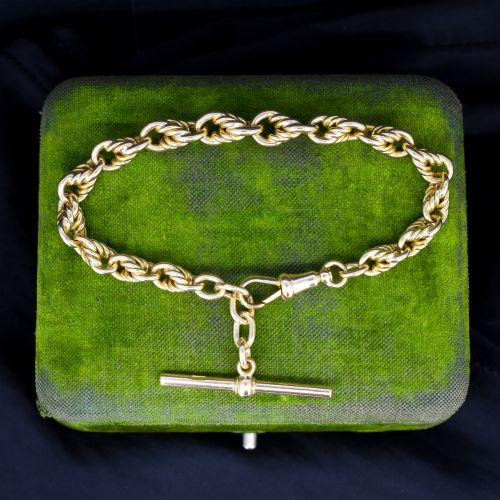
A 9ct gold t bar anchors heavy pocket watch chains and dangles from antique waistcoats with a distinct period weight.
9ct Gold T Bar
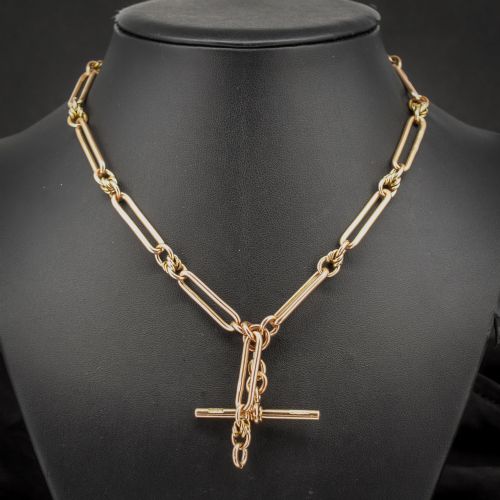
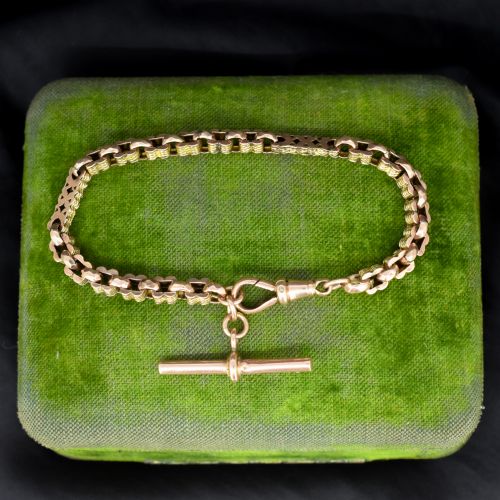
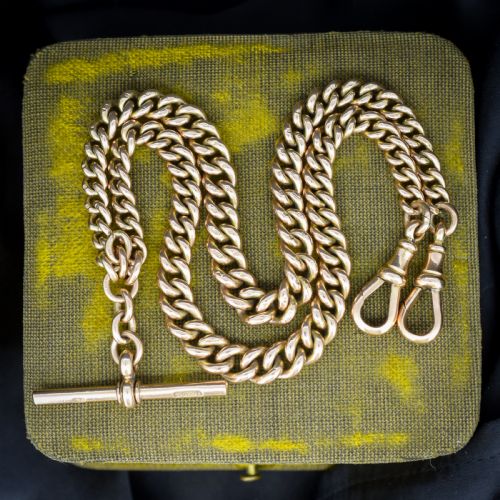
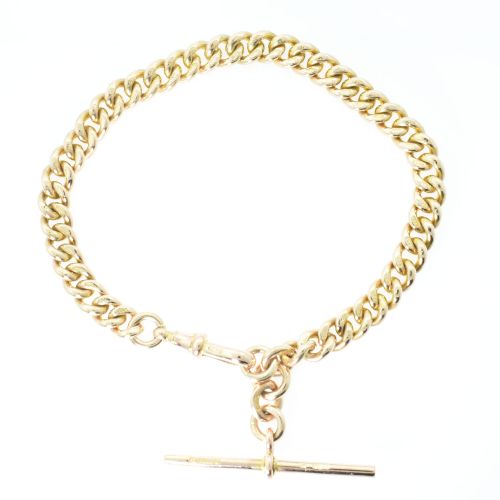
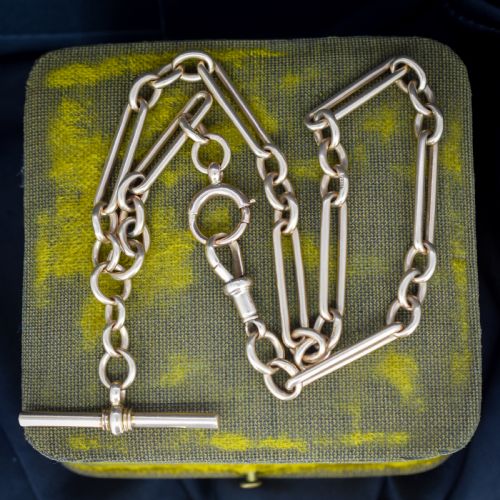
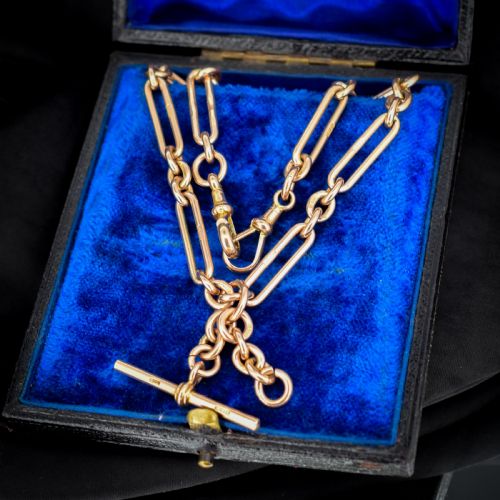
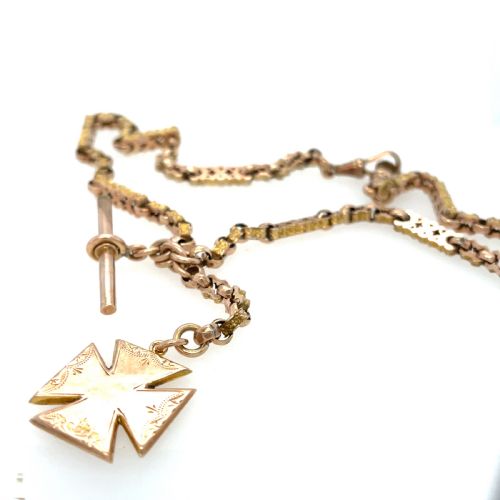
A 9ct gold t bar is primarily encountered as the crossbar component of a Victorian or Edwardian Albert watch chain, designed to slip through a waistcoat buttonhole. These pieces span the late nineteenth century into the 1920s, appearing in yellow and rose gold across periods like the Edwardian era and the Victorian age.
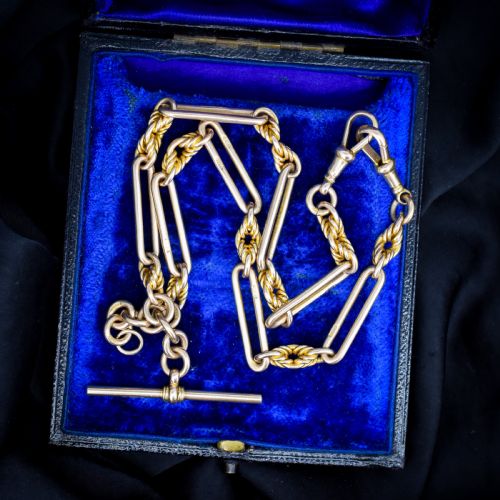
Beyond pocket watch attachments, this search uncovers bar brooches set with gemstones such as pearls, opals, and amethysts, alongside gate link and curb link bracelets. The t bar itself frequently accompanies longuard chains, trombone links, and swivel dog clips preserved from the early twentieth century.
The inventory ranges from substantial graduated curb link double alberts weighing over forty grams to slender bar brooches and drop earrings. Rose gold predominates among the surviving chains, often bearing Chester or Birmingham assay marks from the 1900s and 1920s.
How They Were Made
These items are constructed from nine-carat gold, utilising both yellow and rose alloy variations shaped into hollow or solid curb, trombone, and paperclip links. Goldsmiths soldered tubular bars and love knots by hand, attaching swivel dog clips and jump rings to secure pocket watches and pendants.
Gemstone-set brooches and bar links incorporate seed pearls, diamonds, rubies, and turquoise secured in collet settings or mounted alongside filigree wirework. Assay offices stamped pieces with hallmarks denoting gold purity and regional testing locations such as Chester and Birmingham.
9ct Gold T Bar Retail Price Guide 2026
Typical asking prices for 9ct gold t bar among the pieces listed under this phrase on Sellingantiques today, from the lower quarter to the upper quarter. They describe what is for sale here now, not the wider market.
What Varies in Quality
Quality rests upon the heft of the gold and the structural integrity of individual links, distinguishing hollow mass-produced chains from solid, heavy-gauge examples. Superior watch chains retain crisp hallmark stampings on nearly every link and the t bar itself, showing minimal wear at the pivot points.
The caliber of gemstone setting significantly elevates a piece, separating simple claw-mounted paste stones from finely matched seed pearls, opals, and diamonds integrated into complex Edwardian motifs. Original components like matching dog clips and secure swivel mechanisms preserve the integrity of complete Albert assemblies.
The 9ct Gold T Bar Glossary
- Albert chain
- A pocket watch chain named after Prince Albert, featuring a central t bar and dog clips to secure timepieces and fobs to a waistcoat. These versatile chains are frequently worn doubled or as necklaces.
- T bar
- The small horizontal metal bar attached to the centre of an Albert chain that slides through a buttonhole. It anchors the chain securely to garments.
- Dog clip
- A small spring-loaded snap hook used on watch chains and bracelets to fasten fobs or secure the ends together. They provide a reliable mechanical closure characteristic of period chains.
- Trombone link
- An elongated rectangular metal link with folded corners, frequently utilised in Victorian and Edwardian watch chains. This link shape adds geometric rhythm to heavy gold necklaces.
- Bar brooch
- A decorative pin featuring a straight horizontal metal bar, often embellished with gemstones or centered motifs. They were widely worn during the Victorian and Edwardian periods.
9ct Gold T Bar: Frequently Asked Questions
How were 9ct gold t bars worn originally?
The t bar was slotted horizontally through a waistcoat buttonhole while the attached pocket watch rested in the pocket below. Fobs and pendants often hung from a short drop chain in the centre.
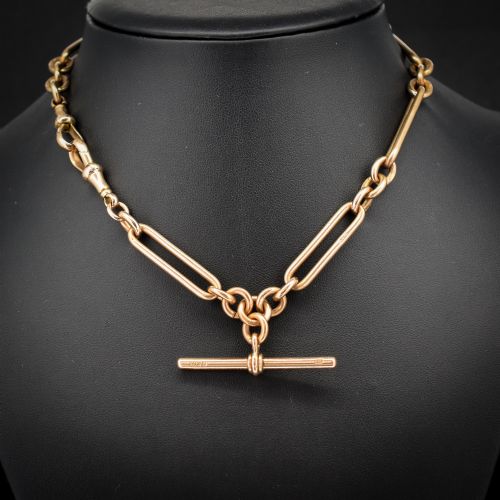
Today, collectors repurpose these antique watch chains as necklaces, threading the t bar through links or wearing the chain with the t bar dropping as a pendant.
What is the difference between an albert chain and a standard necklace?
An Albert chain was engineered specifically for holding pocket watches and accessories, incorporating specialised hardware like swivel dog clips and t bars. Standard necklaces rely on simple ring clasps or barrel clasps without utility attachments.
Many surviving Albert chains function as substantial necklaces due to their generous weight and distinctive link patterns such as curb or trombone formations.
How do I identify a Victorian t bar from a later one?
Victorian examples often exhibit richer rose gold hues and heavier construction, sometimes accompanied by Chester or Birmingham assay marks from the late nineteenth century. Link styles like stars and bars or heavy gate patterns also point toward the Victorian era.
Edwardian and 1920s pieces frequently showcase lighter hollow construction, trombone links, or refined geometric elements typical of Art Deco influences.
Are 9ct gold chains durable for daily wear?
Nine-carat gold provides a durable alloy containing more base metal than higher gold karats, making it resilient against everyday bending and scratching. Solid links withstand regular use far better than hollow variations.
Care should be taken with antique spring mechanisms in dog clips and barrel clasps to ensure secure daily fastening.