




9ct Gold Eternity Band
A 9ct gold eternity band brings together precious metal and continuous stones, offering a ring that suits everyday wear and traditional styling.
9ct Gold Eternity Band
A 9ct gold eternity band is a ring formed from a precious metal circle set with stones, representing continuity through its design. These pieces appear in forms such as half eternity rings, full eternity bands, and multi-row settings.
Buyers examining this selection encounter various historical periods, including the Edwardian era, the nineteenth century, and mid-twentieth-century decades up to the nineteen-seventies and later. The most frequent examples date from the nineteen-sixties, alongside traditional Edwardian turquoise and rose gold pieces and nineteenth-century sapphire trio mounts.
How they were made
The construction relies upon nine-carat gold, utilised in yellow, white, and rose colour variations to form the structural band. Goldsmiths secure gemstones directly into this metal framework using traditional setting techniques.
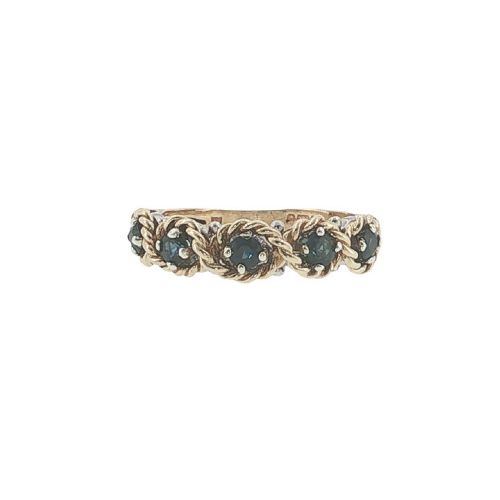
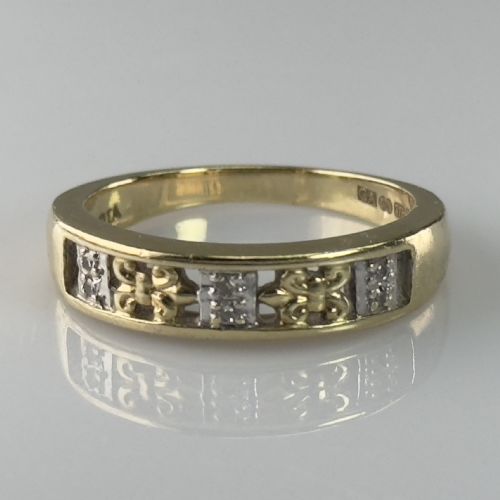
Stones incorporated into the bands include diamonds, sapphires, turquoise, and white stones. These gems are arranged singly, in half rows, across three rows, or encircling the entire band in full eternity configurations.
Current listings feature nine-carat gold eternity bands from the Edwardian period, the nineteenth century, and nineteen-sixties production.
What varies in quality
The standard of a 9ct gold eternity band depends upon the selection and arrangement of its stones, ranging from single sapphire trio mounts to multi-stone diamond and turquoise configurations. Finer pieces demonstrate careful stone matching and secure mounting within the nine-carat gold chassis.
The decorative approach alters the character of each ring, distinguishing patterned bands and simple half eternity styles from elaborate Edwardian full eternity designs and nineteenth-century mountings.
The 9ct Gold Eternity Band Glossary
- Half eternity ring
- A ring set with gemstones along the upper half of the band rather than all the way around. This design allows for easier resizing.
- Full eternity ring
- A ring featuring an unbroken circle of gemstones entirely encircling the finger. This style requires precise stone grading to maintain uniformity.
- Nine-carat gold
- An alloy containing thirty-seven point five percent pure gold mixed with other metals for durability. It appears in yellow, white, and rose colour variants.
- Trio mounted
- A setting arrangement featuring three distinct stones grouped together. This format often highlights sapphires flanked by complementary gems.
9ct Gold Eternity Band: Frequently Asked Questions
What is an eternity band?
An eternity band is a ring featuring a continuous line of identically cut gemstones set into a precious metal band. The design symbolises unending affection and lasting commitment.
These pieces function primarily as finger ornaments, often worn alongside wedding rings or engagement bands. They appear in half eternity and full eternity formats across various historical periods.
How do I wear an eternity band?
Wearers typically place an eternity band on the ring finger of the left hand, often positioned above a wedding band and engagement ring. The continuous stone setting complements simpler adjacent rings.
Full eternity bands require careful sizing since the stones encircle the entire band, while half eternity versions offer more flexibility for adjustment.
What stones are used in these rings?
These rings incorporate diamonds, sapphires, turquoise, and various white stones set into nine-carat gold. Gemstones appear as single feature stones, multi-stone rows, or full circles.
Historical examples utilise specific colour combinations, such as Edwardian turquoise set in rose gold or nineteenth-century sapphire trio mounts.
How do I identify an Edwardian eternity band?
Edwardian eternity bands often feature specific material combinations like rose gold paired with turquoise stones. The craftsmanship reflects the distinct decorative preferences of the early twentieth century.
Comparing the setting style, gold colour, and stone arrangement helps distinguish Edwardian pieces from mid-century or later vintage productions.