




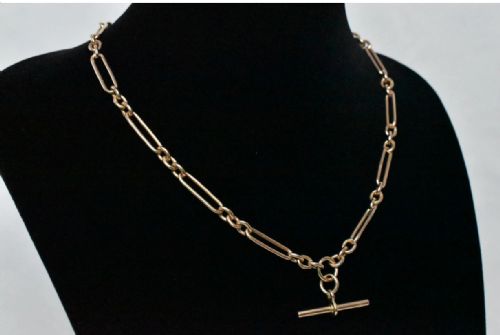
9ct Gold Albert T Bar
A 9ct gold albert t bar secures a traditional pocket watch chain, combining solid metalwork with practical utility for modern wear.
9ct Gold Albert T Bar
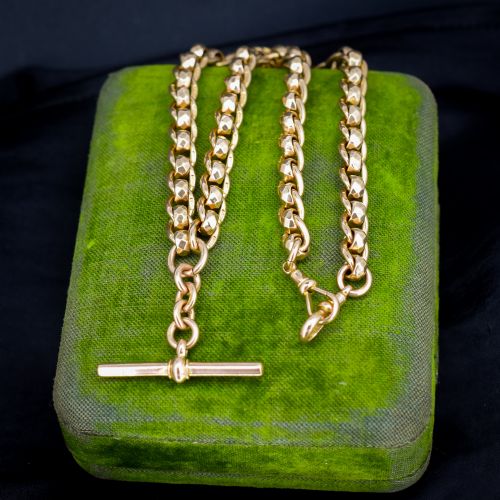
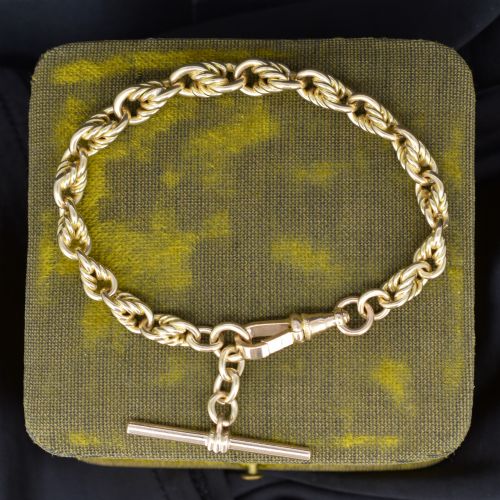
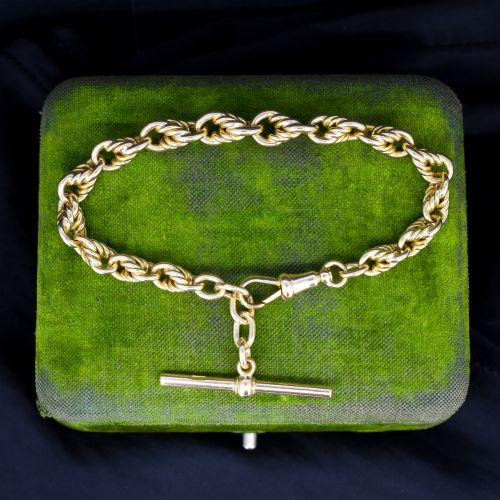
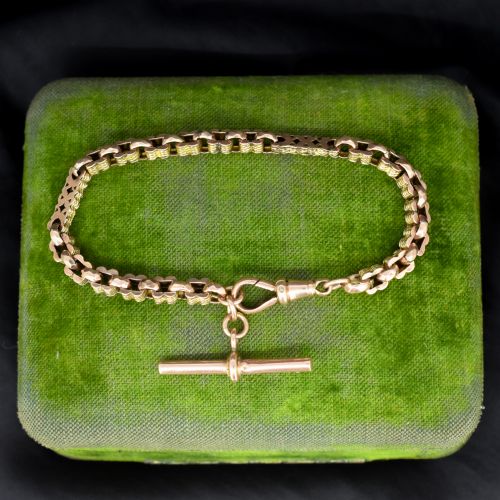
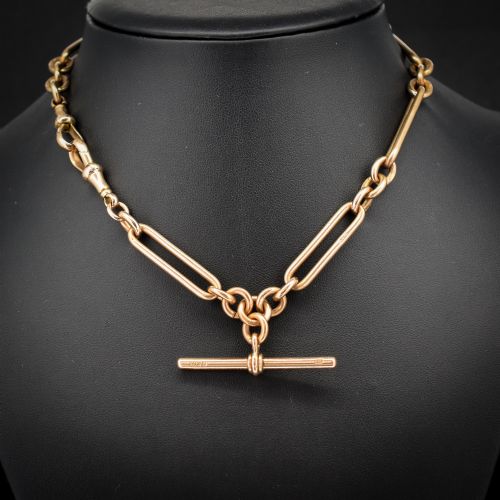
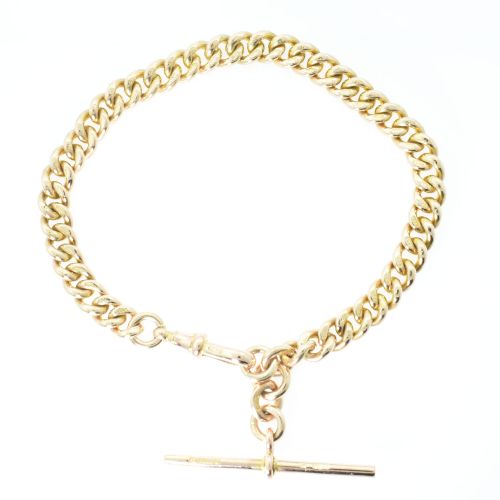
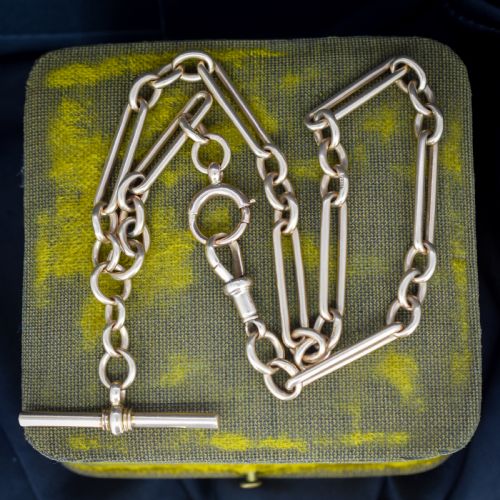
The 9ct gold albert t bar represents a classic piece of period hardware, originating from watch chains worn across waistcoats in the Victorian and Edwardian eras. These components now frequently appear attached to shorter lengths adapted as bracelets or integrated into repurposed necklaces.
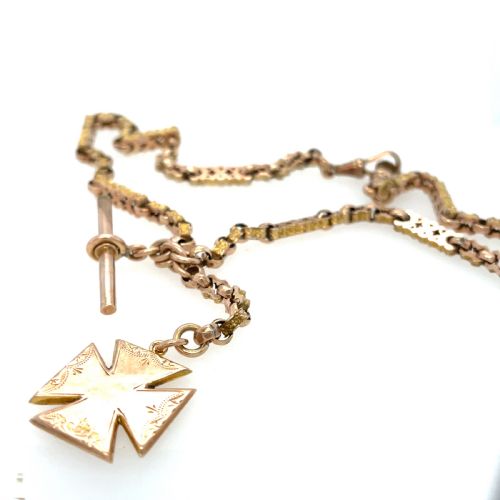
Most examples found on this page date from the late nineteenth century through to the nineteen-twenties, spanning the Victorian, Edwardian, and Art Deco periods. They manifest in yellow gold and rose gold, often bearing hallmarks from assay offices such as Chester and Birmingham.
How they were made
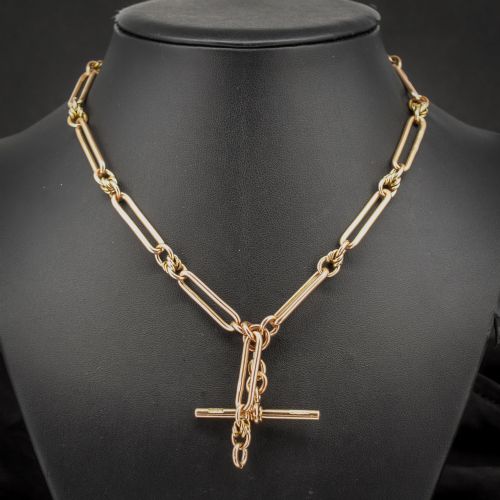
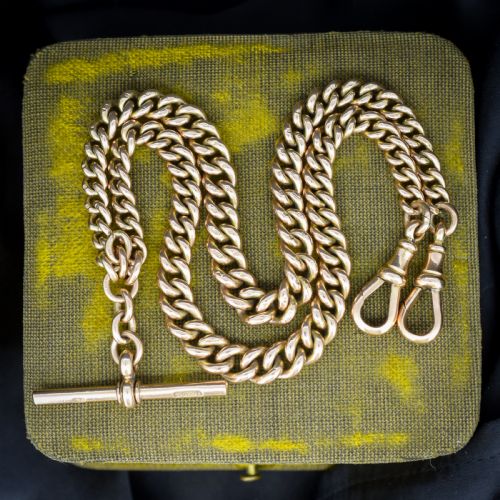
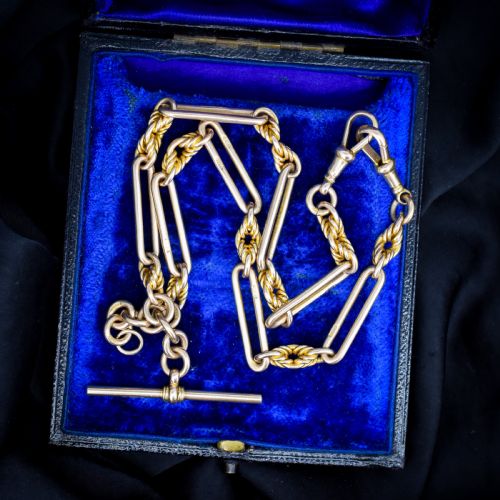
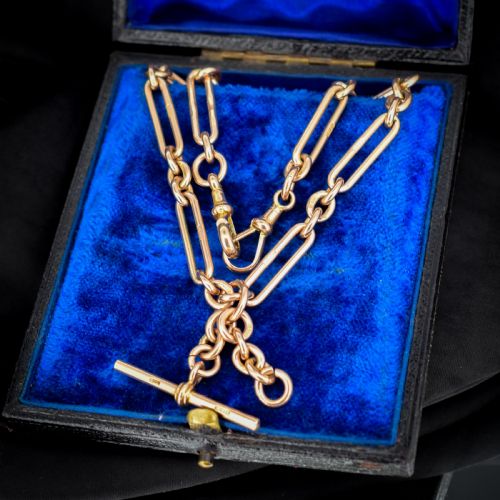
Goldsmiths constructed these pieces using solid nine-carat gold, employing techniques like curb linking, trombone fabrication, and love knot construction. Individual links were hand-assembled and soldered before being fitted with swivelling dog clips and the characteristic crossbar.
Makers utilised distinct regional variations in alloy mixtures to achieve different colour tones, shifting between rich rose gold and bright yellow gold. Surface finishes were left polished or patterned with subtle engraving, depending on the prevailing style of the decade.
9ct Gold Albert T Bar Retail Price Guide 2026
Typical asking prices for 9ct gold albert t bar among the pieces listed under this phrase on Sellingantiques today, from the lower quarter to the upper quarter. They describe what is for sale here now, not the wider market.
Some chains still carry tiny loops meant for miniature compasses or miniature photograph lockets.
What varies in quality
The standard of a piece rests largely on the weight of the gold and the complexity of the link formation, ranging from lightweight hollow components to heavy, solid graduated curbs. Substantial mass provides greater durability and a more tactile presence in the hand.
Another factor is the crispness of the hallmarks and the engineering of the moving parts, such as the spring mechanism within the dog clip or the secure soldering of the t bar loop. Original maker marks add historical clarity that distinguishes mass-produced items from finer workshop output.
The 9ct Gold Albert T Bar Glossary
- T bar
- The short transverse metal bar designed to slip through a waistcoat buttonhole to anchor a pocket watch chain. It fastens via a short drop link to the main strand.
- Albert chain
- A heavy watch chain worn by men in the nineteenth century, named after Prince Albert. Double versions feature two strands suspending from the centre t bar.
- Dog clip
- A spring-loaded swivel clasp attached to the end of a chain for securing a pocket watch or fob pendant. This mechanism allows the attached item to rotate freely without twisting the metal links.
- Trombone link
- A specific chain pattern featuring alternating long rectangular links and short round links. It gained popularity during the late Victorian and Edwardian periods.
- Hallmark
- An official stamp indicating the metal purity, assay office, and often the year of manufacture. British items typically display symbols denoting nine-carat gold alongside town marks like Chester or Birmingham.
9ct Gold Albert T Bar: Frequently Asked Questions
How do I wear a 9ct gold albert t bar today?
Many people wear shorter lengths of these chains as bracelets, allowing the t bar to rest as a decorative toggle fastening against the wrist.
Alternatively, longer pieces function well as necklaces or can be configured to display antique fobs and pendants.
What is the difference between yellow gold and rose gold on these chains?
The colour difference comes from the alloy metals mixed with pure gold during fabrication. Rose gold contains a higher proportion of copper, giving it a warm, reddish hue.
Yellow gold is alloyed with silver and copper to maintain a traditional bright golden appearance.
How can I tell the period of my chain?
Dating relies heavily on legible hallmarks stamped onto the links, t bar, or dog clip, which correspond to specific assay office date letters. Stylistic clues like trombone links or love knot patterns also point toward the Victorian and Edwardian eras.
Were these chains originally meant for pocket watches?
Yes, Victorian and Edwardian gentlemen used them to secure pocket watches kept in waistcoat pockets, with the t bar passing through the buttonhole. The dog clip held the watch securely at one end while the chain draped across the front.