

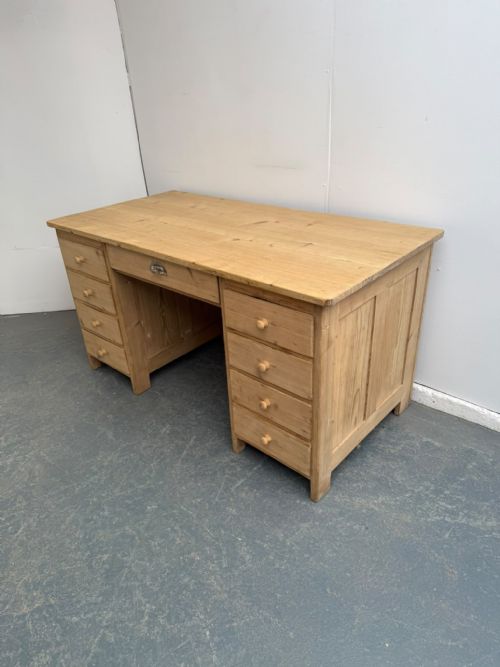


9 Drawer Pedestal Desk
A 9 drawer pedestal desk is a substantial partner in any study, offering twin banks of drawers beneath a leather inset surface.
9 Drawer Pedestal Desk
When searching for a 9 drawer pedestal desk, buyers encounter robust pieces designed for serious administration and correspondence. These twin pedestal formats typically balance three smaller drawers in the frieze above six larger ones flanking the central kneehole.
The versions most commonly met on this page date from the Victorian and Edwardian eras, constructed to anchor a study or library. Alongside traditional pedestal desks, related forms such as kneehole writing tables and breakfront desks appear within the selection.
Origins span the nineteenth and early twentieth centuries, reflecting changing domestic workspaces from Georgian roots onward. Woods range from rich mahogany and figured walnut to practical oak and pine.
Materials and Construction
Carpenters built these desks around solid timber frames, frequently applying fine veneers of mahogany, burr walnut, or rosewood to primary surfaces. Drawer linings often utilise secondary woods like pine or oak, joined with hand-cut dovetails that signal period craftsmanship.
Writing surfaces typically incorporate inset panels of tooled leather, bordered by blind tooling or gilt work. Brass hardware, including drop handles and escutcheons, secures the drawers and complements the darker tones of the polished wood.
9 Drawer Pedestal Desk Retail Price Guide 2026
Typical asking prices for 9 drawer pedestal desk among the pieces listed under this phrase on Sellingantiques today, from the lower quarter to the upper quarter. They describe what is for sale here now, not the wider market.
Period pedestal desks frequently incorporate functional writing slides above the drawer pedestals to expand the available workspace.
Judging Quality
Internal execution dictates longevity, visible in the snugness of drawer joints and the retention of original brass fittings and leather inserts. Secondary details such as carved pillars, fitted stationery interiors, or matching pedestal carcases elevate certain examples.
Hobbs & Co.·Mein of Kelso·Maple & Co·Heal & Sons
The 9 Drawer Pedestal Desk Glossary
- Pedestal desk
- A freestanding desk comprising two separate banks of drawers supporting a single top. This configuration creates a central kneehole for seating.
- Kneehole desk
- A compact desk or dressing table featuring a recessed space for the legs flanked by drawers. Earlier examples often include a concealed small cupboard behind the kneehole.
- Frieze drawer
- A long drawer situated directly beneath the writing surface within the upper framework of the desk. These often house compartments for stationery or writing implements.
- Writing slide
- A pull-out shelf located above the pedestals or drawers, providing extra surface area for correspondence without cluttering the main desk top.
- Burr walnut
- Timber harvested from walnut tree growths, prized for its swirling, highly decorative grain patterns. Cabinet makers applied it as a veneer on high-status Victorian and Edwardian desks.
- Blind tooling
- The impression of a decorative pattern into leather using heated metal tools without gold leaf. It creates a subtle, textured border around the perimeter of the writing surface.
9 Drawer Pedestal Desk: Frequently Asked Questions
What is a 9 drawer pedestal desk?
A 9 drawer pedestal desk is a large writing table featuring two supporting columns of drawers beneath the desktop, joined by a central span. The standard arrangement places three long drawers above, with three stacked drawers in each pedestal.
Such furniture served as private office desks in nineteenth-century libraries and studies. Their substantial construction allowed them to sit freestanding in the middle of a room.
How do I distinguish Victorian from Edwardian desks?
Victorian pedestal desks generally employ heavier timbers like dense mahogany and dark walnut, often featuring rich patina and deep hand-polished finishes. Their design leans toward formal dignity with substantial mouldings and robust proportions.
Edwardian iterations frequently utilise lighter woods such as pine, satinwood, or bleached oak, sometimes displaying simpler lines or revival influences. Carvings on Edwardian pieces tend to be crisper and less massive than their Victorian predecessors.
Are the leather tops original?
Leather writing surfaces experienced heavy wear and frequently required replacement during the working life of a desk. Many surviving examples retain period replacement leathers featuring traditional gold tooling.
When evaluating a desk, examine the integration of the leather with the surrounding wood framework. A sympathetic replacement leather executed in traditional calfskin remains entirely acceptable for daily use.
How do I care for a mahogany pedestal desk?
Keep nineteenth-century mahogany furniture away from direct heat sources and strong sunlight to prevent the timber and leather from drying out. Consistent indoor humidity preserves the stability of the solid wood carcase.
Apply a traditional beeswax polish sparingly to feed the grain and maintain the polished sheen. Avoid silicone-based sprays that build up residue on the surface over time.