

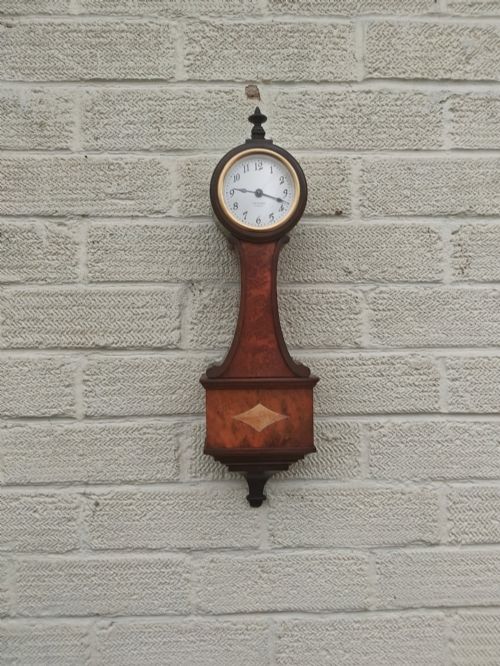


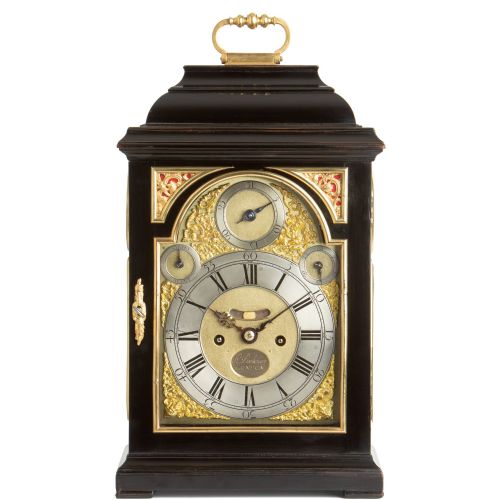
8 Day Chiming Clock
An 8 day chiming clock keeps time across the week while marking the hours with bells or gongs.
8 Day Chiming Clock
An 8 day chiming clock brings mechanical timekeeping and acoustic hour markers into domestic rooms through tall case designs, table brackets, and smaller mantel pieces. These timepieces originate from periods spanning the Georgian era through to the early twentieth century.
Mantel clocks and wall clocks sit alongside larger longcase, grandfather, and grandmother clocks within this selection. Buyers frequently encounter timber cases housing movements that sound quarters or hours on bells, gongs, or tubular systems.
English and continental workshops produced the examples recorded here, using wood veneers, brass dials, and glass panels to enclose the moving trains. Each format dictates where the clock lives within a room, from shelf surfaces to floor corners.
Materials and Construction
Clockmakers fitted mechanical gear trains driven by weights or mainsprings, incorporating fusee or twin-train setups to power the timekeeping and striking functions. Glass doors and side panels protect the dials and oscillating pendulums from dust while allowing visual access to the moving parts.
8 Day Chiming Clock Retail Price Guide 2026
Typical asking prices for 8 day chiming clock among the pieces listed under this phrase on Sellingantiques today, from the lower quarter to the upper quarter. They describe what is for sale here now, not the wider market.
Some miniature grandmother clocks manage to pack full Westminster chime sequences into cases scarcely taller than a toddler.
Distinctions in Execution
The sophistication of the acoustic output sets examples apart, ranging from simple hour gongs to complex quarter-chiming sequences on multiple bells or tubes. Musical movements and quarter-repeating mechanisms demand greater precision from the maker.
Cabinet work distinguishes standard production from finer pieces through selected wood figure, crisp carving, and inlaid borders. Dial execution also varies, separating painted faces from engraved brass dials with applied spandrels.
Seth Thomas·Elliott·Winterhalder & Hofmeier·Camerer Cuss & Co·William Smith·W Prior·Richard Peckover·Junghans·L Donne·JJ Elliot·Wm Gilbert·H.A.C.
The 8 Day Chiming Clock Glossary
- Bracket clock
- A portable timekeeper originally designed to sit on a wall bracket or table. These spring-driven pieces often feature arched wooden cases and carrying handles.
- Fusee
- A conical pulley used in spring-driven clocks to maintain equal power as the mainspring unwinds. This device helps the clock maintain consistent timekeeping across its running period.
- Grandmother clock
- A slender, scaled-down version of the traditional longcase clock. They share the same weight-driven mechanics in a shorter case.
- Striking clock
- A timepiece that sounds the hours or fractions thereof using a bell, gong, or chime block. The mechanism counts the hours independently of the dial hands.
- Twin fusee
- A movement utilising two separate fusee cones to power the timekeeping train and the striking train independently. This arrangement improves timekeeping accuracy.
8 Day Chiming Clock: Frequently Asked Questions
How do 8 day movements work?
An 8 day movement uses weights or spring-driven mainsprings that require winding once a week to keep the gears turning. The escapement regulates the release of power while the gear train drives the hands.
Striking and chiming trains operate on separate gear trains released at set intervals by the motion work. This mechanical separation allows the clock to run both timekeeping and acoustic signals from a single winding routine.
Where should a longcase clock go?
A longcase clock needs a stable, level floor and a secure attachment to the wall through the back of the case to keep the pendulum swinging truly. Plumb alignment ensures the beat remains even.
Placement should avoid direct sunlight, damp walls, and sudden temperature shifts that affect timber cases and brass components. Hallways and quiet living spaces suit their acoustic chime.
How do you date an antique clock?
Dating relies on stylistic clues in the wooden case, such as Georgian proportions, Victorian carving, or Edwardian inlay work. Maker signatures and dial signatures offer direct historical links.
Movement architecture also shifts across eras, moving from early brass plates and verge escapements to later deadbeat designs and pendulum suspensions. Examining the construction methods reveals the period of manufacture.
What is the difference between a chime and a strike?
A strike sounds only the hour using a single hammer hitting a bell or gong to count the time. It marks the passage of hours without melodic tunes.
A chime plays a sequence of notes, such as Westminster quarters, before sounding the hour on multiple bells or rods. This musical output requires a more complex pin barrel or rack mechanism.