



6 Seater Refectory Table
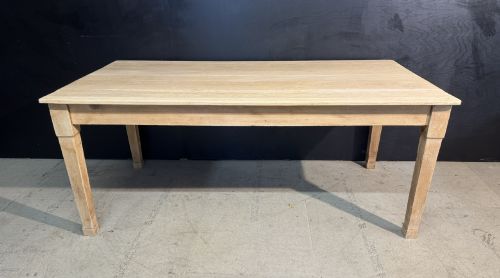
A 6 seater refectory table grounds a dining room in solid timber, offering enduring proportions for daily meals.
6 Seater Refectory Table
When searching for a 6 seater refectory table, buyers encounter substantial dining furniture built primarily from oak, pine, and various fruitwoods. These pieces stem from periods spanning the Victorian era, Edwardian years, and early decades of the twentieth century, with styles ranging from rustic farmhouse to Jacobean revival.
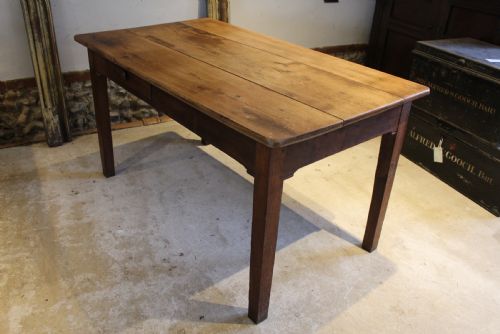
Makers and workshops produced these tables in both plain kitchen formats and heavily carved revival styles. A buyer finds everything from pale bleached oak surfaces to dark golden oak finishes appropriate for seated gatherings.
How they were made
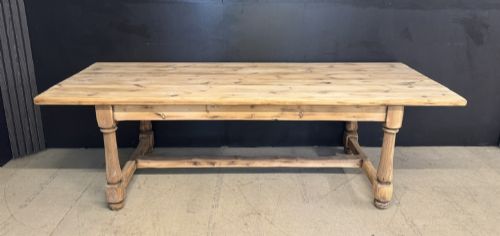
Joiners constructed these tables using heavy timber boards of oak, pine, or chestnut, often joined with pegged mortise and tenon joints for structural rigidity. The substantial tops rest on thick legs, sometimes connected by H-stretchers or central beams to support weight without wobbling.
Surfaces received treatments such as wax polishing, staining, or historic paint layers to protect the wood grain. Details like barrel legs, carved friezes, and panelled ends appear across Edwardian and Victorian iterations, executed with hand tools and traditional woodworking joints.
One exceptional pine specimen arrives complete with eight built-in drawers for storing kitchen linens.
What varies in quality
The distinction between ordinary and superior pieces lies in the selection of timber and the integrity of the joinery. Tables built from quarter-sawn solid oak with tight medullary rays demonstrate superior material selection compared to softer pine or mixed secondary timbers.
Proportion and execution of detail dictate the upper tier of the range. Finely carved friezes, balanced stretcher placements, and thick, stable table-tops indicate skilled workshop production rather than hurried utility manufacture.
The 6 Seater Refectory Table Glossary
- H-stretcher
- A horizontal timber beam connecting the two pairs of table legs in an H-shape. This construction method prevents the legs from splaying outward under heavy loads.
- Jacobean Revival
- A nineteenth and twentieth century decorative style emulating seventeenth century English woodwork. Pieces in this style typically display heavy turnings and deep geometric carving.
- Quarter-sawn
- A method of cutting logs that produces boards with straight grain patterns and visible growth rings. This cut yields stable timber less prone to warping.
- Farmhouse table
- A utilitarian dining table with a thick wooden top and sturdy legs. These tables often show patinated surfaces resulting from generations of domestic use.
6 Seater Refectory Table: Frequently Asked Questions
What defines a refectory table?
A refectory table is characterised by its long, narrow proportions and stretcher base designed to seat many diners along both sides. Historically originating in communal dining halls, the form prioritises structural strength and legroom.
Surviving examples utilise heavy timber construction, making them central fixtures in traditional and country kitchens.
How do I date an oak table?
Dating relies on observing construction methods, tool marks, and stylistic motifs present in the wood. Hand-cut joinery, peg construction, and surface patination point toward nineteenth or early twentieth century manufacture.
Revival pieces often incorporate seventeenth century decorative elements while retaining the hardware and timber conditioning of the Victorian or Edwardian periods.
Are these tables suitable for daily use?
Solid oak and pine tables are built to withstand heavy daily domestic demands. Their robust timber construction handles family meals and gatherings without compromising stability.
Regular maintenance with appropriate wax preserves the historic finish against everyday wear.
What is the difference between oak and pine?
Oak is a dense hardwood offering deep grain patterns and high resistance to denting or scratching. It forms the basis of formal revival and heavy country dining pieces.
Pine is a lighter softwood yielding a softer texture, frequently found in painted or bleached farmhouse tables associated with more relaxed interior schemes.