





3 Tier Etagere Stand
When you want a 3 tier etagere stand, you are looking for stacked display space built with architectural lightness.
3 Tier Etagere Stand
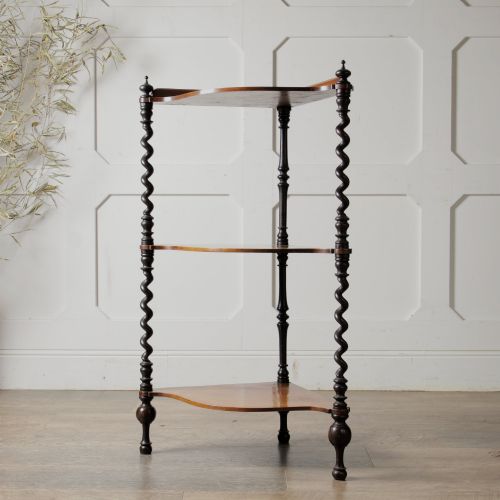
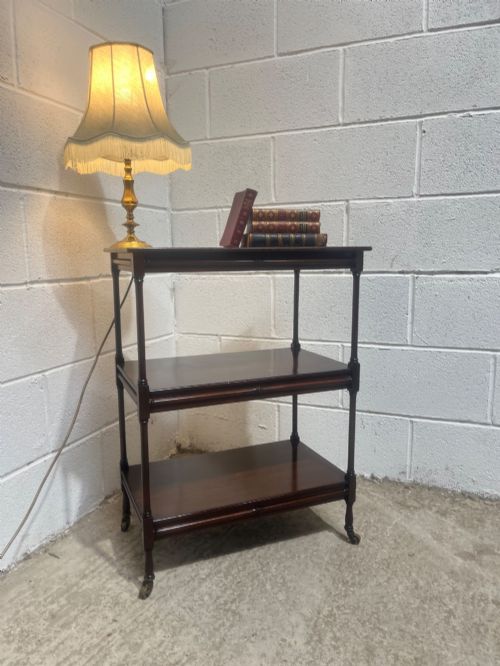
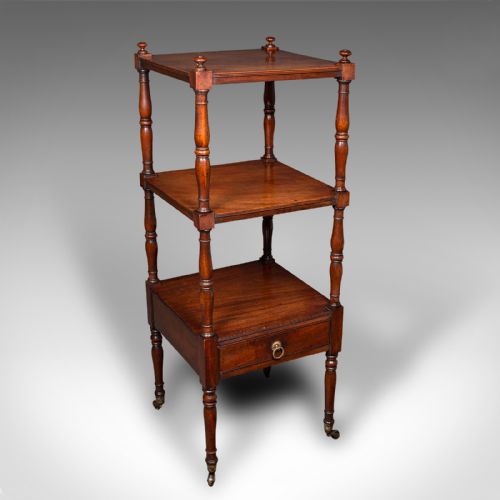
A 3 tier etagere stand is fundamentally a tiered shelving unit designed for display, closely related to the traditional whatnot and occasional side table. Buyers searching this phrase meet pieces originating predominantly in the nineteenth century, including Victorian, Regency, and Edwardian periods.
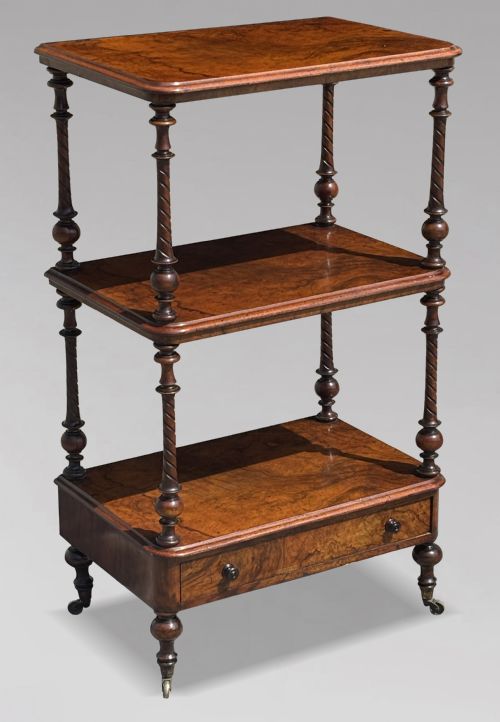
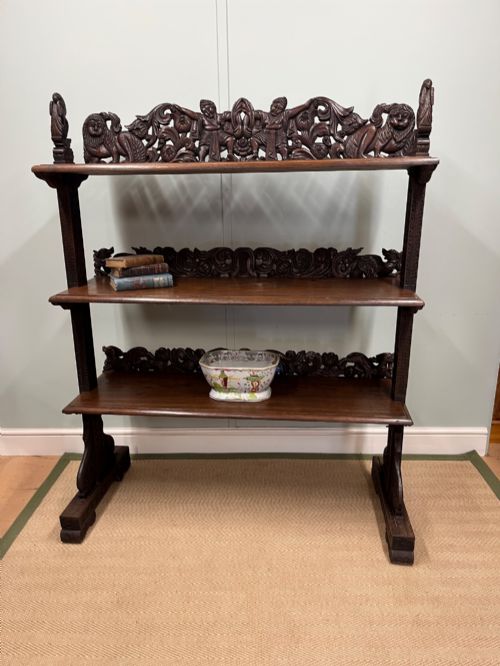
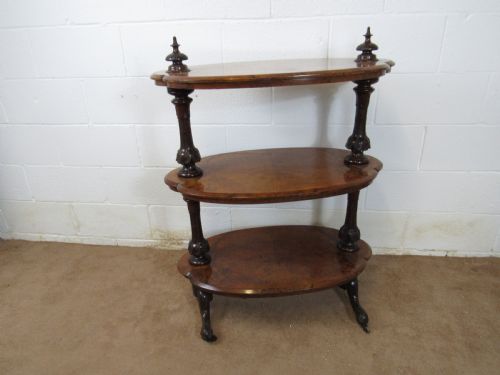
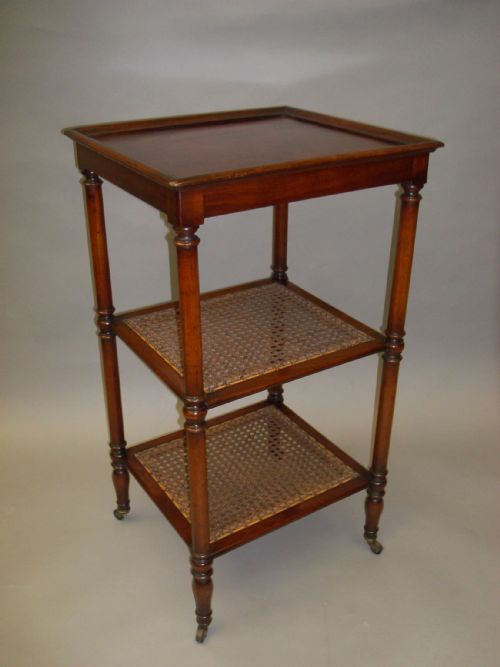
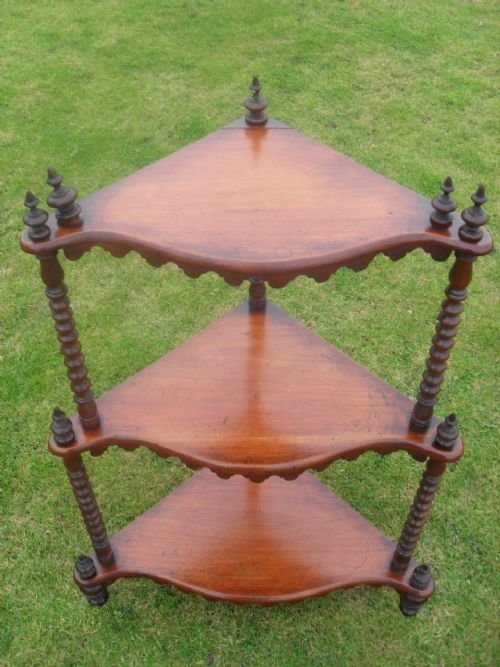
The physical form varies from slim freestanding corner models and serpentine lamp tables to rectangular mahogany buffets and brass-mounted display shelves. Most examples provide three open tiers supported by turned, barley twist, or pillar uprights.
Origins span English workshops of the Georgian and Victorian eras alongside continental French and Anglo-Indian variants. Walnut, mahogany, and rosewood dominate the structural framework, often paired with inlaid marquetry or painted finishes.
Materials and construction
Cabinetmakers utilised rich timber veneers such as burr walnut and figured mahogany applied to solid secondary woods, frequently incorporating brass collars, casters, and delicate gallery rails. Ebonised finishes and parcel gilding provided darker, contrasting tones suited to formal nineteenth-century interiors.
Joinery techniques relied on precisely turned uprights supporting graduated shelves, sometimes reinforced by corner brackets or slender columns. Parquetry and marquetry inlays demanded exacting hand-cut precision, while painted surfaces received layered decorative glazes.
Some nineteenth-century makers cleverly fitted these stands with tiny hidden castors so they could glide silently across the parlour carpet.
Markers of distinction
Quality rests in the selection of timber veneers and the crispness of turned or carved details on the upright supports. Heavily figured burr walnut and dense mahogany with balanced grain patterns elevate a piece above standard utility furniture.
Structural refinement shows in the stability of the tiered shelves and the integration of fine brass mounts or inlaid parquetry. Master-carved barley twists and well-balanced serpentine profiles separate ambitious cabinet work from plain production pieces.
Gillows
The 3 Tier Etagere Stand Glossary
- Étagère
- A piece of furniture consisting of a set of open shelves for displaying small objects or ornaments. It originated in France and gained popularity during the nineteenth century.
- Whatnot
- A multi-tiered piece of standing shelving used for books, ornaments, or general display. It emerged during the Georgian period and remained a staple of Victorian drawing rooms.
- Burr walnut
- A prized timber harvested from the gnarled growth of a walnut tree, yielding highly decorative swirling grain patterns. Cabinetmakers utilised it for premium veneered tabletops and cabinet fronts.
- Ebonised
- Wood treated with a dark stain or finish to imitate ebony. This technique was widely favoured in nineteenth-century revival styles.
- Ormolu
- Gilt bronze mounted onto furniture or decorative objects. It provided bright metallic contrast against dark timbers.
3 Tier Etagere Stand: Frequently Asked Questions
What is a 3 tier etagere stand used for?
These tiered stands served as display surfaces for porcelain, small books, and decorative ornaments in nineteenth-century drawing rooms. They provide vertical storage without blocking light or overwhelming small floor spaces.
Today they function effectively as bedside tables, lamp stands, or corner display units in modern rooms. Their open structure keeps living areas feeling spacious while holding everyday items.
How do I date a Victorian whatnot?
Victorian examples often feature dense timbers like burr walnut or mahogany, combined with turned uprights or barley twist supports. The presence of machine-made screws or lighter secondary woods can help narrow down the decade of production.
Compare the carving depth and edge profiles against known mid-to-late nineteenth-century pieces. Finer grain selection and hand-cut joinery generally point closer to the middle of the era.
Are etageres and whatnots the same thing?
The terms overlap significantly in antique furniture, though etagere often implies a French influence with lighter proportions. Whatnots traditionally describe English multi-tiered shelving units built for general display.
Both forms utilise stacked platforms supported by slender columns or uprights. The primary distinction lies in regional naming conventions and decorative detailing rather than basic function.
Where should I place an etagere stand?
Corner etageres fit neatly into unused angles of a room, while rectangular variants suit narrow wall spaces beside seating. Their open tiers make them ideal for placing near natural light sources to display glass or ceramics.
Avoid placing antique veneered pieces in direct sunlight or beside active heat sources. Stable indoor humidity preserves the stability of the multi-tiered joints and prevents timber warping.