



22ct Yellow Gold
These pieces of 22ct yellow gold bring warmth and a rich tone to rings, earrings, pendants, and brooches.
22ct Yellow Gold
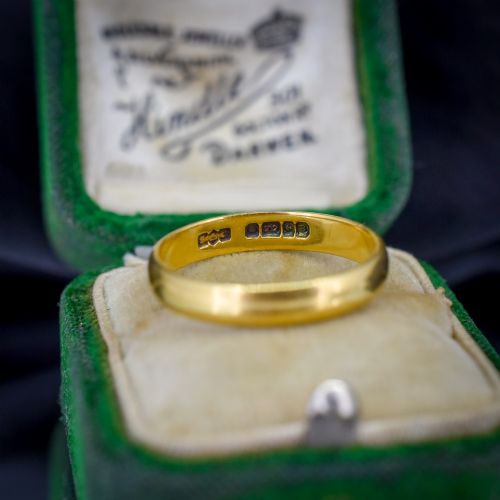
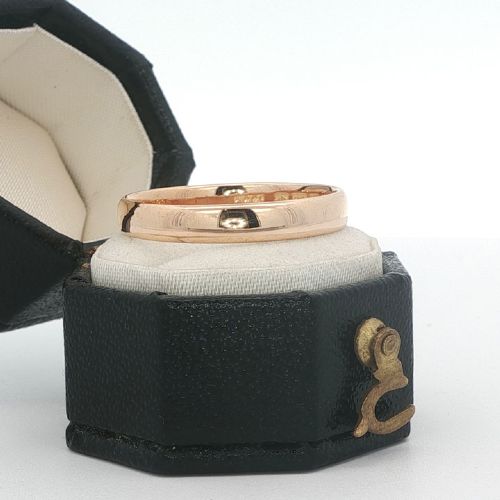
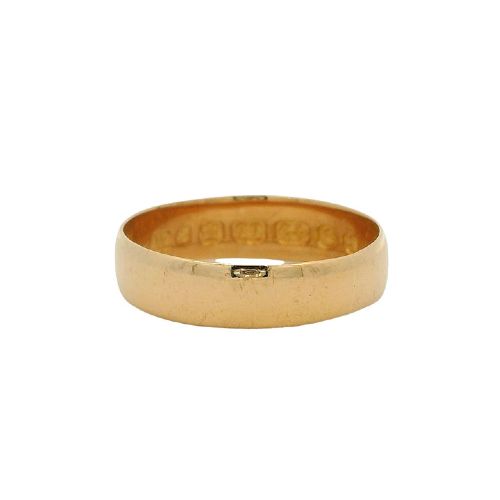
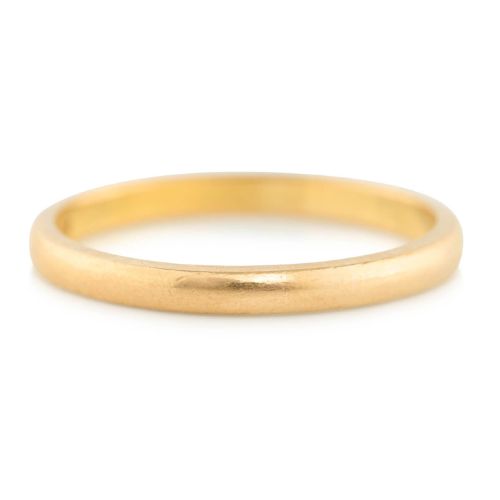
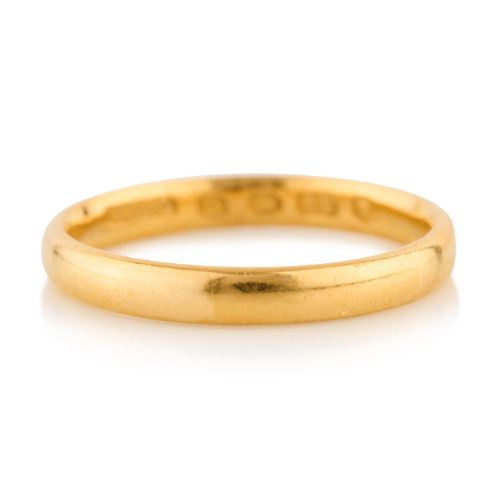
Plain wedding bands dominate the ring category, appearing across multiple decades alongside stone-set jewels. Buyers most frequently meet traditional wedding bands, often dated by hallmarks, alongside vintage rings, pendants, and drop earrings set with diamonds, rubies, turquoise, hardstone, and pearls.
Materials and construction
The items rely primarily on 22ct gold and yellow gold, sometimes paired with 18ct yellow gold in specific components or mounts. Gemstones such as diamonds, rubies, turquoise, hardstone, and pearls are integrated into brooches, pendants, cameo drop earrings, and rings.
Craftsmen shaped the high-purity metal into plain bands or detailed floral brooch settings and drop earrings. Hallmarks stamped into the gold provide precise dates of manufacture and origin, particularly on wedding bands originating from London.
22ct Yellow Gold Retail Price Guide 2026
Typical asking prices for 22ct yellow gold among the pieces listed under this phrase on Sellingantiques today, from the lower quarter to the upper quarter. They describe what is for sale here now, not the wider market.
Listings feature items from the Victorian, Art Deco, and Mid-Century periods, utilising diamonds, rubies, pearls, and hardstone.
Distinctions in quality
Quality in these pieces rests upon the crispness of the hallmarking, the weight and thickness of the gold band, and the secure setting of any stones. Plain wedding bands differ in profile width, from narrower bands to broader dimensions, reflecting the original maker's specifications.
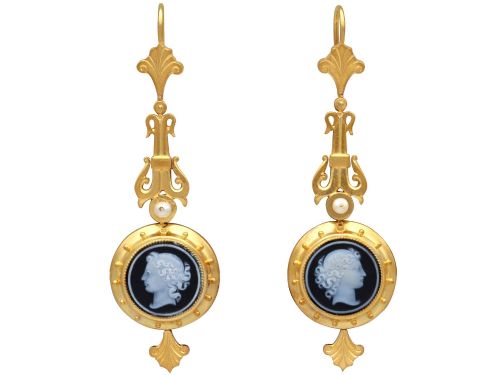
Pieces combining 22ct yellow gold with gemstones show variation in the cut and carat weight of stones like aquamarines, diamonds, and rubies. Items featuring detailed hardstone cameos or multiple gemstone clusters demonstrate higher complexity in their construction.
W. E. D. L
The 22ct Yellow Gold Glossary
- Hallmark
- An official stamp applied to precious metals indicating purity, origin, and date of testing. These marks help determine the exact year a wedding band or piece of jewellery was assayed.
- Cameo
- A method of carving an object such as a hardstone or shell in relief to create a raised design. They frequently appear in Victorian drop earrings.
- Stacking ring
- A ring designed to be worn alongside other bands on the same finger. They appear in mid-century items.
- Carat
- A unit of mass used for measuring gemstones or a measure of purity for gold out of twenty-four parts. High purity gold consists of twenty-two parts pure gold.
- Brooch
- An ornamental piece of jewellery fastened with a pin and clasp, designed to be attached to clothing. Examples include floral motifs and royal insignia set with diamonds.
22ct Yellow Gold: Frequently Asked Questions
What periods do these pieces come from?
The selection spans several decades, including Victorian items from the late nineteenth century alongside Art Deco and mid-century pieces from the 1930s, 1940s, and 1950s.
Wedding bands and brooches from this range demonstrate the shifting styles of British jewellery design over nearly a century.
How do I know my ring size?
Ring sizes are measured using standard alphabetical scales as recorded in individual listings, such as size J, M and a half, or P.
Checking these dimensions against a local jeweller's sizing tools ensures a proper fit for daily wear.
Are all items solid 22ct gold?
While the search focuses on 22ct yellow gold, the listings also include pieces that combine 22ct gold with 18ct yellow gold mounts or specific gemstone settings.
Individual descriptions detail the exact metal purity and any stones present, such as diamonds, rubies, or turquoise.
How should I care for 22ct gold jewellery?
Because 22ct gold has a high purity, the metal is softer than lower carats and benefits from careful storage away from harder metals.
Cleaning should be done gently with a soft cloth to preserve the polished surface and protect any set pearls or hardstone.