



20th Century Walnut Desk
A 20th century walnut desk brings warmth and steady grain to a study, built in styles from Edwardian revival to Scandinavian design.
20th Century Walnut Desk
A 20th century walnut desk combines practical workspace with rich timber figure, appearing in forms ranging from compact writing tables to substantial partners desks and bureaus. The Edwardian period and the decades spanning 1910 to 1930 provide the bulk of these pieces, alongside regional examples in Scandinavian and continental styles.
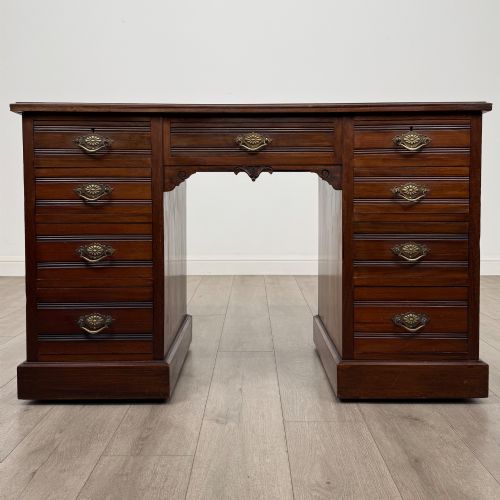
Writing bureaus and fall-front writing desks dominate the selection, offering fitted pigeonholes and drawers behind sloping lids. Pedestal desks, lowboys, and kidney-shaped writing tables also emerge across the period, often accompanied by matching swivel armchairs or side tables.
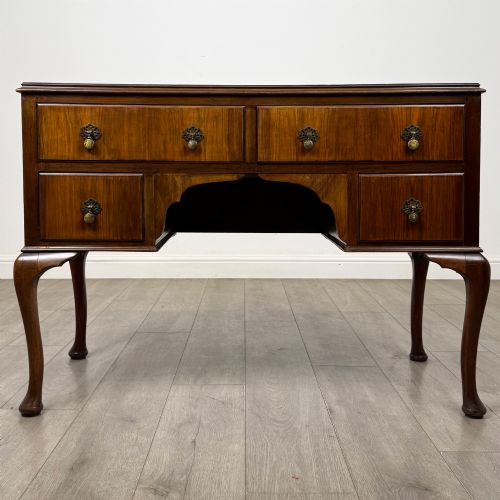
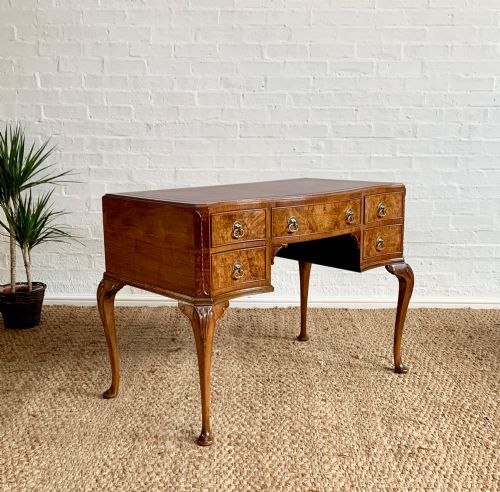
Makers utilised rich veneers and solid cuts of timber to create surfaces suited for libraries and studies. Revivalism runs strongly through the selection, particularly Queen Anne style influences featuring cabriole legs and shell carvings.
Materials and construction
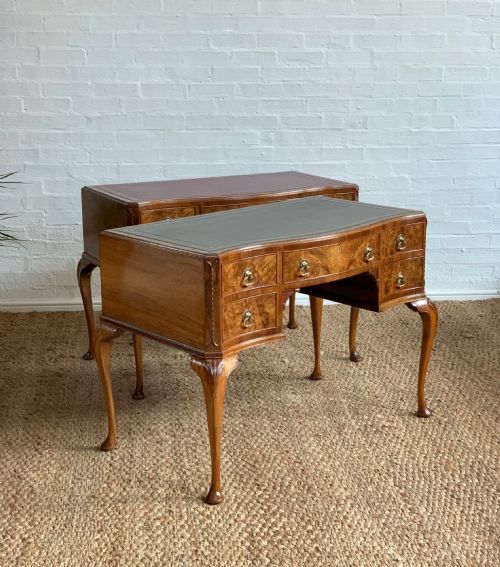
Makers constructed these desks using solid walnut and walnut veneer over secondary timbers, frequently selecting burr walnut and figured walnut for the main writing surfaces and drawer fronts. Inlaid marquetry, brass hardware, and contrasting woods like mahogany or ebonised wood appear as decorative accents.
Writing surfaces frequently integrate panels of tooled leather to provide a durable and traditional writing plane. Internal drawer carcases often utilise secondary woods such as elm, while structural frames rely on solid walnut and brass fittings.
20th Century Walnut Desk Retail Price Guide 2026
Typical asking prices for 20th century walnut desk among the pieces listed under this phrase on Sellingantiques today, from the lower quarter to the upper quarter. They describe what is for sale here now, not the wider market.
The site records desks spanning the Edwardian era through to 1930, constructed in walnut, burr walnut, and elm with brass and leather details.
Factors that determine quality
The choice of timber figure separates standard pieces from finer examples, with heavily figured burr walnut and book-matched veneers commanding attention. The crispness of carved details, such as those found on Queen Anne style legs or Scandinavian carved motifs, indicates the hand of a skilled cabinet maker.
Fitted interiors, original brass handles, and documented maker attribution elevate a piece beyond standard production models. The structural integrity of pedestal construction and the smooth operation of writing slides and drawer runners complete the distinction.
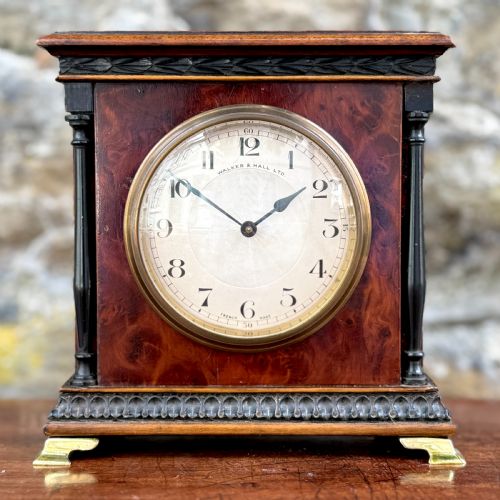
Wylie & Lochhead Glasgow·Walker and Hall
The 20th Century Walnut Desk Glossary
- Burr walnut
- A veneer sliced from the knotty growth of a walnut tree, showing swirling patterns of grain. It provides a highly decorative surface for desk lids and drawer fronts.
- Pedestal desk
- A freestanding desk comprising two supporting banks of drawers with a central opening for the user. Larger versions often feature cupboards or drawers on the reverse side.
- Writing bureau
- A desk featuring a sloping hinged flap that opens to reveal a fitted interior of small drawers and pigeonholes. These pieces often stand on bracket feet or cabriole legs.
- Lowboy
- A small dressing or writing table with a low profile and one or more rows of drawers beneath the top. They frequently display Queen Anne style cabriole legs.
- Partners desk
- A large pedestal desk designed to be used from both sides simultaneously, featuring matching banks of drawers or cupboards back-to-back.
20th Century Walnut Desk: Frequently Asked Questions
What is a partners desk?
A partners desk is a large, double-sided writing table designed for two people to work face-to-face.
These pieces feature drawers and cupboards accessible from both the front and the reverse.
Are these desks suitable for daily use?
These pieces were built for writing and administrative work, making them well-suited for modern laptop and paperwork tasks.
Leather writing inserts provide a durable surface, though care should be taken with moisture and direct heat.
How do I spot Queen Anne revival style?
Queen Anne revival pieces typically feature graceful cabriole legs that curve outward and taper down to pad or claw-and-ball feet.
Walnut veneers and subtle shell carvings often complement these curving structural lines.