


2 Over 3 Chest of Drawers
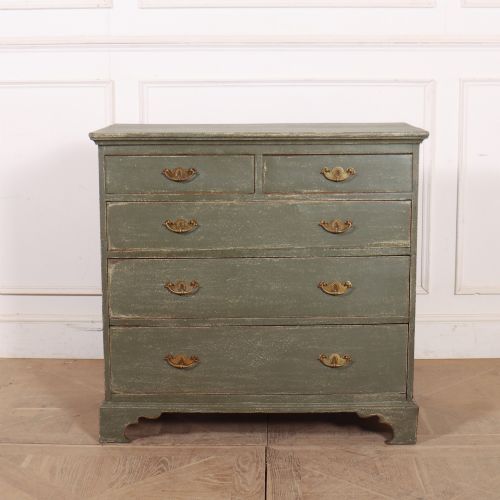
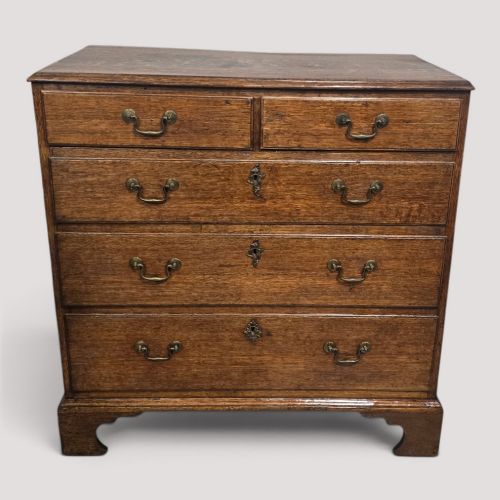
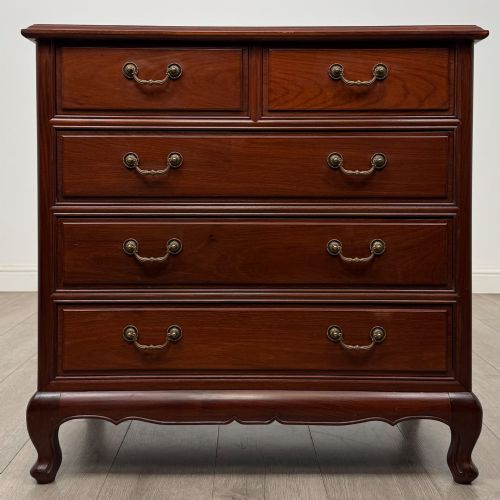
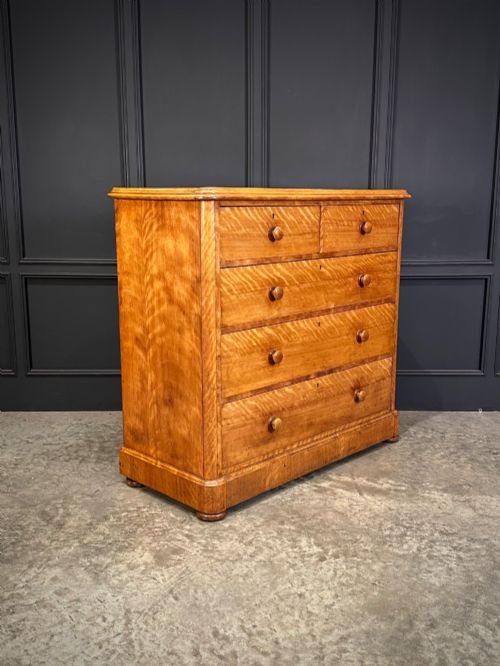
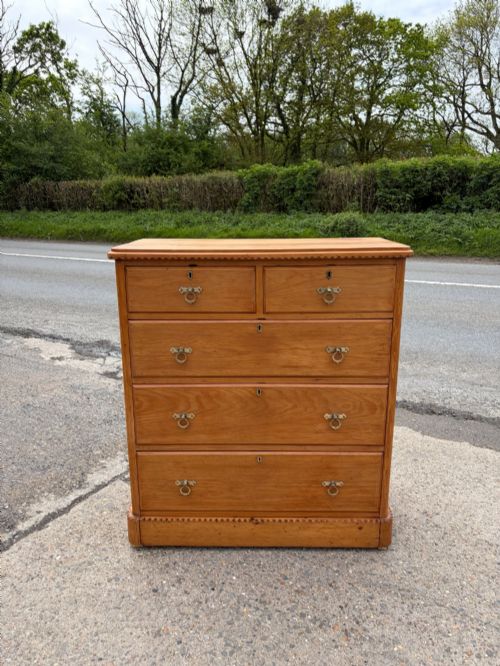
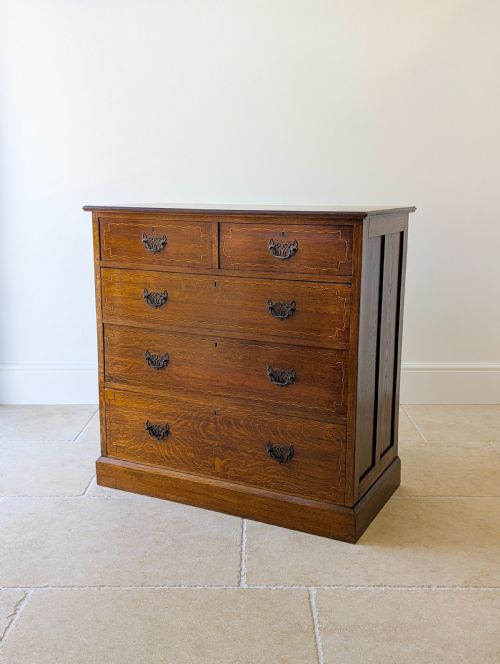
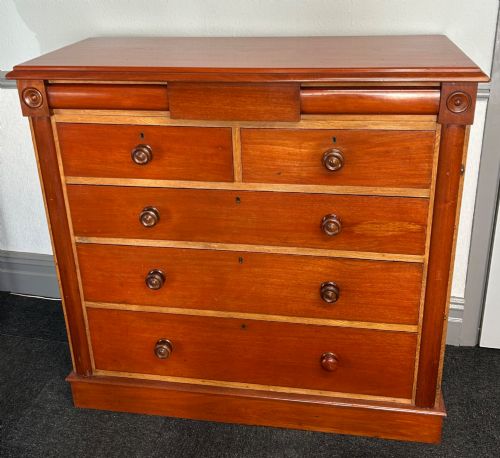
When you choose a 2 over 3 chest of drawers, you gain a classic bedroom storage piece featuring two smaller top drawers above three longer ones.
2 Over 3 Chest of Drawers
A 2 over 3 chest of drawers is a traditional storage form defined by its proportional arrangement of two short drawers placed above three graduated long drawers. This specific configuration appears frequently across Georgian, Victorian, and Edwardian periods in both formal cabinet timbers and domestic woods.
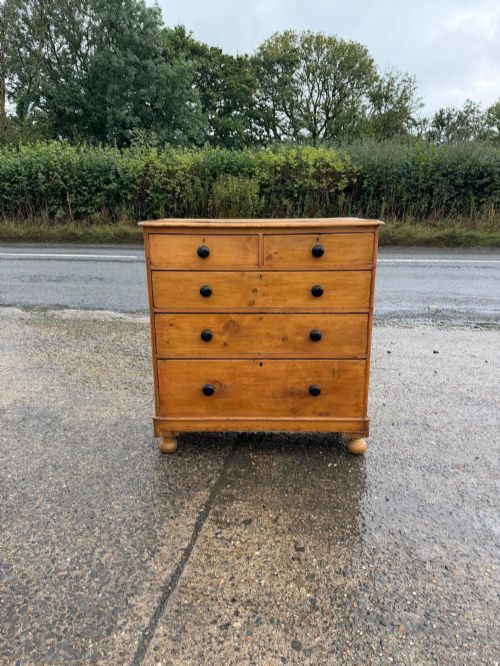
The versions most commonly met on this page span the late eighteenth century through to the early twentieth century. Examples range from substantial mahogany and walnut pieces to utility-focused pine versions built for everyday chamber use.
How they were made
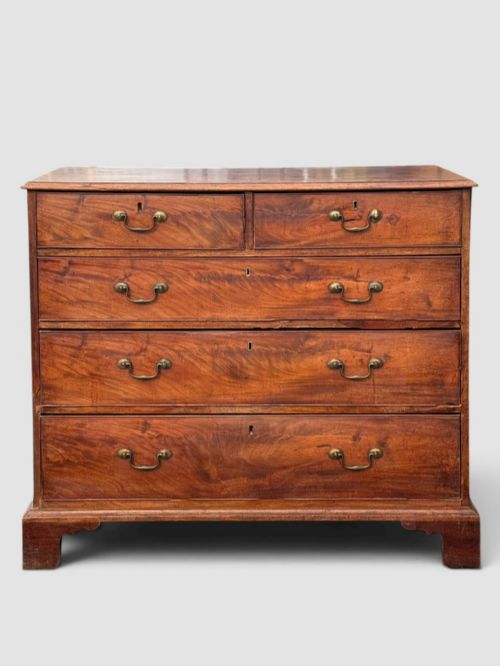
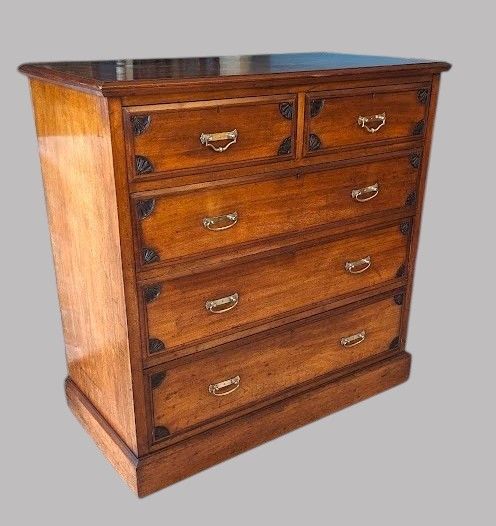
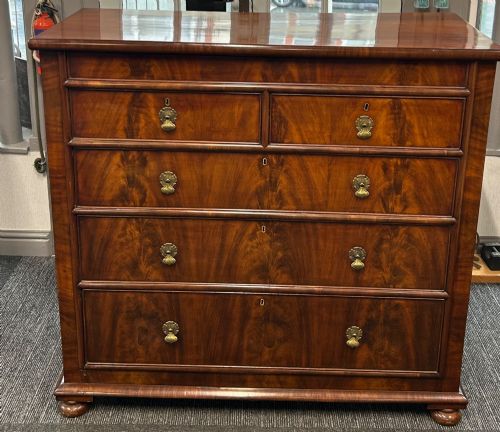
Cabinet makers constructed these carcases using solid timbers such as oak, mahogany, and pine, frequently applying flame mahogany veneer or walnut to principal surfaces for visual depth. Drawer dividers and internal framing relied on sturdy softwood or oak joinery designed to support heavy contents over decades of daily use.
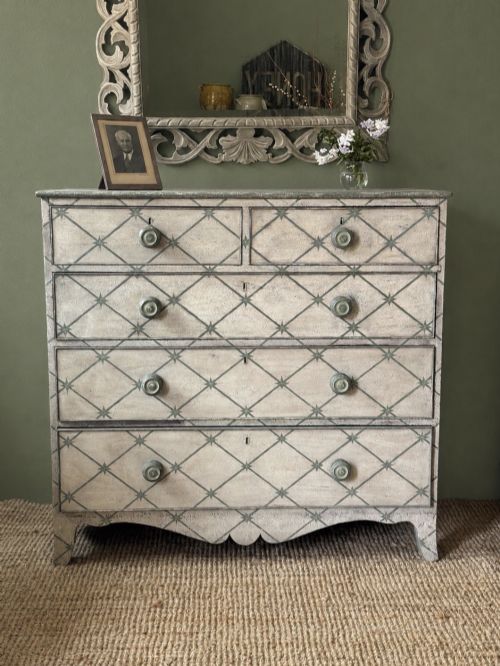
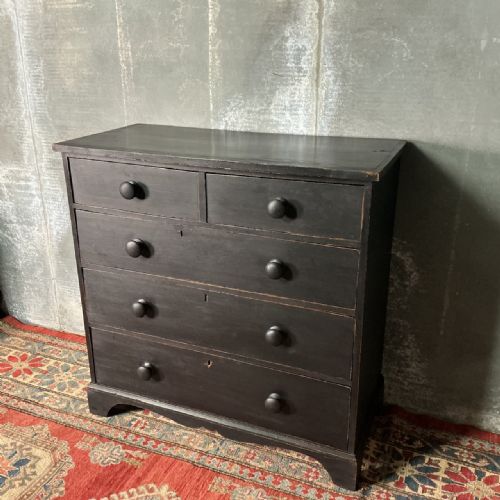
Hardware details such as brass drop handles, brass backplates, porcelain knobs, and turned wooden bun handles fastened the drawer fronts. Surface finishes included traditional painted layers, clear polish over grain, and crossbanding to accentuate the perimeter borders of the top boards.
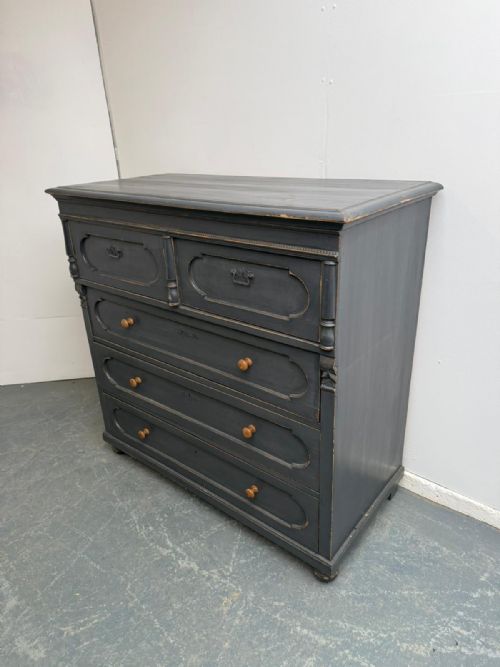
Some pine variants arrive wearing coats of icy mottled blue paint applied long after their initial workshop departure.
What varies in quality
The standard of timber selection and veneer matching dictates much of the distinction between individual pieces. Fine examples utilise carefully figured flame mahogany or dense walnut across the entire facade, whereas simpler utility pieces rely on painted or plain pine.
Construction methods also separate workshop output, seen in the precision of the dovetail joints connecting the drawer boxes and the crispness of the mouldings around the top edge and feet.
J Moorcroft·Heal & Son·Johnstone & Jeanes
The 2 Over 3 Chest of Drawers Glossary
- Bowfront
- A convex curved cabinet front that projects outward in a smooth arc. This curved shape requires specialised joinery to bend the drawer fronts and frame to match the contour.
- Crossbanding
- A decorative border technique where thin strips of veneer are laid running perpendicular to the main grain of the panel. This frames the primary timber surface with a contrasting directional grain pattern.
- Dovetail
- An interlocking joint formed by interlocking wedge-shaped fingers that binds drawer corners together securely without metal fasteners. Hand-cut variations indicate earlier or more bespoke workshop production.
- Bracket foot
- A small architectural foot fitted beneath the bottom corners of a case piece, shaped like a bracket or small pedestal. They often support Georgian chests of drawers raised slightly off the floor.
- Flame mahogany
- A highly figured tropical timber grain displaying flickering, flame-like patterns caused by the way the tree limbs met the trunk. Cabinet makers reserved this timber for principal drawer fronts and top panels.
2 Over 3 Chest of Drawers: Frequently Asked Questions
What is a 2 over 3 chest?
A 2 over 3 chest is a cabinet featuring five storage drawers arranged in two smaller compartments across the top row and three wider drawers underneath.
This specific layout provides versatile organisation, allowing smaller accessories to sit in the top pair while bulkier garments occupy the deeper lower drawers.
How do I date a chest?
Dating relies on examining the construction materials, joinery methods, and hardware styles. Georgian pieces often display bracket feet and fine mahogany veneers, while Victorian examples frequently utilise pine or heavy turned bun handles.
Secondary woods inside the drawer linings and the type of fixings used on the backboards also offer clear chronological clues for identification.
Where were these placed?
These chests served primarily as bedroom storage furniture for linens, folded garments, and personal effects. Their generous proportions made them central fixtures in domestic chambers across various domestic properties.
Smaller iterations were also positioned in dressing rooms or hallways where floor space was more restricted but storage remained essential.
How do I care for wood?
Maintaining antique timber furniture involves keeping pieces away from direct heat sources and sudden humidity changes that cause wood to split or warp. Regular dusting with a soft, dry cloth preserves the polished surface without damaging the historic finish.
Applying occasional natural wax feeds the timber and maintains the subtle sheen developed over centuries of handling.