
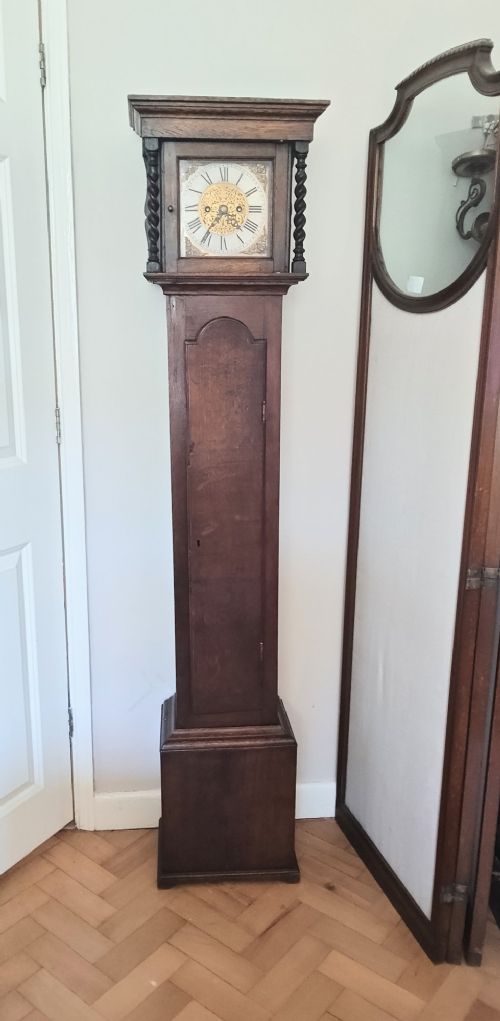


19th Century Standing Clock
These pieces for a 19th century standing clock bring mechanical movement and timber presence to a room, offering tall timber cases or smaller table variants.
19th Century Standing Clock
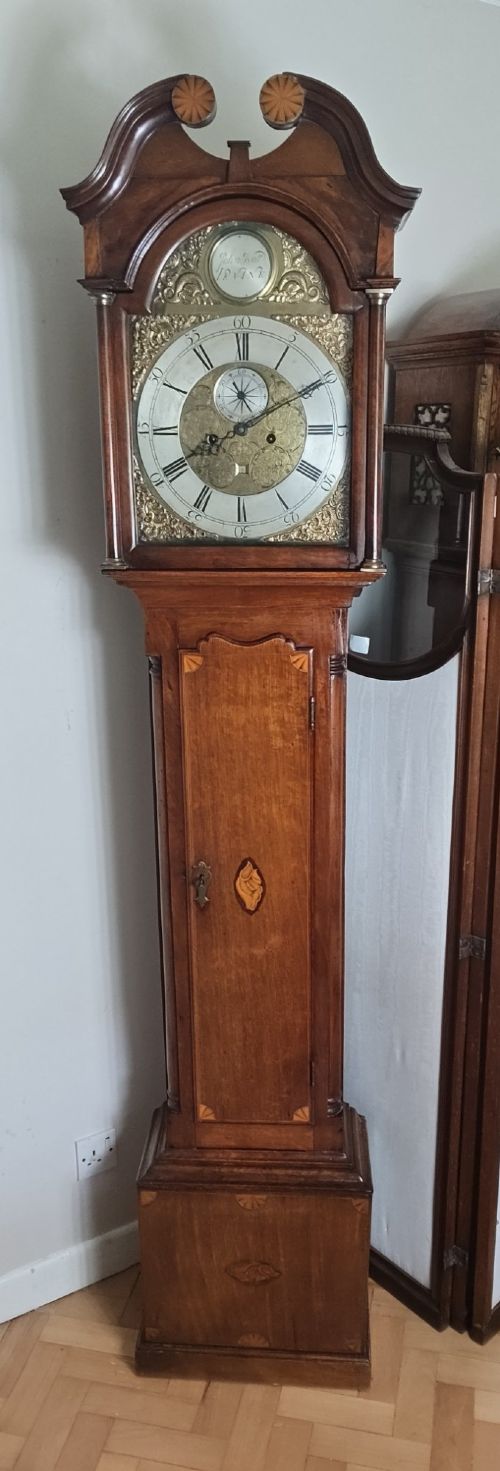
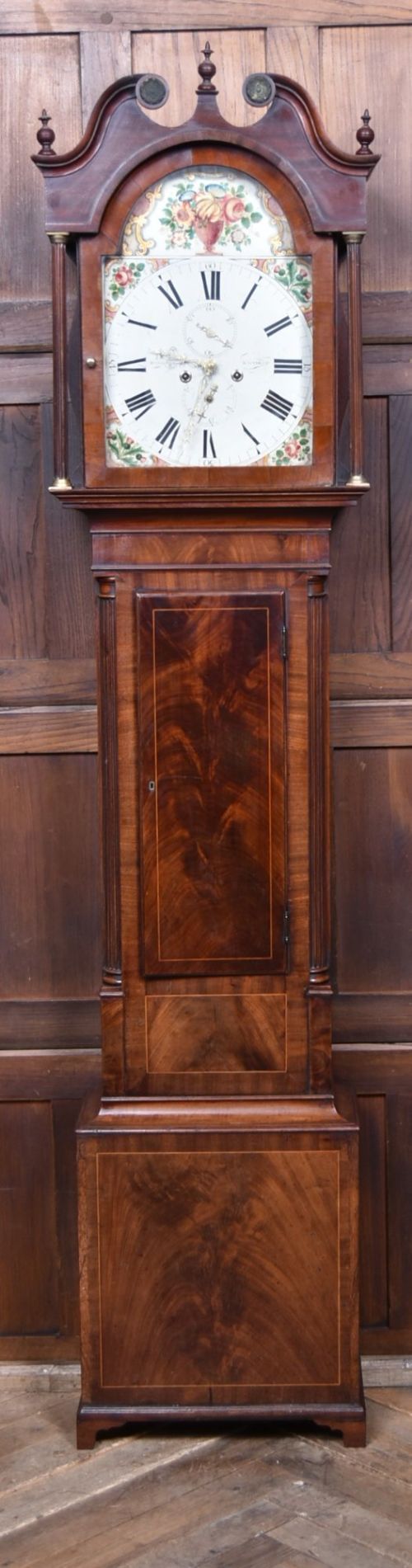
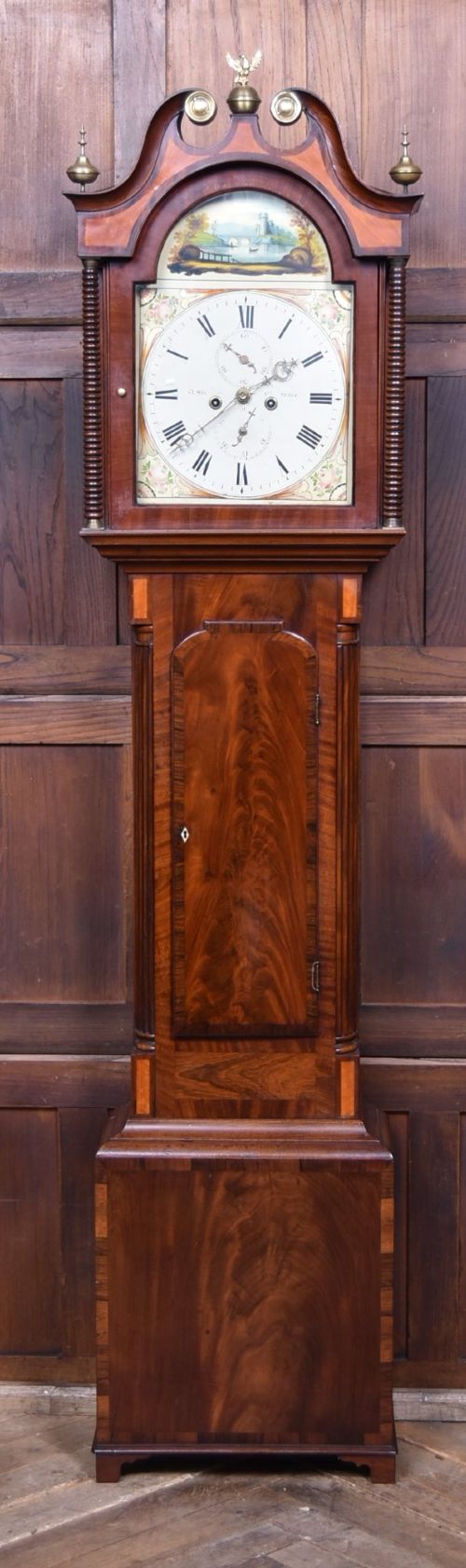
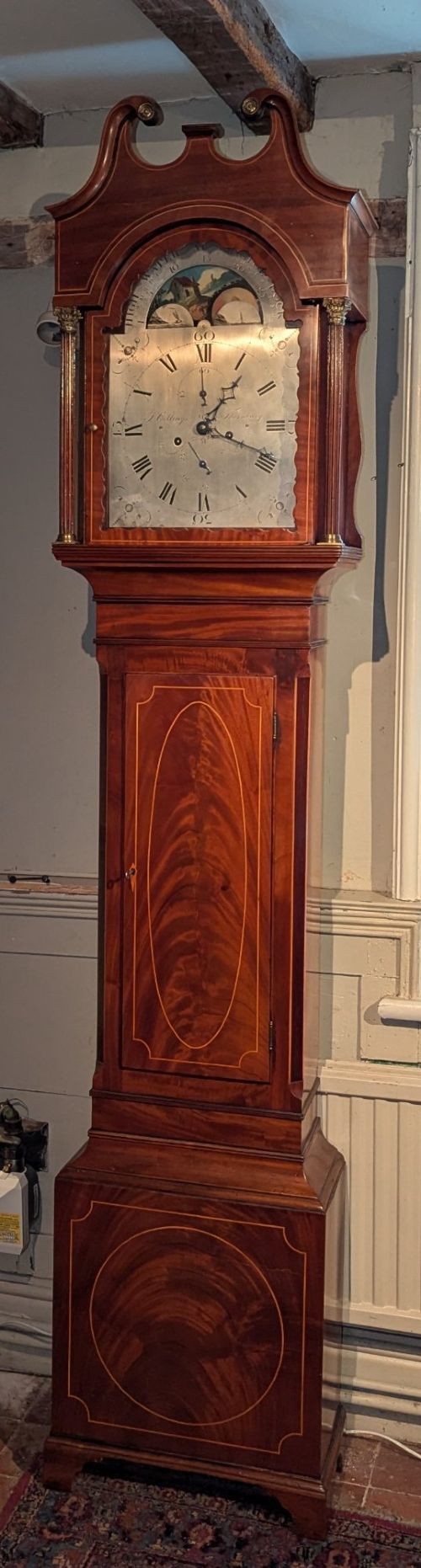
A 19th century standing clock primarily comprises tall floor-standing longcase and grandfather clocks, alongside more compact grandmother clocks and pedestal-supported mantel pieces. The version most commonly met on this page is the tall mahogany or oak longcase clock housing an eight-day or thirty-hour movement.
Makers housed these movements in regional cases spanning Scottish, Welsh, and English workshops, often incorporating arched dials and moon phases. Styles range from plain rustic country pine and oak to refined Georgian and Regency inlaid mahogany designs.
Alongside floor-standing examples, collectors encounter French gilt ormolu bracket clocks on pedestals and table-standing cuckoo clocks protected by glass domes. Each form serves as both a functional timepiece and a substantial architectural element within domestic interiors.
How they were made
Cabinetmakers constructed the tall cases using solid timbers and veneers, predominantly selecting mahogany, oak, pine, and flame mahogany veneer with decorative inlay and paterae. Brass and steel formed the intricate internal gear trains and dials, while glass protected the dial faces and viewing windows.
Finer decorative examples integrated cast ormolu mounts, tortoiseshell, and gilt bronze details, particularly on French Rococo revival and Louis XVI style pieces. Dial construction combined hand-painted or engraved brass and iron plates, signed by regional and metropolitan clockmakers.
Watch for tiny painted moons smiling out from behind the dial to remind you of the tides.
What varies in quality
The sophistication of the movement and the cabinetry separate standard regional timepieces from exceptional signed works. Superior examples display intricate marquetry, flame mahogany veneers, and complex musical or chiming gear trains by known makers.
The crispness of dial engraving, the weight of cast brass bezels, and the proportion of the timber case dictate overall execution. Regional variation also plays a role, with provincial pine pieces differing significantly from metropolitan London or Scottish Regency productions.
Hendrie Ogg·D. Straiton·Thomas Webbe·Thwaites·Parkinson and Frodsham·Rob Parry·Jno Lane·Ganthony·John Jones·Joyce·Geo Tarratt·Sam Robson·Beha·Charles Denham
The 19th Century Standing Clock Glossary
- Longcase clock
- A tall, floor-standing clock enclosed in a wooden case with a pendulum and weights.
- Grandmother clock
- A smaller, more slender version of the traditional longcase clock, typically produced in the 19th century.
- Moon dial
- A specialised clock dial displaying the phases of the moon alongside the standard time.
- Fusee
- A conical pulley used in spring-driven clocks to maintain even power as the mainspring unwinds.
- Ormolu
- Gilded bronze mounted onto decorative clocks, brackets, and furniture during the 18th and 19th centuries.
- Paterae
- Small circular decorative motifs carved or inlaid into furniture and clock cases during the Georgian and Regency periods.
19th Century Standing Clock: Frequently Asked Questions
What is a grandfather clock?
A grandfather clock is a tall, floor-standing pendulum clock enclosed in a protective wooden case. These pieces use hanging weights to drive the time-keeping mechanism.
They generally stand over six feet tall and feature hinged waist doors to access the weights and pendulum.
How do I wind an eight-day clock?
An eight-day clock requires winding approximately once a week using a specialised crank key inserted into holes on the dial face. Winding lifts the internal weights or tightens the spring inside the movement.
Care must be taken not to overwind the mechanism, which can damage the internal gear train.
Where were these clocks made?
Nineteenth-century standing clocks originated across Britain and continental Europe, with distinct regional styles emerging from England, Scotland, Wales, and France. Metropolitan centres like London produced refined Regency and Georgian pieces, while provincial towns favoured local timbers.
Maker signatures on the dial often indicate the specific town or workshop where the clock was assembled.
What is the difference between a grandfather and grandmother clock?
A grandmother clock is simply a smaller, more slender variant of the traditional grandfather or longcase clock. They emerged later in the 19th century to fit into rooms with lower ceilings and smaller proportions.
Despite their reduced scale, many still house quality eight-day mechanical movements.