




19th Century Spool Chair
A 19th century spool chair brings tactile, turned wooden geometry into a room through repetitive rounded profiles that charm the eye.
19th Century Spool Chair
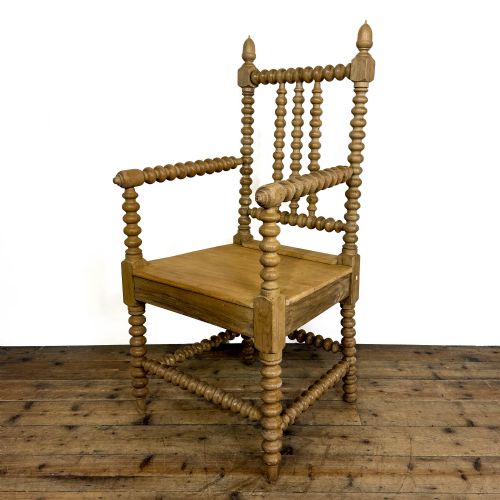
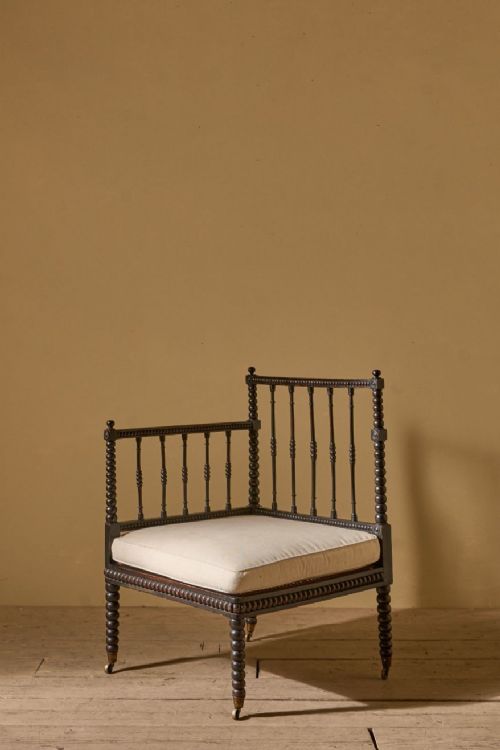
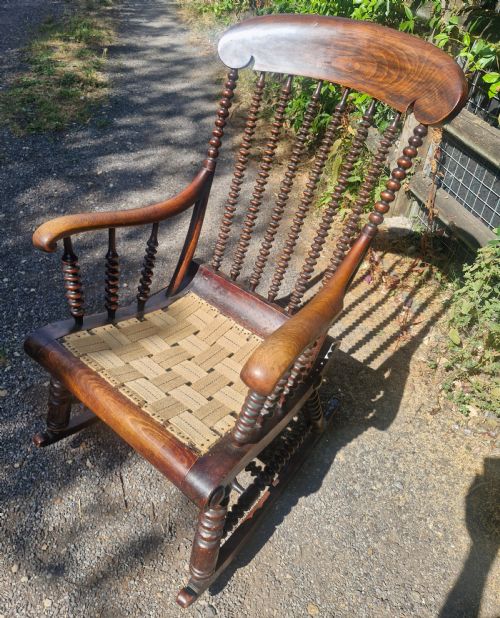
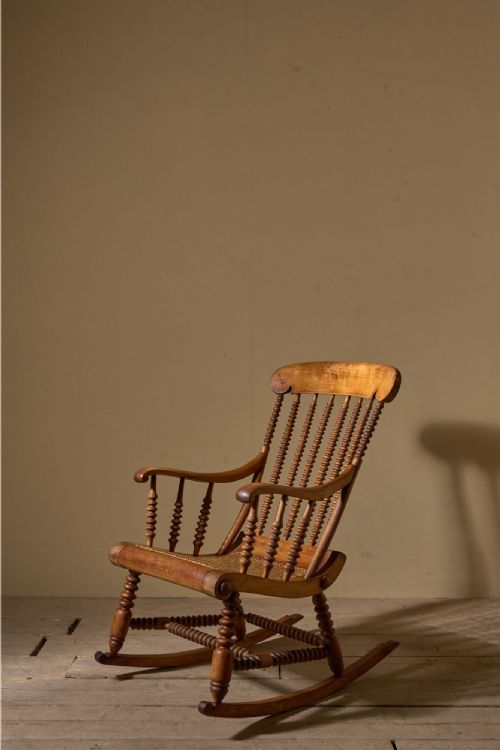
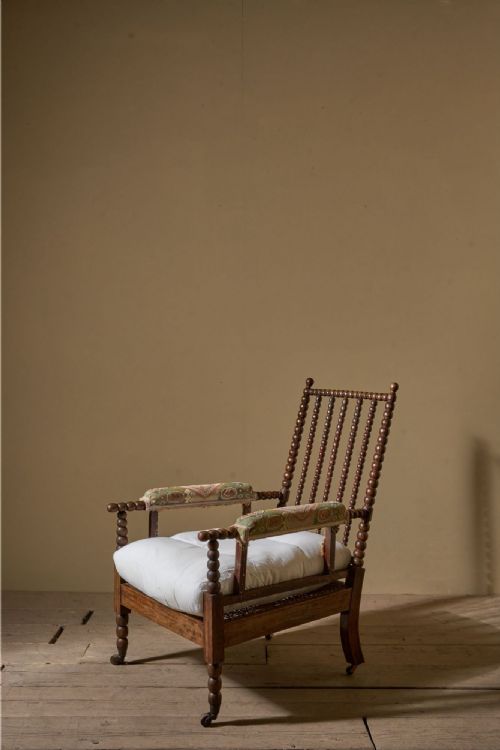
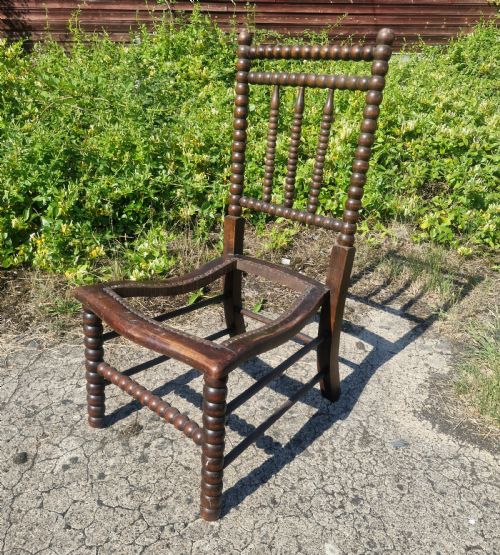
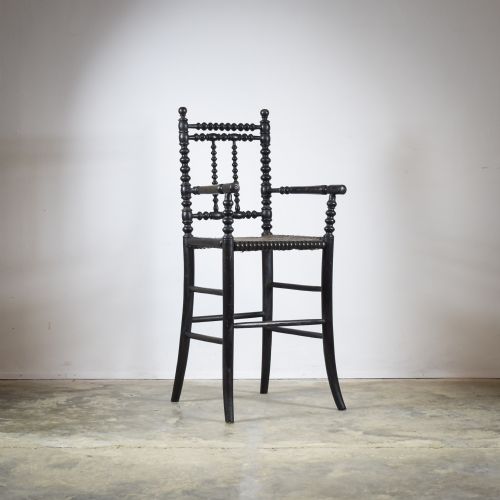
A 19th century spool chair is defined by its characteristic turned framing, where rows of small wooden spheres or cylinders resemble cotton spools or bobbins. This selection encompasses a varied range of forms, from open armchairs and corner chairs to rocking chairs, daybeds, and low bedroom seating.
The pieces appearing on this page demonstrate the broad geographical spread and stylistic diversity of the Victorian era and country traditions. Buyers will encounter English country examples alongside Swedish country folk art pieces, showcasing how makers across different regions adapted the bobbin-turning technique.
Seating variations frequently incorporate woven cane seats, upholstered cushions, and low frames designed for specific domestic spaces like bedrooms or firesides. Armchairs and rocking chairs provide the most common encounters, often rendered in darker woods or simulated finishes.
How they were made
Construction relies heavily on solid timbers such as oak, walnut, hardwood, and ebonised wood shaped on a lathe to create the repeating spool motifs. Artisans also utilised simulated finishes like rosewood on certain frames to mimic expensive exotic woods.
Upholstery and support elements vary by form, combining traditional fabric textiles with natural cane webbing for seats. Brass fittings occasionally appear on specific structural points or castors, while child chairs and daybeds demonstrate specialised scaling.
19th Century Spool Chair Retail Price Guide 2026
Typical asking prices for 19th century spool chair among the pieces listed under this phrase on Sellingantiques today, from the lower quarter to the upper quarter. They describe what is for sale here now, not the wider market.
The site records geographic variety within the 19th century grouping, including English country examples and Swedish country folk art thrones.
What varies in quality
The crispness and precision of the lathe work define the primary tier of craftsmanship in these turned frames. Uniformity across long runs of spools requires steady hand-turning skill, distinguishing finer workshop output from simpler vernacular production.
Material selection and finish integrity dictate the enduring character of each piece, particularly where ebonising or simulated graining is applied. Original cane work and robust joinery in structural members further elevate the standing of surviving examples.
The 19th Century Spool Chair Glossary
- Bobbin turning
- A woodturning technique that produces a series of rounded, spool-like shapes along the length of a spindle or leg. This repetitive motif forms the principal decorative element of the furniture.
- Ebonised wood
- Timber treated with a dark finish to imitate expensive ebony wood. It was widely utilised during the Victorian period to create high-contrast decorative surfaces.
- Corner chair
- A seating form designed to fit into the corner of a room, featuring a diagonal orientation with a curved backrest supported by multiple posts.
- Cane seat
- A woven seating surface made from split rattan or natural fibres. It offers a lightweight, flexible platform that complements open wooden framing.
- Slipper chair
- A low-seated upholstered chair originally designed for bedrooms to assist with putting on shoes. These examples sit close to the floor with abbreviated legs.
19th Century Spool Chair: Frequently Asked Questions
What is a spool chair?
A spool chair is a piece of seating furniture constructed with turned wooden members that resemble rows of thread bobbins. These decorative turnings form the legs, arms, and back frames.
Originating largely in the 19th century, these chairs showcase the Victorian fascination with tactile, machine-tooled or hand-turned wooden textures.
How do I identify a 19th century bobbin chair?
Identification relies on examining the timber species, construction methods, and turning styles typical of the Victorian period. Hardwoods like oak, walnut, and ebonised wood predominate.
Regional variations also provide clues, such as Swedish country folk art characteristics or English country house upholstery styles integrated into the frame.
Were these chairs used in bedrooms?
Many smaller forms, such as low seat bedroom chairs and slipper chairs, were specifically designed for domestic sleeping quarters. Their compact proportions suited dressing rooms and intimate spaces.
Larger armchairs, rocking chairs, and daybeds served primary living areas, parlours, and nurseries across country and urban homes.
How do I care for cane seats?
Cane webbing requires gentle cleaning with a slightly damp cloth to prevent the natural plant fibres from becoming brittle. Keeping the material hydrated avoids splitting.
Avoiding excessive direct sunlight and heavy point-loading helps preserve the tension and flexibility of the original or replaced woven surfaces.
What is the difference between bobbin and spool furniture?
The terms are generally used interchangeably by makers and collectors to describe the same cylindrical, bead-like woodturning style. Both refer to the resemblance to sewing spools.
Regional terminology might favour one word over the other, but the structural technique and visual result remain consistent across the pieces.