



19th Century Ring
A 19th century ring brings personal history and period craftsmanship directly to the hand through surviving gold and gemstone designs.
19th Century Ring
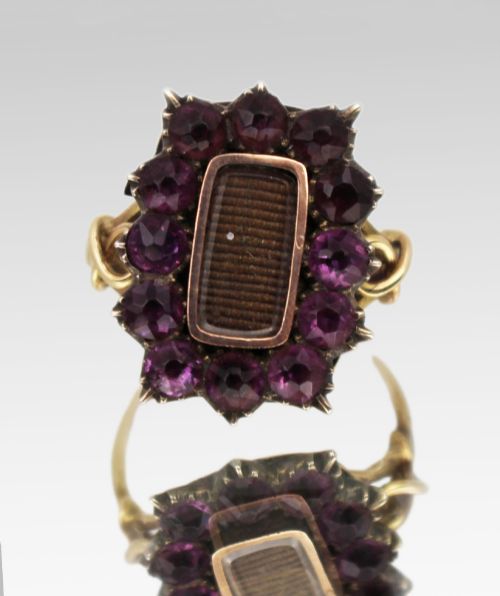
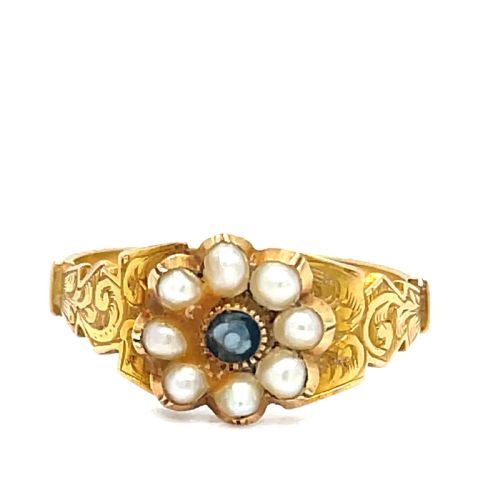
A 19th century ring spans Georgian, Regency, and Victorian periods, showcasing distinct design shifts from neoclassical motifs to sentimental high-Victorian aesthetics. Collectors encounter gold bands set with diamonds, turquoise, pearls, carnelian intaglios, and purple glass stones.
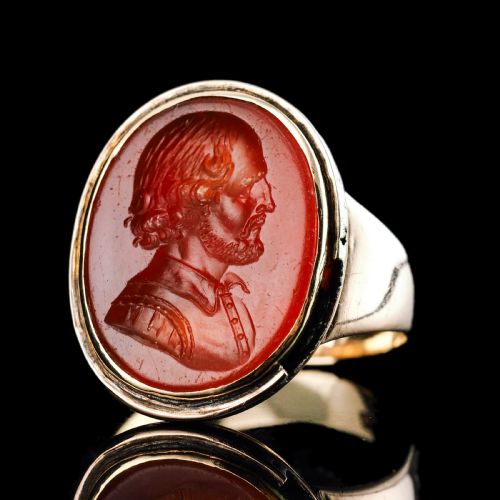
Mourning rings appear frequently in the selection, incorporating hairwork or dark stones alongside inscriptions to commemorate the deceased. Other examples include buckle rings, cluster designs, and side-profile intaglios carved into hardstone.
The pieces reflect the shifting jewellery conventions of the 1800s, moving from delicate Georgian foil-backed stones to robust Victorian bands with substantial gold carat weights.
Materials and Construction
Goldsmiths of the era utilised various purities, including 9ct, 15ct, and 18ct yellow gold, fashioned by hand before mass-manufacturing took over late in the century. Shanks were often solid, while settings relied on hand-cut collets to secure rose-cut or old mine-cut diamonds.
Gemstone selection dictated the mounting technique, with closed-back settings common in earlier Georgian specimens to enhance stone colour, transitioning to open-back settings in later Victorian pieces.
19th Century Ring Retail Price Guide 2026
Typical asking prices for 19th century ring among the pieces listed under this phrase on Sellingantiques today, from the lower quarter to the upper quarter. They describe what is for sale here now, not the wider market.
A gentleman in an intaglio ring gazes outward across two centuries, still holding his profile with quiet Victorian dignity.
Assessing Craftsmanship and Condition
Superior examples retain the crispness of hand-engraving on the shoulders and shank without thinning from decades of wear. The security of the original stone settings and the absence of clumsy modern solder repairs distinguish finer specimens.
The quality of the central gemstone or intaglio carving separates standard production from exceptional masterwork. Intact enamel work on mourning bands and well-matched natural seed pearls add significantly to the integrity of the piece.
The 19th Century Ring Glossary
- Intaglio
- A gem or stone carved with a design depressed beneath the surface so that an impression can be made in relief. These feature frequently in gentleman's side-profile rings.
- Mourning ring
- A piece of jewellery commissioned to remember a deceased person, often containing black enamel, hairwork, or jet. They serve as tangible records of 19th-century remembrance customs.
- Old mine cut
- An early diamond cut characterised by a roughly square girdle, high crown, and small table. This shape appears on many authentic 1800s cluster rings.
- Collet
- A band or rim of metal that holds a gemstone in place. Hand-formed collets indicate earlier hand-working methods.
19th Century Ring: Frequently Asked Questions
How do I date a 19th century ring?
Dating relies on stylistic clues, gold hallmarks, and the specific cut of the gemstones mounted in the band. Georgian examples often display closed-back settings, while late Victorian pieces utilise heavier gold stampings.
Examining the shank wear and any interior inscriptions provides additional chronological context for the piece.
Can I wear an antique gold ring daily?
Daily wear is possible for sturdier gold bands, but delicate stone settings and hollow Victorian forms require care. Softer gems like turquoise and pearls demand protection from harsh chemicals and heavy impacts.
Removing the jewellery during manual tasks preserves the integrity of antique claws and delicate hand-engraving.
Are antique gemstone treatments common?
Stones in these pieces display natural characteristics typical of pre-modern mining and cutting techniques. Foil backs were sometimes placed behind glass or lower-grade stones to enhance brilliance.
Evaluating the interior of the setting reveals whether foils remain intact behind the gems.