




19th Century Nautical Box
A 19th century nautical box brings maritime history into the room, offering intricate dioramas, navigational instruments and sturdy storage used at sea.
19th Century Nautical Box
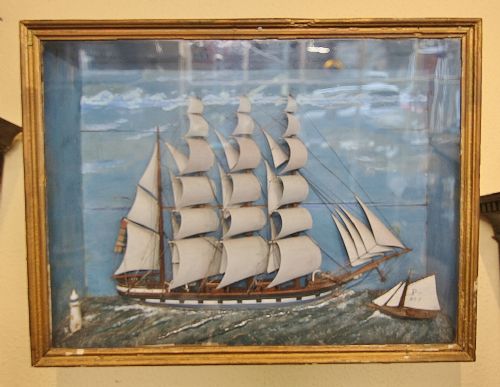
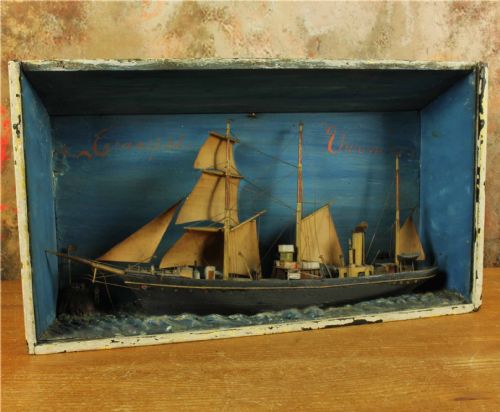
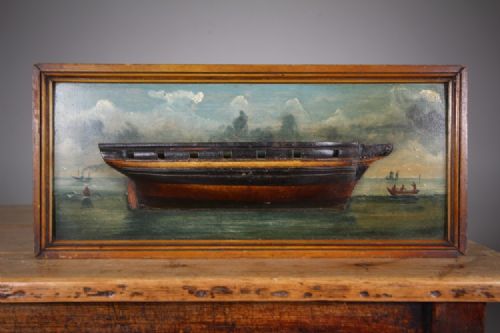
A 19th century nautical box encompasses a diverse group of objects created for life at sea and maritime remembrance, ranging from detailed ship dioramas to heavy storage chests and precision instruments. When exploring this category, buyers encounter pieces from the Victorian era alongside earlier Regency examples, capturing a period of intense seafaring activity.
The most common forms appearing in this selection are shadow box dioramas showing clipper ships and racing vessels, alongside solid wood chests and scientific instruments. These objects reflect both the practical demands of navigation and the folk art traditions of sailors who fashioned models during long voyages.
Origins span English workshops and French makers, with specific pieces linked to cities such as Liverpool and London. The materials and construction methods shift between utilitarian pine chests and delicate glass-cased shadow boxes housing painted canvas sails.
Materials and Construction
Wood serves as the primary medium, utilising durable timbers like mahogany, camphor wood and painted pine to construct heavy storage trunks and framing for display cases. These woods were chosen for their resilience against damp maritime environments and heavy handling.
Glass, brass and oil paint combine within shadow box dioramas and scientific instruments, where painted canvas creates realistic sea waves and paper or card details form ship rigging. Brass mounts and gilt finishes provide both structural reinforcement and precise calibration for instruments like chronometers and telescopes.
Specialised techniques include straw work decoration applied to dioramas and complex mechanical assemblies found in automata and celestial globes. Artisans combined traditional cabinetmaking with maritime folk art methods to produce both robust sea chests and delicate encased models.
19th Century Nautical Box Retail Price Guide 2026
Typical asking prices for 19th century nautical box among the pieces listed under this phrase on Sellingantiques today, from the lower quarter to the upper quarter. They describe what is for sale here now, not the wider market.
Sailors constructed intricate ship models using discarded straw and scraps of canvas during long months at sea.
Factors That Distinguish Quality
The sophistication of the maritime diorama separates standard examples from exceptional pieces, particularly in the rendering of rigging, hull proportion and the illusion of movement on the painted sea. Superior craftsmanship shows in the intricate detail of miniature vessels and the preservation of original oil paint on canvas.
Material selection and maker attribution elevate certain scientific instruments and chests, especially those signed by known makers and constructed from superior hardwoods like camphor or polished mahogany. The survival of original components, such as glass covers and brass fittings, influences the integrity of the piece.
Litherland Davies Of Liverpool·Henri de Magnac·John Lilley & Son London
The 19th Century Nautical Box Glossary
- Shadow Box Diorama
- A three-dimensional display enclosed within a shallow glazed case, frequently utilised to depict sailing ships and maritime scenes against a painted backdrop.
- Marine Chronometer
- A highly accurate timekeeper used aboard ships for determining longitude at sea by precise observation of celestial bodies.
- Artificial Horizon
- A navigational device used with a sextant to measure angles when the natural horizon is obscured by fog or darkness, often consisting of a glass plate and black liquid.
- Campaign Chest
- A modular storage trunk designed to separate into sections for ease of transport during military or naval expeditions.
- Seaman's Chest
- A robust wooden box used by sailors to store personal belongings aboard ship, occasionally decorated with painted folk art motifs.
19th Century Nautical Box: Frequently Asked Questions
What is a 19th century nautical box?
A 19th century nautical box covers various items connected to the sea, including ship dioramas in glazed cases, navigational instruments in brass and wood storage chests.
These pieces were made for practical use on vessels or as decorative folk art to record maritime achievements during the Victorian period.
How were ship dioramas made?
Makers constructed ship dioramas using carved wood, painted canvas and paper to represent vessels under sail inside a protective wooden frame with a glass front.
The background sea and sky were typically painted in oil on canvas or wood to create a sense of depth and movement.
Where were these boxes used?
Storage chests and instruments were used aboard ships during long voyages, while delicate shadow box dioramas were displayed in homes and maritime offices ashore.
Navigational tools like compasses and chronometers were essential equipment on the captain's deck for charting courses across the ocean.
How do I care for a diorama?
Keep shadow box dioramas out of direct sunlight to prevent fading on the painted canvas background and delicate paper elements.
Maintain stable indoor humidity levels to protect the antique wood framing and prevent the old glass from loosening within its rebate.