



19th Century Money Box
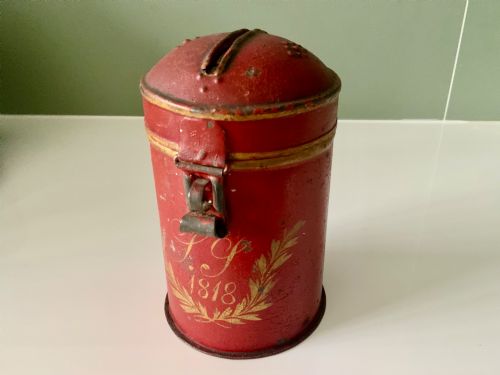
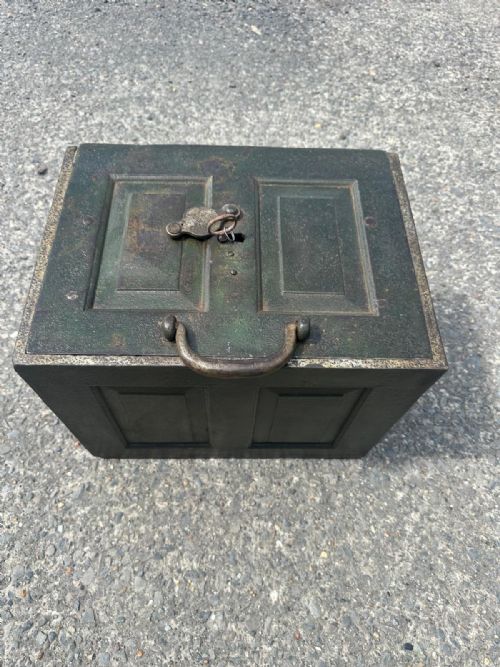
These 19th century money box examples are cast iron, painted iron, toleware, and tin containers built to secure coin and cash.
19th Century Money Box
A 19th century money box takes many forms across this selection, ranging from strong boxes and safes to painted cash boxes and decorative figures. Buyers searching for a 19th century money box encounter varied regional styles, including Regency toleware, Scandinavian country pieces, French combination safes, and American cast iron banks.
The objects serve primarily to hold currency securely, utilising locks, keys, and combination dials. Forms vary from simple pine and tin containers to heavy cast iron chests and detailed lacquer cashier boxes.
Originating across Britain, France, Sweden, and America, these pieces reflect the distinct metalworking and painting traditions of the 19th century. Victorian examples sit alongside earlier Regency items and later pieces dated towards 1890.
How they were made
Makers constructed these boxes predominantly from metals such as cast iron, iron, brass, tin, and toleware, occasionally utilising pine for internal structures or support. Surface decoration frequently involved hand painting, seen on Qajar lacquer boxes and green painted Scandinavian strong boxes.
Security mechanisms defined the construction of cash boxes and safes, incorporating specialised locks, original keys, and intricate three dial combination systems. Metal surfaces were shaped into chests, cottages, and figures, with paint applied directly to iron and tin substrates.
19th Century Money Box Retail Price Guide 2026
Typical asking prices for 19th century money box among the pieces listed under this phrase on Sellingantiques today, from the lower quarter to the upper quarter. They describe what is for sale here now, not the wider market.
Listings feature items from the 19th century, including specific periods like the Regency era, the Victorian era, and the year 1890.
What varies in quality
Quality in these pieces rests upon the survival of original surface finishes, such as hand painted details and early paintwork, alongside the integrity of the metal body. Pieces retaining original keys and functional mechanical locks demonstrate higher preservation.
The sophistication of the construction separates standard utility boxes from complex items like French combination safes or cast iron banks. Finer examples display careful artistry in the lacquer work, painted decoration, and metal casting.
Milners of Liverpool
The 19th Century Money Box Glossary
- Toleware
- Lacquered or enamelled metalware, typically tin or iron, decorated with painted designs. It was popular during the Regency period for domestic containers.
- Strong box
- A heavily reinforced metal box designed for securing valuables and money. These often feature iron construction and secure locking mechanisms.
- Prattware
- A type of English earthenware featuring underglaze coloured decoration, often moulded into figurative cottages or buildings.
- Combination safe
- A secure box operated by a dial mechanism requiring a specific numerical sequence rather than a traditional key. These represent more complex 19th century engineering.
- Qajar lacquer
- A Persian artistic technique involving painted and varnished surfaces on papier-mâché or wood, applied here to cashier boxes.
19th Century Money Box: Frequently Asked Questions
What materials make up a 19th century money box?
Makers constructed these pieces using metals such as cast iron, iron, brass, tin, and toleware, sometimes pairing them with pine or lacquer. Painted finishes frequently appear on the surface.
Different regions employed distinct materials, such as Scandinavian green painted wood and iron, or Persian lacquer over a rigid base.
How did people use these boxes?
Owners utilised them to store coins, cash, and valuables securely within homes, shops, or offices. The inclusion of locks, keys, and dial combinations restricted access.
Some items functioned as decorative figures or cottages, serving a dual purpose as ornaments and coin banks.
How do you identify a Regency toleware box?
Regency toleware pieces feature lacquered or enamelled metal construction with painted surface decoration. They date to the early part of the century.
These boxes display characteristic metal shaping typical of the period before heavy cast iron safes became widespread.
Are original keys common?
Some surviving boxes retain their original keys, which collectors value for completeness. Iron safes and strong boxes often relied on these specific keys to operate their heavy internal mechanisms.
When original keys or combination dials remain functional, they indicate a well preserved survival from the period.