







19th Century Medicine Glass
These 19th century medicine glass items are functional medical vessels designed for accurate dosing, offering collectors a direct link to historical apothecary practices.
19th Century Medicine Glass
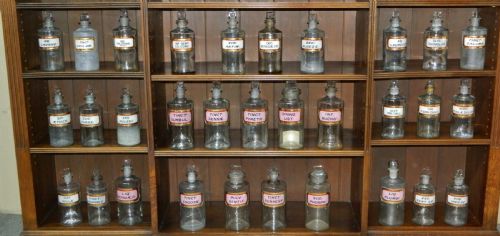
When you search for 19th century medicine glass, you encounter functional vessels and measuring instruments utilised for administering pharmaceutical doses during the Victorian and Regency eras. These items appear primarily as individual medicine glass measures, complete fitted apothecary boxes, and sets of chemists jars.
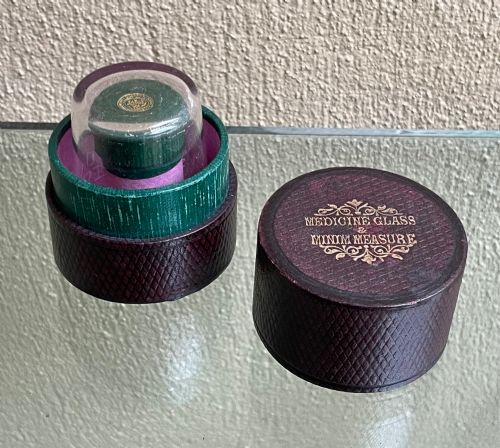
The objects stem from the broader categories of apothecary equipment and glassware, often accompanied by protective leather cases or housed within mahogany travelling chests. Their primary function was the precise measurement and storage of liquid medicines in domestic and professional settings.
Most examples originate from the 19th century, spanning periods from around 1800 through to 1900, including Regency and Victorian eras. Buyers find both standalone glassware and complete cased sets equipped with their original bottles and measuring glasses.
Materials and construction
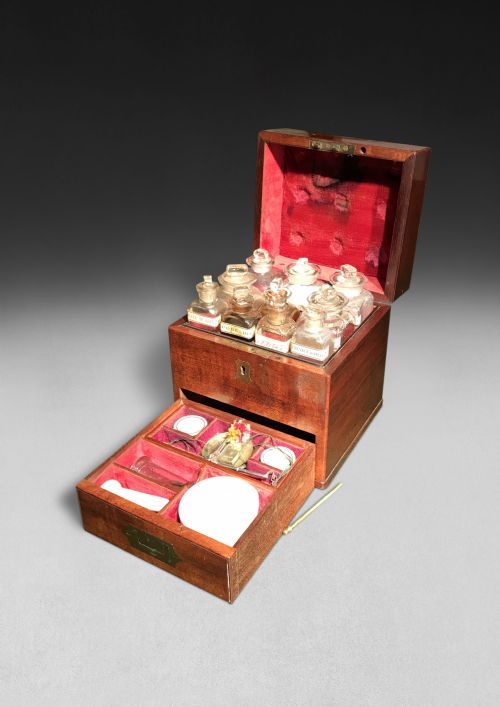
The primary material is glass, moulded or blown into specific shapes for measuring fluids, sometimes accompanied by cut glass detailing. In cased examples, mahogany is utilised for the fitted boxes, complemented by brass hardware and interior velvet linings.
Leather is employed for protective travelling cases designed to secure fragile glass measures during transit. Additional details across the broader inventory include paper labels, gold leaf, and rock crystal work.
19th Century Medicine Glass Retail Price Guide 2026
Typical asking prices for 19th century medicine glass among the pieces listed under this phrase on Sellingantiques today, from the lower quarter to the upper quarter. They describe what is for sale here now, not the wider market.
Some medical travellers relied on sturdy leather cases just to keep their tiny glass measures from rolling away into the carriage upholstery.
Factors determining quality
Quality in these items is determined by the completeness of the set, particularly whether original measuring glasses remain intact within their fitted mahogany boxes alongside the corresponding bottles. The precision of the glass moulding and the condition of associated components such as leather cases also dictate the standing of a piece.
The integration of materials like brass fittings and intact velvet linings within fitted cabinetry elevates the standard of an apothecary chest. Pieces that retain their original travelling configuration without replacement parts represent the higher tier of surviving examples.
Tonnel Paris
The 19th Century Medicine Glass Glossary
- Apothecary box
- A fitted wooden chest designed to store medicine bottles, scales, and glass measures securely. These boxes typically feature internal compartments and a lower drawer.
- Medicine glass
- A small glass vessel marked with graduated lines to measure liquid doses accurately. They are frequently found paired with leather cases.
- Chemists jar
- A larger glass container utilised for storing pharmaceutical ingredients on shelves. These appear in sets within the historical evidence.
- Mahogany
- A durable tropical hardwood commonly utilised for the construction of 19th-century apothecary boxes and travelling chests. Its stability made it ideal for fitted interiors.
19th Century Medicine Glass: Frequently Asked Questions
What is a 19th century medicine glass?
A 19th century medicine glass is a small graduated vessel used for measuring liquid pharmaceutical doses accurately during the Victorian and Regency periods.
These glasses often survived alongside fitted mahogany apothecary boxes or within protective leather travel cases designed to prevent breakage.
How were apothecary boxes used?
Apothecary boxes served as portable pharmacies for doctors and households, containing bottles, measuring glasses, and scales.
The fitted interior compartments kept fragile glassware secure during travel while organising various medicinal liquids and powders.
Are the glass measures marked with scales?
Many surviving medicine glasses feature etched or enamelled lines indicating specific volumetric doses for medical administration.
These graduations allowed practitioners and patients to measure exact quantities of liquid remedies.
How should I clean my medicine glass?
Antique glass requires gentle cleaning with warm water and mild soap, avoiding harsh abrasives that could damage the surface.
Care must be taken with any surviving markings or gilt details to preserve the historical integrity of the piece.