





![Pen and Ink Sketch - Female Nudes by William Edward Frost [1810-1877]](https://www.sellingantiques.co.uk/photosnew/dealer_kendallhouse/dealer_kendallhouse_full_1758970795762-8493507346.jpg)

19th Century Figure Drawing
A 19th century figure drawing captures the human form through the direct observation that defines the period's academic training and intimate studies.
19th Century Figure Drawing
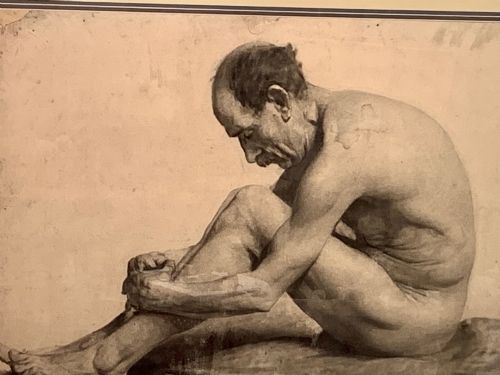
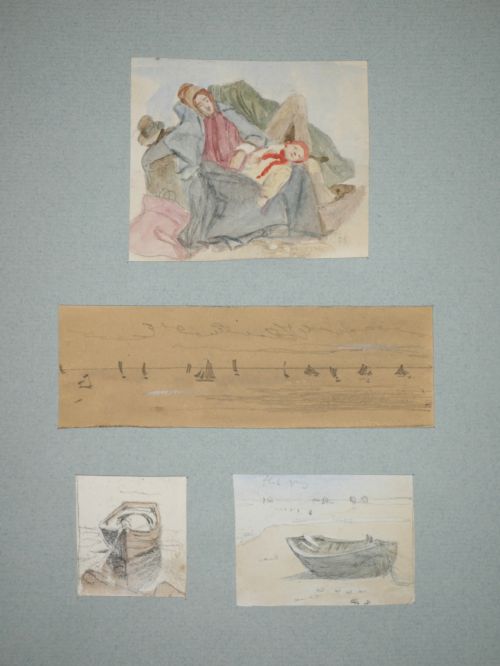
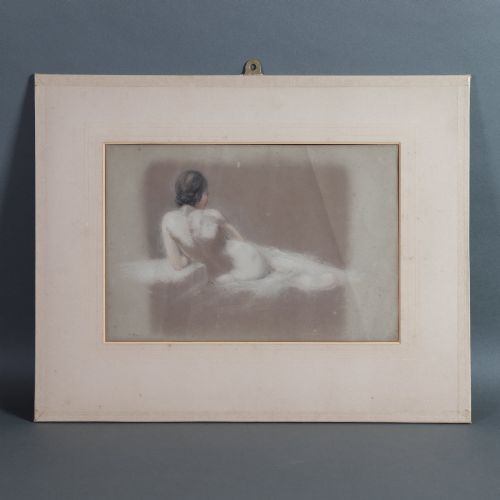
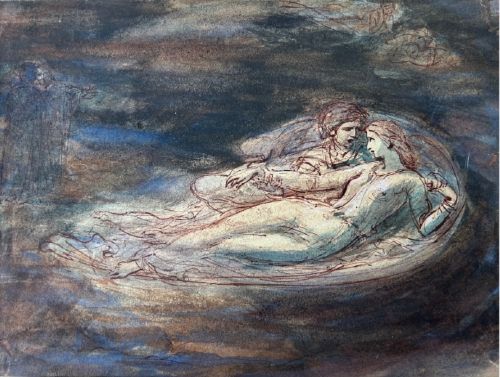
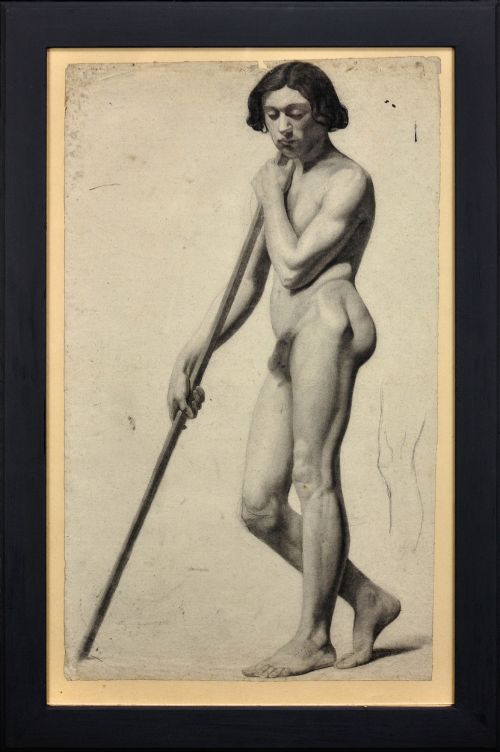
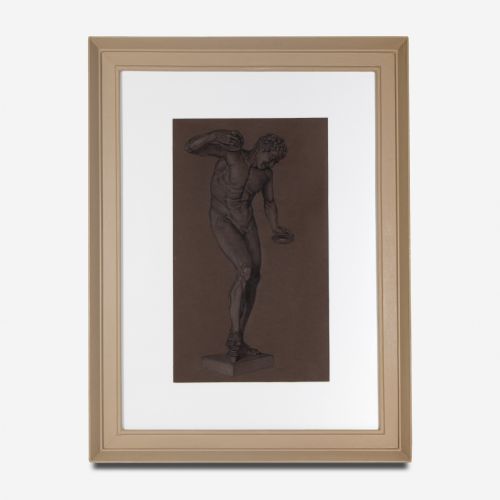
A 19th century figure drawing encompasses original works on paper ranging from rigorous academic life studies to intimate portraits and narrative sketches. These pieces document the human form through various perspectives, from classical nudes to clothed figures captured in quiet contemplation or theatrical poses.
The selection reflects diverse European and colonial traditions, with English, French, and Irish schools appearing frequently alongside Regency-era pencil sketches. Framed artworks dominate the offering, presenting both finished compositions and preparatory studies intended for larger works.
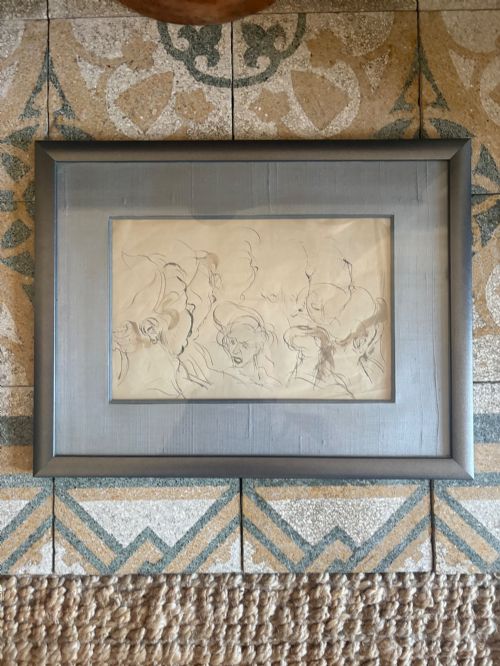
Collectors encounter everything from robust male life studies by named artists to delicate female portraits created with expressive lines. These works provide tangible evidence of nineteenth-century draughtsmanship, preserving the preparatory steps of historical artists.
Materials and technique
These works rely on traditional media applied to paper, with graphite, charcoal, chalk, and ink serving as the primary vehicles for line and shadow. Artists utilised delicate washes of watercolour and pastel to introduce colour, while occasional oil studies on paper capture heavier pigment layers.
Techniques range from fine-line contour drawing and cross-hatching to expressive mixed media applications that emphasise texture and form. The physical support typically consists of antique paper or vellum, housed within period mounts and wooden frames.
Several drawings preserve the hurried hand of nineteenth-century artists sketching theatrical figures mid-performance.
Judging quality
Quality rests upon the confidence of the line and the precision of anatomical understanding demonstrated by the draughtsman. Academic life studies that successfully convey volume, musculature and gesture represent the upper tier of the range.
The preservation of the paper support and the vibrancy of fugitive media like chalk and pastel significantly influence the overall integrity of the piece. Works retaining clear provenance and attribution to documented artists command distinct consideration.
James Smetham·William Etty·Henry Arthur Roberts·Alfred Dehodencq·George Richmond·Cecil CP Lawson
The 19th Century Figure Drawing Glossary
- Academic Realism
- A style of painting and drawing produced under the influence of European academies of art, emphasising precise anatomical accuracy and classical proportions.
- Graphite
- A form of carbon used in pencils, which became widely utilised for detailed preparatory drawings and tonal studies during the nineteenth century.
- Wash
- A thin, transparent layer of diluted ink or watercolour applied to paper to create shadows and tonal depth beneath linear elements.
- Preparatory study
- A preliminary drawing or painting executed by an artist to plan a larger, more finished composition.
- Vellum
- A fine parchment made from calfskin, employed as a durable and smooth drawing surface for detailed ink work.
19th Century Figure Drawing: Frequently Asked Questions
How should I frame an antique drawing?
Protect antique paper from direct sunlight and environmental moisture by using conservation-grade framing materials. Acid-free mounts prevent chemical damage to the historic paper over time.
Ensure the drawing does not touch the glass directly to avoid condensation trapping the delicate graphite or chalk medium.
What is an academic life study?
An academic life study is a detailed drawing of a nude or draped model produced within a formal art school setting. These exercises formed the cornerstone of nineteenth-century artistic training.
Artists focused intensely on proportion, lighting, and shadow to master the human form before executing major oil paintings.
How do I identify a preparatory study?
Preparatory studies often display visible grid lines, compositional notes, or multiple overlapping contour lines where the artist worked out proportions. These marks reveal the evolving thought process behind a planned painting.
Unlike finished exhibition pieces, they prioritise investigation over pristine surface presentation.
Are these works always signed?
Many nineteenth-century drawings remain unsigned because artists created them as private working documents or studio exercises rather than commercial pieces. Attribution often relies on stylistic comparison, historical records, or accompanying gallery documentation.
Signed works usually feature initials or signatures added in graphite or ink by the artist's own hand.