




19th Century Dutch Chest
These pieces known as a 19th century dutch chest combine robust storage with elaborate marquetry, bringing distinct continental character to a room.
19th Century Dutch Chest
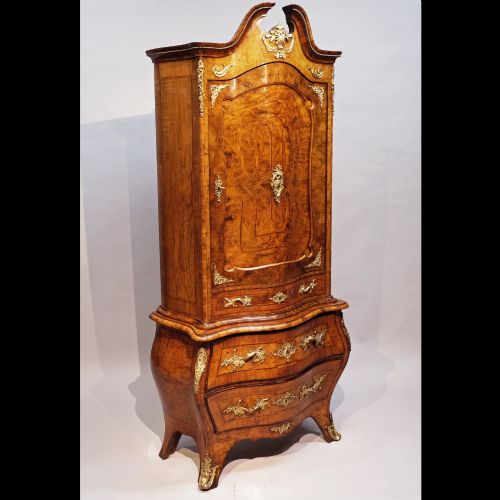
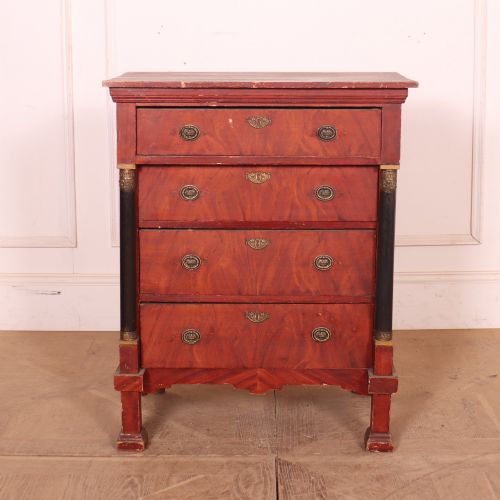
A 19th century dutch chest encompasses a range of storage forms including bombe commodes, serpentine chests of drawers, and bureau cabinets. These pieces often arrive from the nineteenth century bearing rich figurative marquetry or dark burr walnut veneers.
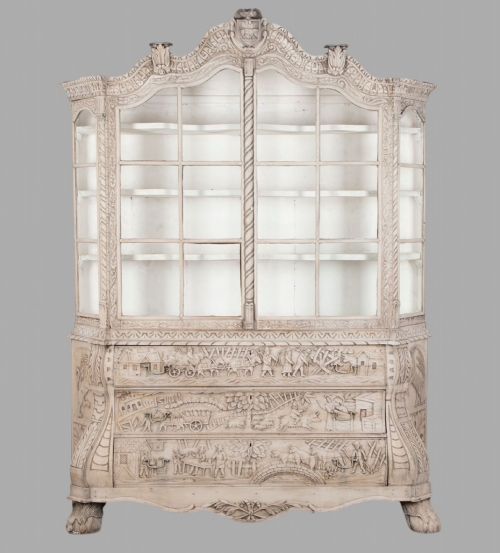
The most common form you will meet on this page is the chest of drawers or commode, frequently shaped with a distinctive swollen bombe front. Alongside these stand larger display cabinets on chests and smaller travelling variants or writing bureaux.
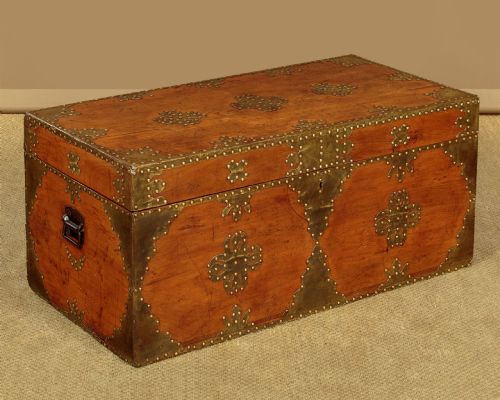
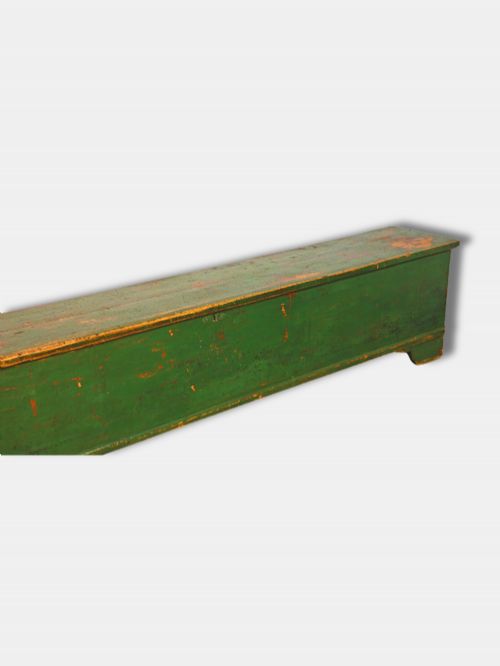
Makers utilised various regional woods, setting walnut and mahogany against oak carcasses, while colonial examples employ teak and ebony with brass mounts. The styles span from rococo revival curves to simpler country forms and empire commodes.
How they were made
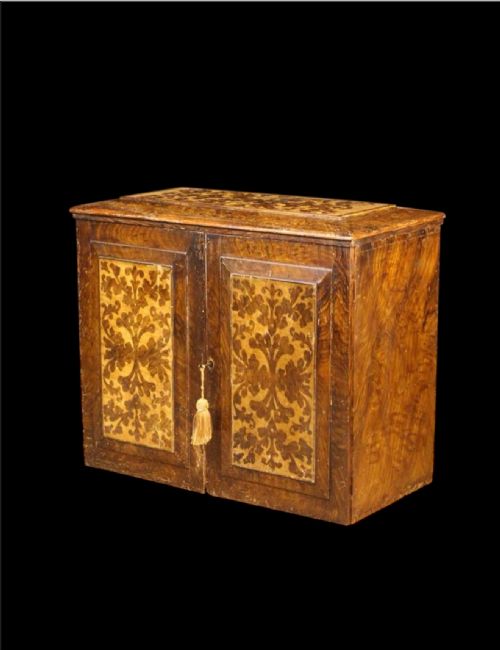
Cabinetmakers constructed the primary carcasses using sturdy timbers such as oak, pine, and mahogany to support heavy applied veneers. Drawers and panels received intricate marquetry in fruitwoods, depicting floral and foliage motifs across the surface.
Surface decoration relied heavily on contrasting veneers like burr walnut and mahogany, polished to highlight the natural grain patterns. Brass mounts, handles, and escutcheons were cast and fitted to secure corners and drawer fronts on colonial and domestic pieces alike.
Some chests hide secret compartments behind decorative marquetry drawers, built for secrets.
What varies in quality
The sophistication of the marquetry sets pieces apart, with finer examples displaying complex floral shading and crisp botanical detail across every drawer front. Simpler country versions rely on plain timber grain rather than elaborate inlay.
Structural complexity also defines the tier of a piece, distinguishing straightforward commodes from double-tier display cabinets and bombé forms requiring advanced curved joinery. The choice of primary wood, from standard mahogany to burr walnut and exotic colonial hardwoods, alters the visual weight.
The 19th Century Dutch Chest Glossary
- Bombé
- A swelling or bulging outward curvature on the front and sides of a chest or commode. This curved profile requires specialised joinery to maintain structural integrity.
- Marquetry
- Inlays of different coloured woods arranged in decorative patterns or pictures across a furniture surface. Craftsmen cut these thin veneer pieces to fit flush into the backing wood.
- Commode
- A low chest of drawers or cabinet originating from French influence on continental furniture design. In this context it often describes decorative Dutch drawer units.
- Serpentine
- A furniture front shape curving outward in the centre and inward at the sides. This fluid line appears frequently on nineteenth-century drawer units.
- Escutcheon
- A protective plate surrounding a keyhole, often cast in brass to match the drawer pulls. It serves both a functional and a decorative purpose on the timber surface.
19th Century Dutch Chest: Frequently Asked Questions
How do I clean a marquetry chest?
Dust the surface regularly with a soft, dry cloth to prevent dirt accumulation in the inlaid grain. Apply a suitable wax polish sparingly to maintain the sheen without softening the historic finish.
Avoid placing these wooden pieces near direct heat sources or strong sunlight, which can dry out the fruitwood inlays and cause the veneer to lift over time.
Where should I place a bombe chest?
Position the piece against a principal wall in a hallway or living space where its curved profile can be fully appreciated. Ensure the room maintains stable humidity levels to protect the timber and delicate marquetry.
Allow sufficient clearance around the drawers so they open smoothly without obstruction from surrounding furniture.
What is a colonial chest?
Colonial chests and trunks utilise dense regional timbers such as teak and ebony rather than standard European walnut or mahogany. These pieces often feature robust brass mounts designed for transport and maritime use.
They reflect international trade connections while retaining the functional storage capacity of domestic nineteenth-century forms.
How do I spot a bureau cabinet?
Look for a hinged writing flap that folds down to reveal small interior drawers and pigeonholes for correspondence. These hybrid pieces combine a lower chest of drawers with an upper desk compartment or display cabinet.
They offer both enclosed storage and a functional writing surface within a single vertical footprint.