

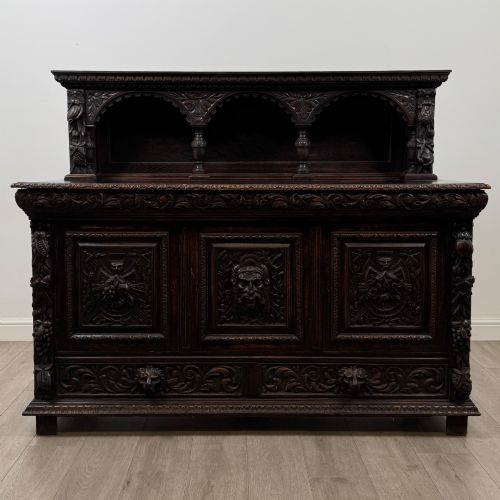
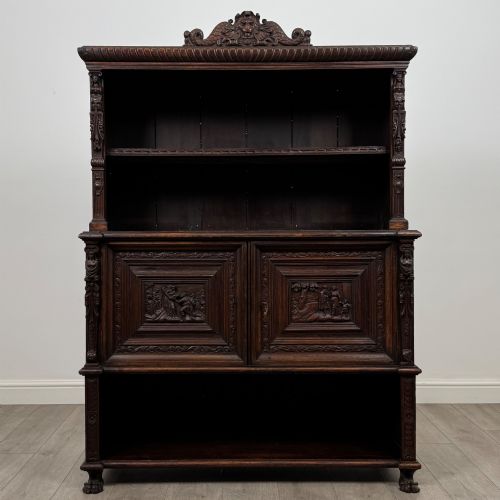


19th Century Court Cupboard
A 19th century court cupboard is a substantial and heavily carved storage piece built to anchor a dining room or hall.
19th Century Court Cupboard
A 19th century court cupboard is a robust storage piece that draws heavily on earlier historical periods. Buyers searching this phrase meet substantial sideboards, buffets, and cabinets on stand alongside traditional court cupboards.
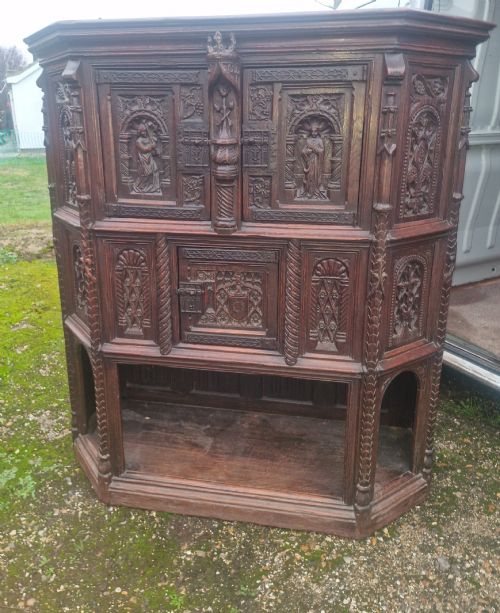
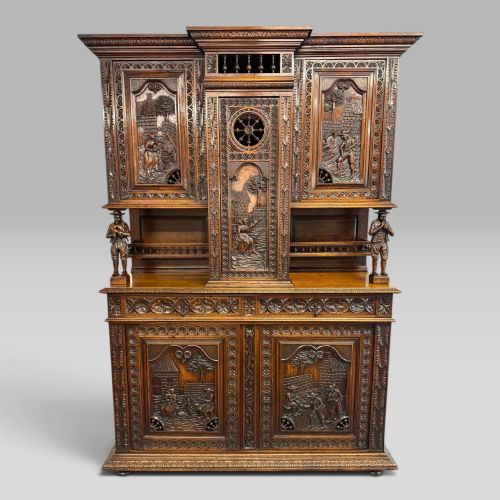
The majority of these pieces originate from the Victorian era and utilise dark timbers. Regional expressions include Welsh deuddarn forms, Flemish cabinets with lion masks, and French Breton buffets.
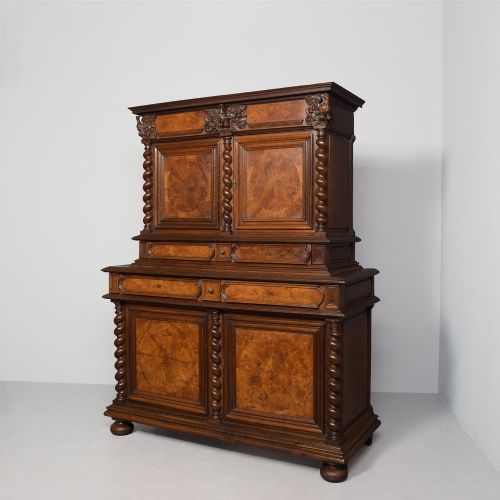
Revival styles dominate the selection, referencing Renaissance, Gothic, Jacobean, and Charles II designs. These pieces often feature tiered shelving, enclosed cupboards, and mirror backs.
How they were made
Oak is the primary material used for these pieces, supplemented by walnut and mahogany. Iron and brass hardware provide functional hinges and handles, while glass occasionally appears in cabinet doors.
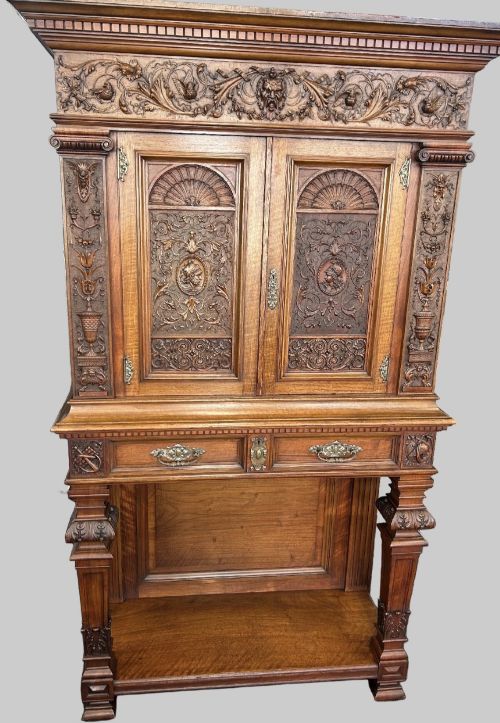
Construction relies heavily on dense carving techniques, yielding profuse ornamentation such as lion masks and Green Man motifs. Joinery supports heavy tiered structures like buffets and cabinets on stand.
19th Century Court Cupboard Retail Price Guide 2026
Typical asking prices for 19th century court cupboard among the pieces listed under this phrase on Sellingantiques today, from the lower quarter to the upper quarter. They describe what is for sale here now, not the wider market.
Listings demonstrate a strong preference for oak, supplemented by walnut and mahogany, rendered in Renaissance and Gothic revival styles.
What varies in quality
Depth and crispness of the carving distinguish finer examples from simpler workshops. Relief work ranges from shallow geometric incisions to deeply undercut figurative panels and figural masks.
The choice of timber and the ambition of the revival style dictate the status of the piece. Grand architectural proportions and named maker attributions elevate certain buffets and cabinets above standard production items.
James Shoolbred and Co·Maple and Co
The 19th Century Court Cupboard Glossary
- Court cupboard
- A traditional tiered storage piece featuring enclosed lower sections and open or recessed upper stages.
- Deuddarn
- A traditional Welsh two-tier oak cupboard originating from earlier centuries but built during the Victorian period.
- Renaissance Revival
- A style drawing on sixteenth-century architectural and decorative motifs, characterised by symmetry and heavy ornamentation.
- Gothic Revival
- An aesthetic incorporating medieval architectural elements such as pointed arches, tracery, and dark carved timber.
- Cabinet on stand
- A freestanding enclosed storage box raised upon an integrated table or leg structure.
19th Century Court Cupboard: Frequently Asked Questions
What is a 19th century court cupboard?
A 19th century court cupboard is a revival storage piece featuring heavy timber construction and tiered shelving. These items often incorporate Renaissance or Gothic motifs.
They serve as prominent storage furniture in dining rooms and large hallways, providing both surface display area and enclosed cabinet space.
How do I identify the revival style?
Revival styles are identified through specific decorative vocabulary carved into the wood. Renaissance Revival pieces show classical symmetry and lion masks, while Gothic versions use pointed arches and tracery.
Jacobean and Charles II revivals display turned supports and geometric panel moulding.
Where were these cupboards made?
These cupboards were produced across Britain and continental Europe during the nineteenth century. English workshops worked extensively in oak, while French and Flemish makers produced distinct regional forms like Breton buffets.
Italian cabinets also appear, showing individual regional sculptural techniques.
How do I care for carved oak furniture?
Carved oak furniture requires stable indoor humidity to prevent the heavy timbers from splitting. Dusting recessed carvings regularly with a soft brush keeps the deep relief clean.
Avoid placing these substantial pieces in direct sunlight or near heat sources that dry out the wood.