

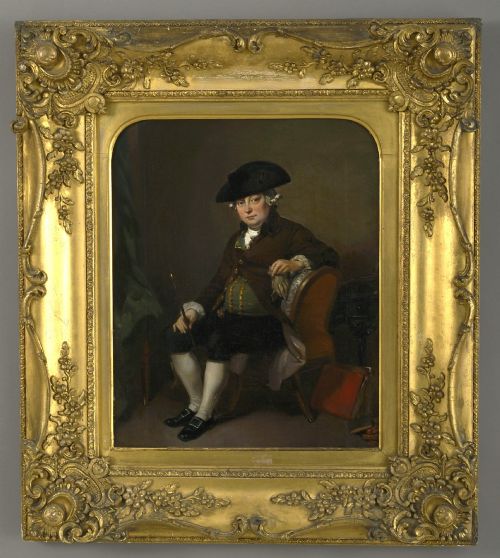


19th Century Costume
These depictions of 19th century costume capture historical attire through oil paintings, watercolours, prints, dioramas, and textiles that bring past eras into sharp focus.
19th Century Costume
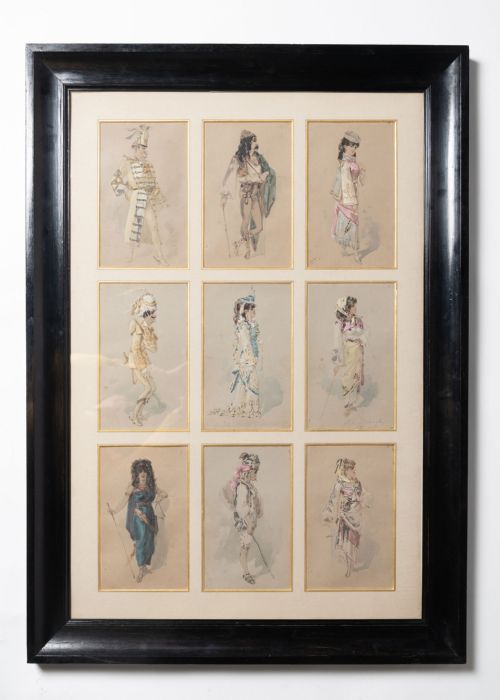
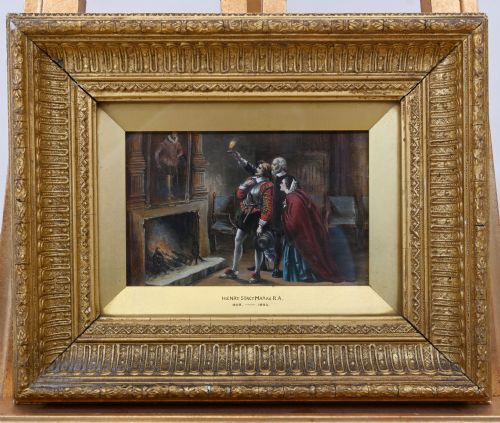
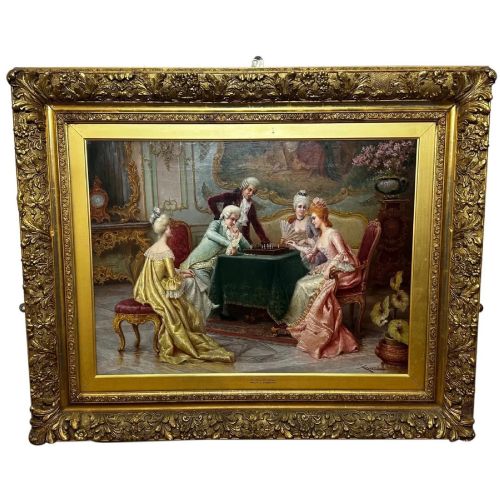
When searching for 19th century costume, collectors encounter a diverse array of artworks and objects rather than garments alone. The selections span oil paintings, watercolours, and drawings on paper, alongside framed prints, shadow box dioramas, porcelain figures, and embroidered textiles.
The physical forms include detailed depictions of actors, theatrical scenes, fashionable portraits, and genre studies. Many pieces originate from British, French, Italian, and Chinese creators, reflecting varied cultural approaches to recording dress and attire.
The periods represented stretch across the Regency, Victorian, and late Qing eras, offering varied interpretations of historical dress. Viewers will find works executed in oil on canvas or panel, watercolour, pencil, and print media, often framed in giltwood.
Materials and technique
Artists rendering 19th century costume relied on traditional painterly methods, utilising oil on canvas, wood panel, and board to build rich textures in fabric and drapery. Watercolour and pencil on paper allowed practitioners to capture delicate lace, ribbons, and fine lines with precision.
Textile works incorporate silkwork, red velvet, and silver metal thread brocade work, alongside gold embroidery on garments. Artisans also employed hand colouring on lithographs and prints to delineate specific hues of period dress.
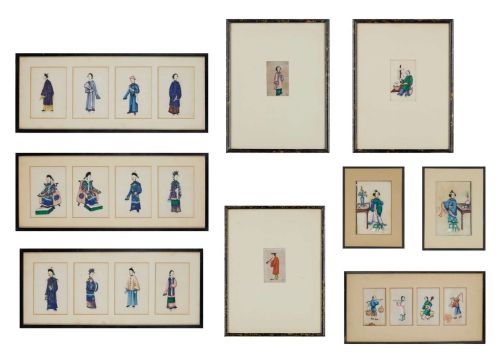
Specialised media such as pith paper paintings and shadow box dioramas demonstrate distinct regional techniques for representing theatrical and figural scenes in three dimensions.
19th Century Costume Retail Price Guide 2026
Typical asking prices for 19th century costume among the pieces listed under this phrase on Sellingantiques today, from the lower quarter to the upper quarter. They describe what is for sale here now, not the wider market.
Even King Charles Spaniels make cameo appearances, painted faithfully beside their military owners.
Assessing quality
The distinction between standard examples and superior works rests on the precision of the draughtsmanship and the handling of fabric textures. Master practitioners render the fall of silk, velvet, and lace with convincing weight and luminosity.
Compositional complexity and the psychological depth of portraiture elevate certain pieces above routine costume studies. Works executed by accomplished academic and genre painters show superior command of light, shadow, and historical accuracy.
Carlo Ferranti·Samuel De Wilde·George Kilburne·Arthur Hopkins·Robert Alexander Hillingford·Martinetti·Hans Temple·Arturo Orselli·Pierre Louis Joseph De Coninck·Willem Johannes Martens·Frederick Tayler·Marcel Brunery·Edmund Alphonse Andre·Adolphe Alexandre Lesrel·Belisario Gioja·George Perfect Harding
The 19th Century Costume Glossary
- Genre painting
- A pictorial representation of scenes from everyday life, often featuring figures in historical or contemporary costume. These works focus on narrative moments rather than formal portraiture.
- Pith paper
- A delicate material derived from the pith of the Tetrapanax papyrifer plant, used extensively for Chinese paintings. It accepts watercolour with brilliant, velvety absorption.
- Lithograph
- A printmaking method based on the chemical repulsion of oil and water on a limestone or metal plate. Hand colouring was frequently applied afterwards.
- Diorama
- A three-dimensional scene enclosed in a box, often incorporating painted backdrops and sculpted elements to create theatrical depth.
19th Century Costume: Frequently Asked Questions
What periods do these pieces cover?
The objects span the nineteenth century, drawing from Regency, Georgian, and Victorian aesthetics alongside late Qing dynasty creations.
Specific dates within the listings range from the early decades through to the turn of the twentieth century.
How should I display watercolour works?
Works on paper require protection from direct sunlight to prevent the fading of watercolours and hand-coloured prints. Framing behind conservation-grade glass preserves the integrity of the paper.
Keeping pieces away from high humidity safeguards delicate media such as pith paper.
Where did these theatrical scenes originate?
Many theatrical and genre scenes stem from European art traditions, particularly French and Italian academic studios. Chinese pith paintings offer an alternative perspective on figural subjects from the same broad era.