



19th Century Coalport
These 19th century coalport pieces are fine porcelain and bone china items that collectors prize for their rich hand-painted decoration and classical forms.
19th Century Coalport
When you search for 19th century coalport, you encounter a diverse array of English ceramics spanning tea wares, cabinet plates, vases, and serving dishes. These pieces represent the output of the Shropshire factory across the Georgian, Regency, and Victorian eras.
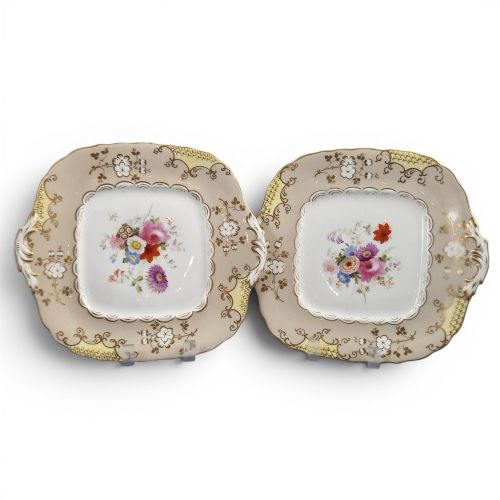
The objects most frequently met on this page include cabinet cups and saucers, decorative dessert dishes, and ornate tazzas. Such items reflect both the utilitarian tea services of the early decades and the highly decorative display pieces of the later Victorian period.
How they were made
The makers utilised porcelain and bone china as the primary body, shaping them into forms ranging from campagna urns to soup tureens. Potters applied ceramic enamel and glaze to seal the body and provide a smooth ground for subsequent painting.
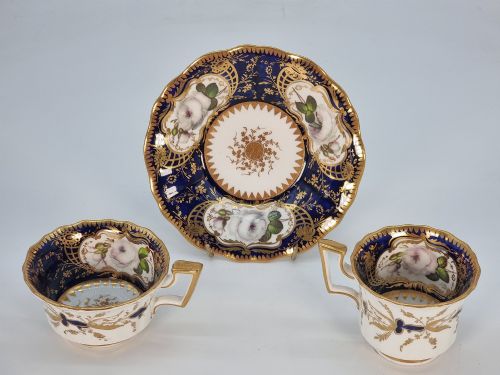
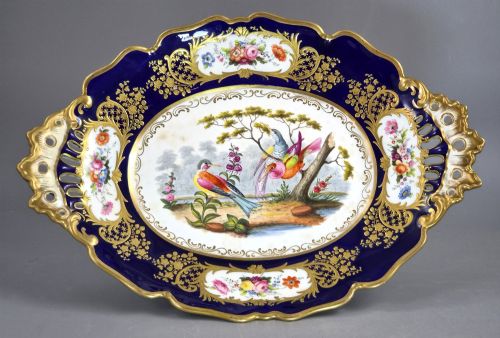
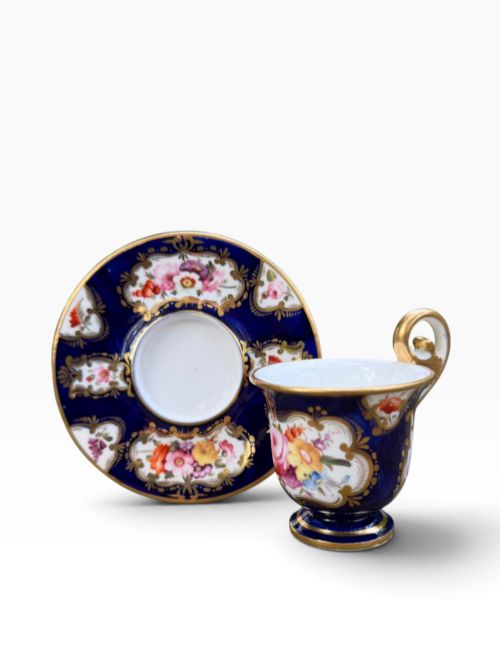
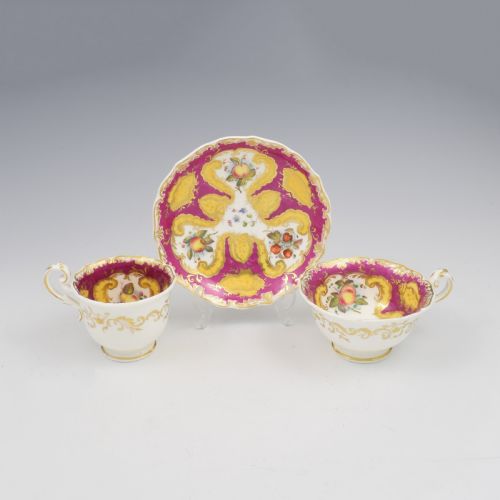
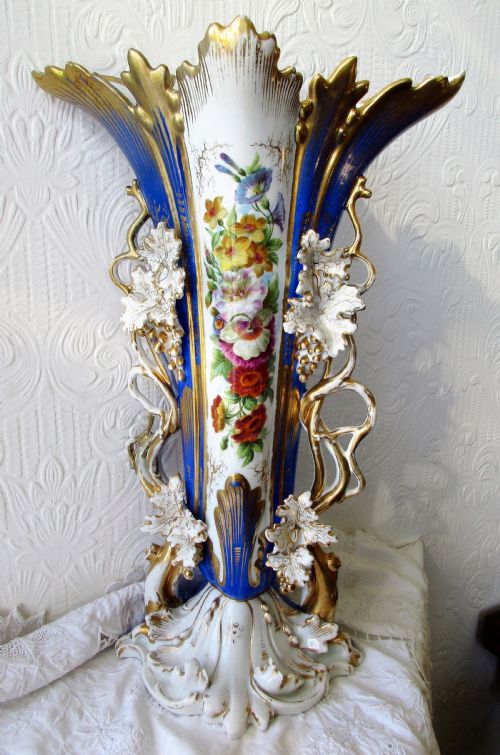
Artisans embellished the surfaces with gold leaf, gilding, and gilt accents, often combining rich cobalt blue grounds with hand-painted botanical or bird motifs. Firing in kilns set the delicate enamel colours and fixed the metallic leaf to the ceramic surface.
19th Century Coalport Retail Price Guide 2026
Typical asking prices for 19th century coalport among the pieces listed under this phrase on Sellingantiques today, from the lower quarter to the upper quarter. They describe what is for sale here now, not the wider market.
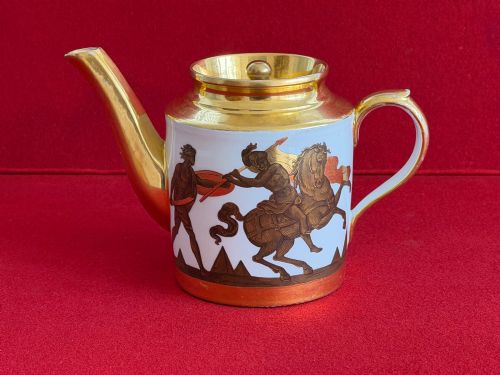
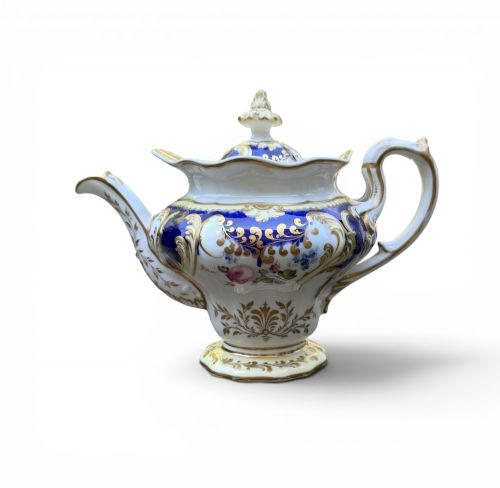
Object forms range from practical teapots, chambersticks, and slop bowls to decorative cabinet plates, tazzas, and pilgrim flasks.
What varies in quality
The distinction between ordinary and exceptional work rests upon the precision and ambition of the hand-painted decoration. Pieces featuring intricate botanical studies, elaborate gilt borders, or detailed figural scenes command greater attention than simple utilitarian wares.
The weight, translucency of the bone china, and the crispness of moulded rococo revival scrolls also determine the standing of an individual piece. Factories produced both everyday domestic pottery and exhibition-grade items, creating a wide spectrum of artistic merit.
John Rose·Thomas Dickson·Coalbrookdale
The 19th Century Coalport Glossary
- Bone china
- A type of porcelain containing bone ash, known for its bright white body and durability. It allowed English potteries to throw thin, elegant vessels.
- Cabinet plate
- A decorative ceramic plate intended for display in a cabinet rather than for dining use. These often feature elaborate hand-painted scenes and rich gilding.
- Tazza
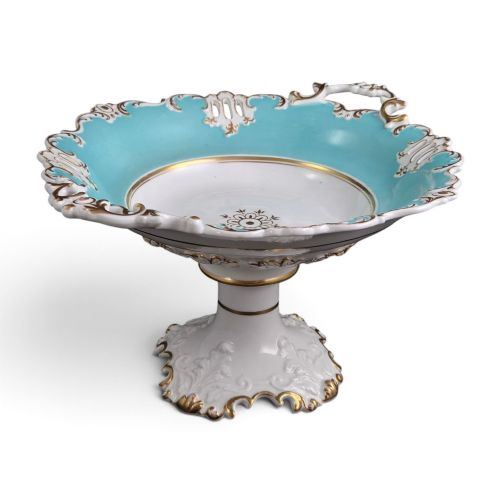
- An ornamental pedestal plate or shallow bowl raised on a central foot. They frequently appear in dessert services from the mid-nineteenth century.
- Campagna urn
- A classical vase shape modelled after ancient Roman stone vessels, featuring a wide krater bowl on a pedestal base. Coalport rendered these in porcelain with twin handles.
- Gilding
- The application of gold leaf or gold paint to ceramic surfaces for ornamentation. In nineteenth-century ceramics, this adornment highlights rims, handles, and panel borders.
19th Century Coalport: Frequently Asked Questions
How do I identify a John Rose period piece?
Pieces from the John Rose period typically date to the early decades of the nineteenth century and often display vibrant botanical paintings or rich cobalt blue grounds. Scholars and collectors look to specific paste characteristics and pattern numbers recorded from that era.
Markings on these early ceramics can be scarce or painted rather than impressed, requiring close visual comparison with documented examples from the factory.
What is a chamberstick?
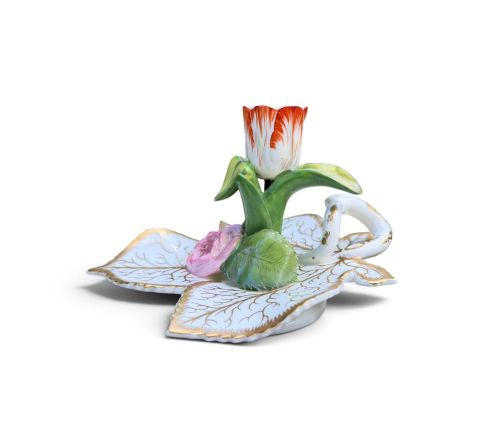
A chamberstick is a low, saucer-like candleholder equipped with a looped handle for carrying around a house at night. Potters made these practical items in porcelain alongside traditional tableware.
They often include a small socket for the candle and a shallow tray to catch melting wax during use.
What defines the rococo revival style?
The rococo revival style draws inspiration from the asymmetry and flowing scrollwork of the eighteenth-century French movement. On these ceramics, it appears as moulded C-scrolls, shell motifs, and pierced handles.
Potters combined these ornate three-dimensional forms with vibrant turquoise grounds and elaborate gilt borders during the middle Victorian decades.