




![Pen and Ink Sketch - Female Nudes by William Edward Frost [1810-1877]](https://www.sellingantiques.co.uk/photosnew/dealer_kendallhouse/dealer_kendallhouse_full_1758970795762-8493507346.jpg)

19th Century Classical Sketch
A 19th century classical sketch captures the rigorous discipline of historical academic study on paper, offering buyers direct access to period draughtsmanship.
19th Century Classical Sketch
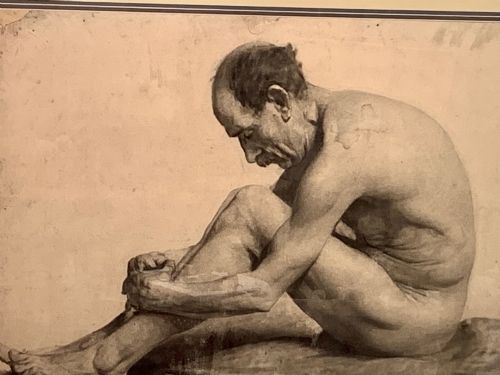
A 19th century classical sketch encompasses original works on paper, such as figure studies, academic life drawings, and architectural renderings produced during the 1800s. These pieces record the rigorous training methods of European art schools, focusing heavily on human anatomy, antique sculpture, and mythological subjects.
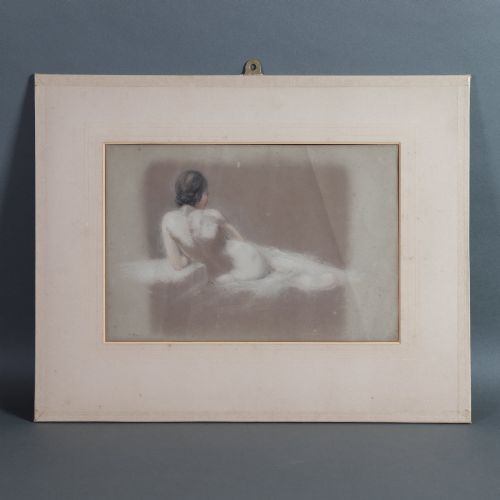
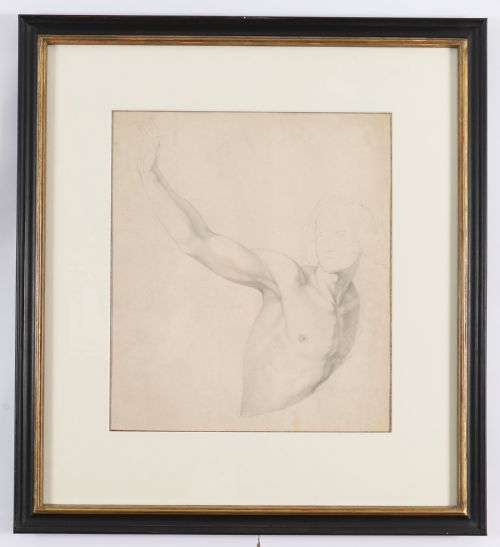
Buyers will encounter various formats, from graphite life studies of standing male nudes and ink washes after Renaissance masters to architectural drawings and allegorical scenes. The selection frequently reflects French academic traditions and English school practices from the nineteenth century.
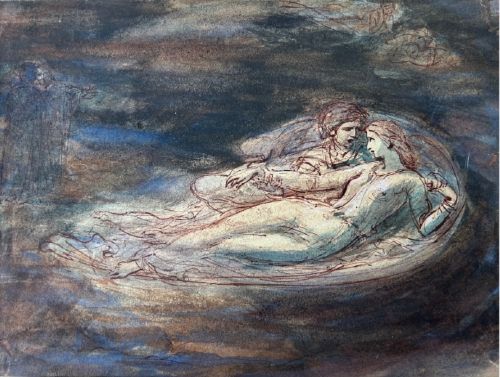
Pieces range from rapid preliminary oil studies of body parts to finished narrative compositions executed in pen, ink, and watercolour. Each item preserves the immediate hand of the artist or student working within a strict neoclassical framework.
Materials and execution
Draughtsmen and students of the period worked primarily on paper using graphite, charcoal, chalk, and ink, often enhancing their studies with watercolour, gouache, or wash. Some compositions extend to oil applied directly to paper or panel substrates.
Techniques relied on precise contour drawing and tonal modelling to render three-dimensional form, as seen in academic life studies and copies after classical sculptures or earlier masters.
Distinguishing quality in period works
Quality rests upon the sureness of the line, the accuracy of anatomical proportion, and the subtlety of tonal gradation across the paper surface. Stronger works demonstrate confident handling of shadow and light in depicting the human form or architectural detail.
The sophistication of the composition sets exceptional pieces apart from standard student exercises, distinguishing accomplished academic output from routine instructional practice.
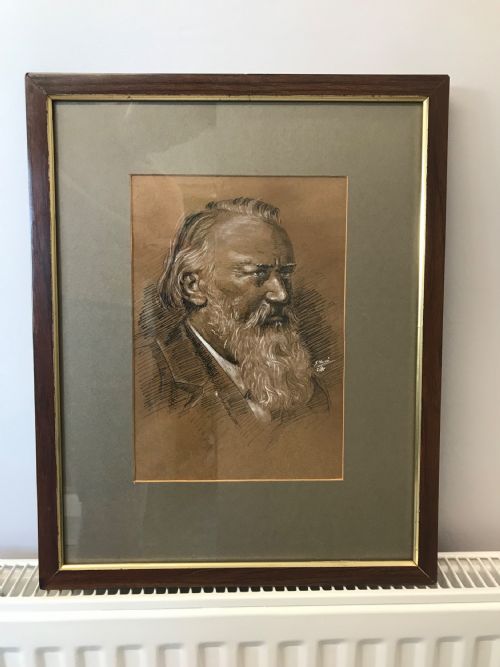
William Etty·Johannes Brahms·Henry Arthur Roberts·Pierre-Paul Prud'hon·William Edward Frost
The 19th Century Classical Sketch Glossary
- Academic realisms
- A style of painting and drawing produced under the influence of European academies of art, adhering to strict classical standards. It prioritises precise anatomy and historical subjects.
- Neoclassical
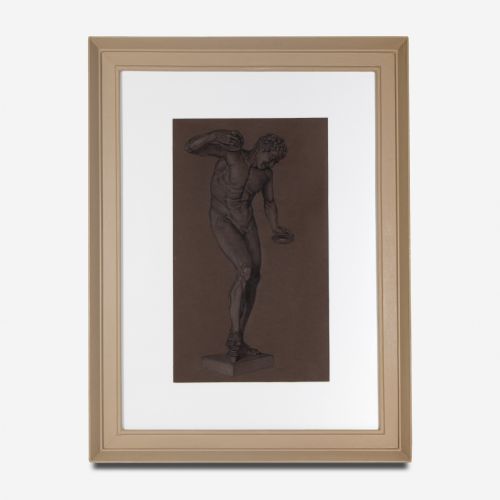
- A Western cultural movement drawing on the art of classical antiquity. In these sketches, it manifests through subjects like dancing fauns and classical statues.
- Graphite drawing
- A monochrome work created using a form of crystalline carbon. It served as the primary medium for detailed life studies and preliminary sketches.
- Wash
- A technique where ink or watercolour is diluted to create semi-transparent layers of tone. It provides depth and shadow in pen and ink compositions.
- Manner of
- A term indicating that a work is executed in the style of a specific artist, rather than by their own hand. It reflects the strong educational influence of master painters.
19th Century Classical Sketch: Frequently Asked Questions
What is a classical sketch?
A classical sketch is a drawing or study from the nineteenth century that engages with traditional academic subjects, human anatomy, or ancient art.
These works were typically created as training exercises or preparatory studies by artists and students in European schools.
How should I frame a paper drawing?
Paper works from the nineteenth century require conservation framing to protect them from light damage and atmospheric moisture. Using acid-free mounts ensures the paper and ink remain stable over time.
Keeping the drawing away from direct sunlight preserves the original graphite, ink, and watercolour pigments.
Are these works original art?
The selection includes original hand-drawn or painted studies executed directly on paper or panel by artists and students. Each piece represents a unique historical document rather than a modern reproduction.
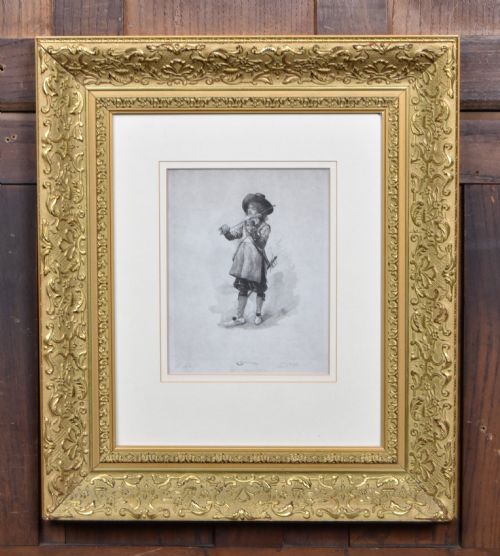
Certain listings also comprise period prints and architectural drawings produced during the same era.
How do I identify academic drawings?
Academic drawings often feature figures rendered from life, statues, or historical narratives with a strong emphasis on anatomical precision and tonal shading. Inscriptions, school stamps, or student signatures frequently provide context regarding their origin.
Such works reflect the structured curricula of nineteenth-century art institutions across Europe.