





19th Century Canterbury Table
A 19th century canterbury table is a partitioned stand designed for sheet music and periodicals, bringing practical elegance to any parlour.
19th Century Canterbury Table
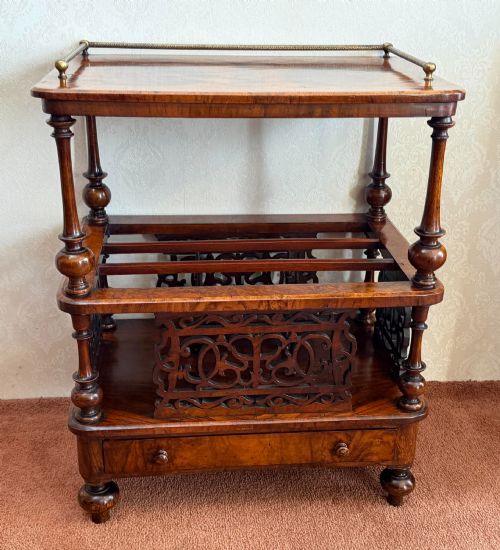
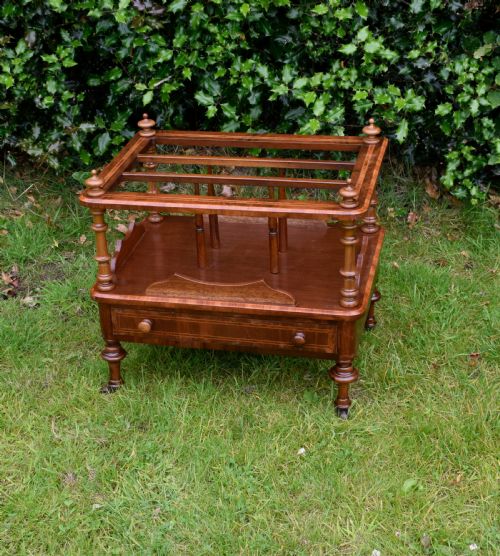
A 19th century canterbury table combines a low partitioned rack for books, music sheets or newspapers with occasional table surfaces or drawers. You will frequently encounter Victorian and Regency examples configured as whatnots, side tables, or music stands.
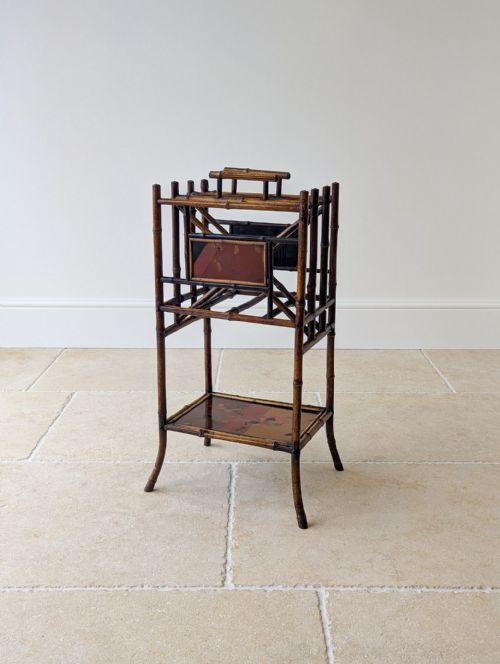
The form spans the entirety of the nineteenth century, utilising dense timbers and occasional bamboo frames. Many pieces integrate drawers at the base or upper work tops supported by turned columns.
Originating as stands for holding folios and scores near the pianoforte, these versatile pieces evolved into general tidies for the nineteenth-century drawing room. They sit low to the floor, mounted on castors to allow easy movement around the room.
How they were made
Cabinetmakers constructed these pieces primarily in figured timbers such as rosewood, walnut, and burr walnut, alongside lighter exotic materials like tiger bamboo. Artisans selected these woods for their striking grain patterns and ability to take a high polish.
Metal accents including brass fittings and ormolu mounts punctuate the timber frames, while ceramic components occasionally appear. Joinery involved traditional framing techniques to support the vertical slats that form the newspaper and music compartments.
19th Century Canterbury Table Retail Price Guide 2026
Typical asking prices for 19th century canterbury table among the pieces listed under this phrase on Sellingantiques today, from the lower quarter to the upper quarter. They describe what is for sale here now, not the wider market.
Listings feature pieces spanning the Regency and Victorian eras, showcasing walnut, rosewood, bamboo, and ceramic materials.
What varies in quality
The standard of timber selection largely defines the quality of a 19th century canterbury table, with highly figured burr walnut and rich rosewood sitting at the upper end. Plain utility timbers occupy a different tier of craftsmanship.
Structural complexity also dictates value, distinguishing simpler open racks from elaborate burr walnut whatnots featuring integrated work tops, carved details, and fitted drawers. The delicacy of the turned columns and the precision of the fretwork slats further separate standard pieces from finer workshop productions.
Melissa White
The 19th Century Canterbury Table Glossary
- Canterbury
- A low stand with vertical partitions designed for holding sheet music, newspapers, or portfolios. The name derives from the Archbishop of Canterbury who commissioned the first such piece for holding music scores.
- Whatnot
- A piece of open shelving furniture with multiple tiers used for displaying ornaments or holding books. In combination with a canterbury, it provides upper surface space above the partitioned rack.
- Ormolu
- Gilded bronze ornamentation applied to furniture, popular in French and English decorative pieces during the nineteenth century. It provides metallic contrast against dark woods like rosewood and walnut.
- Burr walnut
- Timber taken from the gnarled growths of walnut trees, yielding intricate, swirling grain patterns highly prized by cabinetmakers. It appears frequently on finer Victorian versions of these stands.
- Tiger bamboo
- Bamboo exhibiting natural dark mottled markings resembling tiger stripes, utilised during the Aesthetic Movement. Pieces made from this material bring an exotic, lighter texture to the form.
19th Century Canterbury Table: Frequently Asked Questions
What was a canterbury table used for?
These tables served primarily as dedicated holders for sheet music near pianos, as well as tidy stands for daily newspapers and periodicals in the drawing room. The partitioned base kept unbound papers upright and sorted.
Many examples also doubled as small side tables or work tables equipped with drawers for sewing accessories and stationery. This multi-functional design made them indispensable items of parlour furniture throughout the Victorian and Regency periods.
How do I date a canterbury table?
Dating relies heavily on stylistic cues, wood choices, and construction methods characteristic of different decades within the nineteenth century. Regency examples often display cleaner classical lines in rosewood, whereas mid-Victorian pieces lean towards ornate burr walnut and carved details.
Later nineteenth-century pieces, particularly from the Aesthetic Movement, frequently utilise bamboo and lacquer finishes. Examining the turning of the legs and the style of the brass castors also helps narrow down the period of manufacture.
Where should I place a canterbury table at home?
A canterbury table works exceptionally well beside a sofa, armchair, or piano where its lower compartments can hold current reading material or sheet music. Its compact footprint allows it to sit neatly in tight corners or narrow hallways.
The flat top surface provides a convenient spot for a small lamp, drinks, or decorative objects. Because they are typically low to the ground and mounted on castors, they remain easy to reposition as needed.
Are all canterbury tables made of wood?
While the majority of nineteenth-century examples utilise traditional hardwoods like walnut, rosewood, and mahogany, alternative materials certainly exist. The Aesthetic Movement introduced lightweight pieces constructed from bamboo and finished with lacquer.
Additionally, many pieces incorporate metal elements such as brass handles, ormolu mounts, and ceramic details on their castors. The interior linings and drawer pulls further introduce mixed media to the overall design.