



19th Century Book Set
A 19th century book set brings tactile history to your shelves, offering uniformity in binding alongside centuries of literature and philosophy.
19th Century Book Set
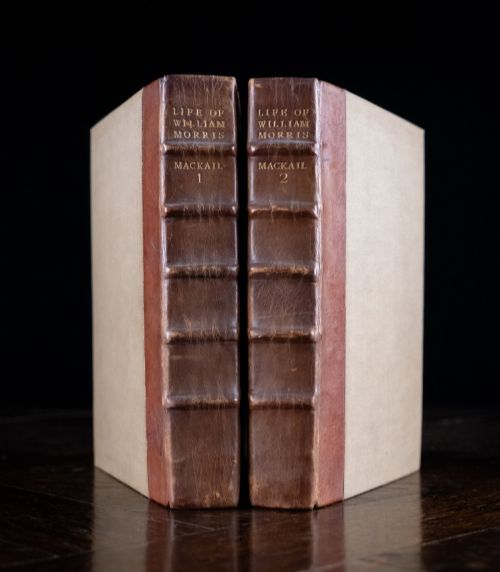
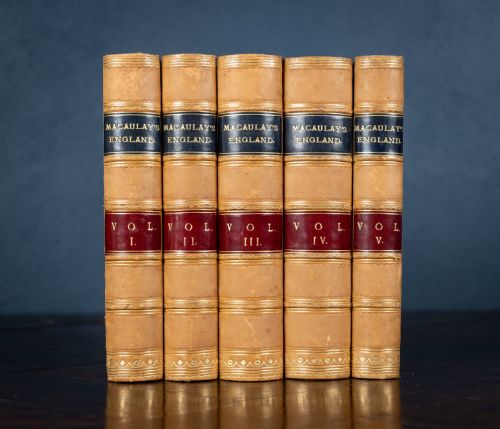
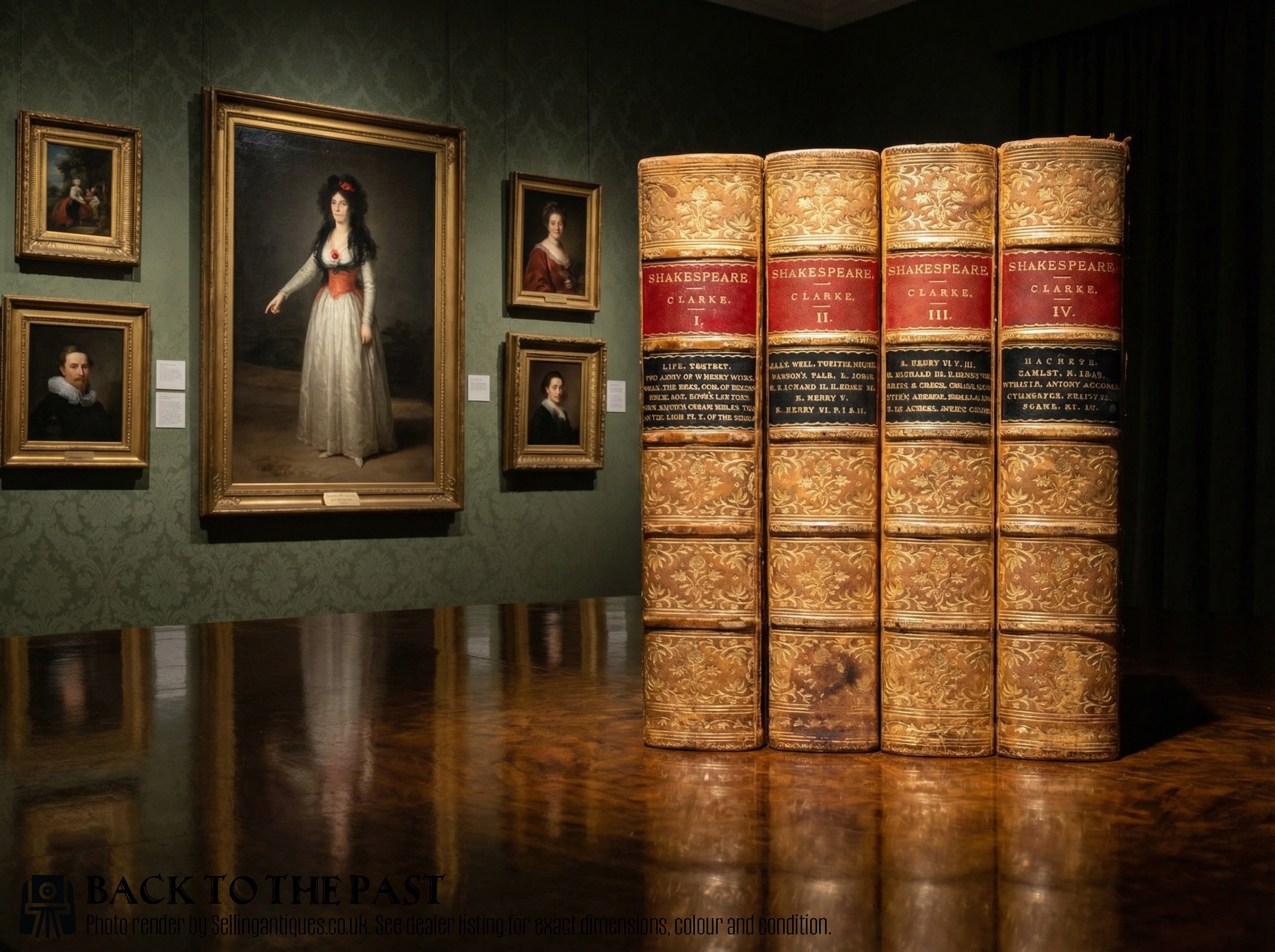
When you search for a 19th century book set, you encounter multi-volume collections of poetry, history, novels, and philosophical works spanning the Victorian and Neoclassical eras. These multi-volume groupings range from complete Shakespeare plays to extensive editions of Walter Scott or historical texts by Macaulay.
The versions most common on this page are uniformly bound volumes designed to sit together harmoniously on library shelves. Alongside actual bound texts, the selection encompasses related library furniture and decorative accessories such as oak steps, games boxes, and revolving bookcases.
Materials and binding techniques
Binders utilised durable materials such as calfskin, vellum, cloth, and leather to protect the paper pages within, frequently finishing spines and covers with tooling in gold leaf. Many sets received uniform rebinding to ensure matching appearances across multiple volumes.
Beyond paper and leather, cabinetmakers worked with woods like rosewood, boxwood, oak, walnut, and coromandel to construct the accompanying library steps, desks, and revolving bookshelves that housed these collections.
Listings feature materials spanning leather, vellum, calfskin, and rosewood across the Victorian and Neoclassical styles.
Distinctions in quality
The grade of a 19th century book set depends heavily on the integrity of the original bindings and the uniformity of the set's appearance. Sets that retain their original matched publisher bindings or high-end bespoke leather coverings command greater interest than mismatched volumes forced into a group later.
Condition of the paper, legibility of the gold leaf tooling on the spines, and the presence of original illustrations by artists such as Gustave Dore elevate specific editions. For accompanying library furniture and desk sets, the quality rests in the joinery, timber selection, and intact metal mounts.
The 19th Century Book Set Glossary
- Vellum
- A fine parchment made from calfskin, used historically for durable and luxurious book covers. It provides a smooth, pale surface that ages with a distinctive warmth.
- Calfskin
- A soft, supple leather derived from the skin of a calf, frequently employed for high-end Victorian bookbindings. It takes gold tooling exceptionally well.
- First Edition
- The earliest printed appearance of a work bearing those specific typesetting plates. Collectors prize these for their textual primacy.
- Gold Leaf
- Gold beaten into an extremely thin sheet, utilised for lettering and decorative stamping on book spines. It prevents tarnishing and catches ambient light.
- Neoclassical
- A style rooted in classical antiquity influencing the arts and book design during the early part of the period. It prioritises symmetry, restraint, and classical motifs.
19th Century Book Set: Frequently Asked Questions
How do I care for leather bound books?
Keep leather bound volumes away from direct sunlight and fluctuating radiator heat to prevent the skin from drying and cracking.
Ensure adequate ventilation around your bookshelves to avoid moisture buildup that attracts mould to paper and bindings.
Are these sets complete?
Many listings specify completeness, such as four-volume Shakespeare sets or multi-part historical works, while others offer a curated selection from a larger series.
Read the individual title descriptions carefully to confirm whether all original volumes of a particular publication are present in the set.
Can I read these antique books?
Most volumes remain entirely readable, containing nineteenth-century typography, pre-digital typesetting, and occasional period illustrations.
Handle older paper and delicate bindings with care to preserve the structural integrity of the spine during reading.
How do I identify the date of a book set?
Check the title page for printed publication dates or examine preface inscriptions left by nineteenth-century owners.
Stylistic cues in the leather tooling and typeface often help narrow down the decade of publication when explicit dates are absent.