




1960s Gold Statement Ring
A 1960s gold statement ring delivers bold mid-century design, vibrant gemstones and heavy precious metal that commands attention on the hand.
1960s Gold Statement Ring
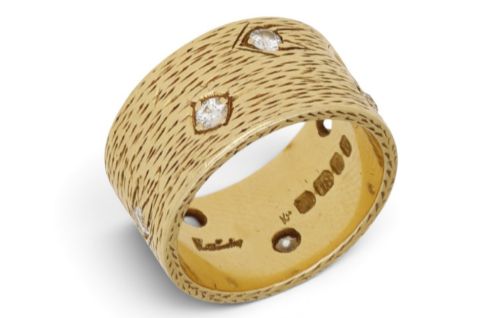
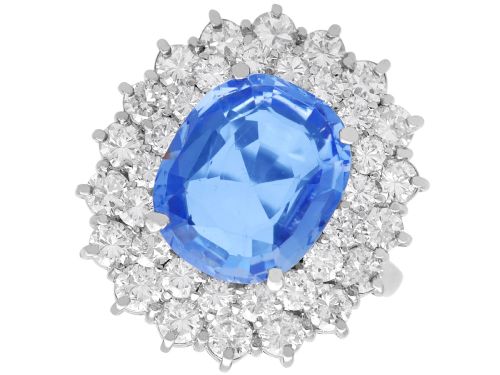
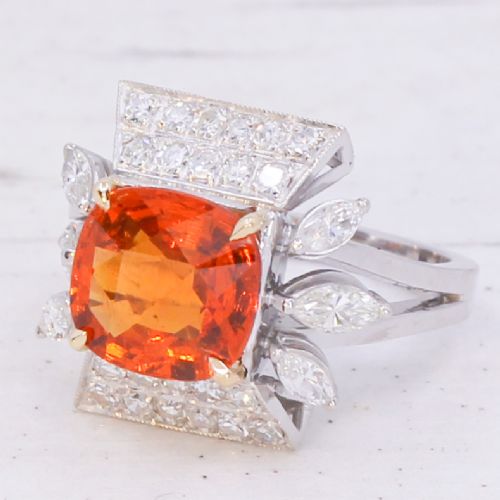
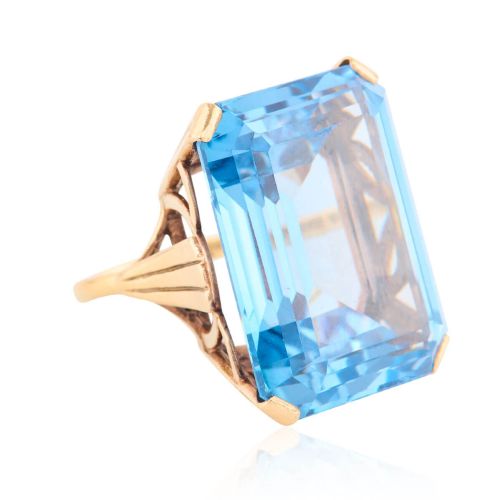
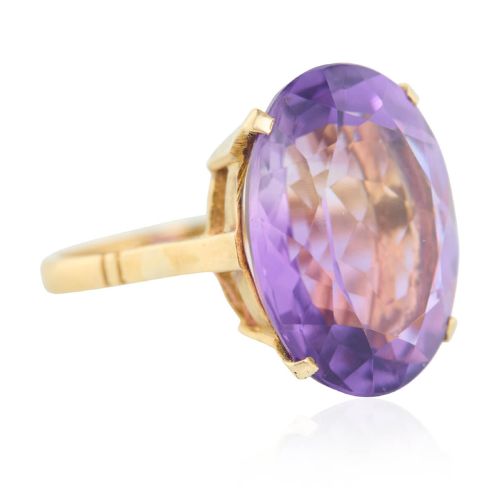
When you search for a 1960s gold statement ring, you encounter striking cocktail pieces and bold dress rings designed to catch the eye. The selection centres heavily on the 1960 and 1950 periods, featuring mid-century, modernist and retro styles alongside occasional Edwardian examples.
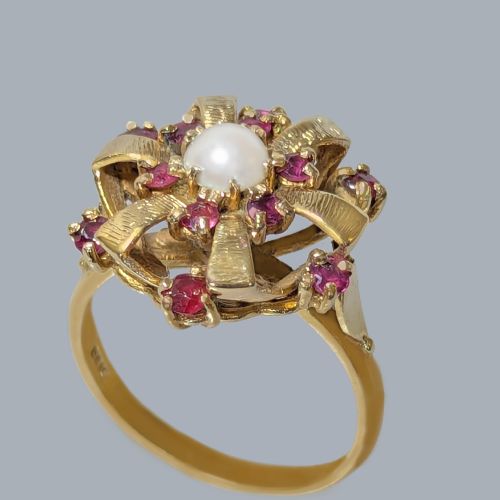
Makers utilised impressive centre stones, mounting large aquamarines, garnets, amethysts and emeralds into substantial yellow gold, white gold or platinum settings. These rings span simple single-stone solitaires to intricate cluster, ballerina and open-work configurations.
How they were made
Workshops fashioned these rings primarily in 9ct and 18ct gold, alongside white gold, platinum and occasional 14ct variations. Gemstones such as diamonds, sapphires, rubies, turquoise, coral and paste were secured using claw, cluster and lattice settings.
Techniques combined traditional casting with open-work scroll design and multi-stone arrangement. Italian and French makers applied distinct regional flair, incorporating interchangeable elements or structured ballerina silhouettes.
French jewellers during this era occasionally built rings with interchangeable bead stones, letting the wearer swap their gems on a whim.
What varies in quality
Quality rests upon the scale, weight and clarity of the primary gemstones, from massive aquamarines and tourmalines down to detailed diamond clusters. The heft of the gold setting and the intricacy of the metalwork, such as lattice or scrolled open work, dictate the overall calibre.
Design execution separates standard production from exceptional mid-century modernist examples. Pieces featuring certified natural emeralds, substantial sapphire carats or complex multi-stone configurations represent the upper tier of the range.
The 1960s Gold Statement Ring Glossary
- Cocktail Ring
- A large, prominent ring worn to evening social events, usually featuring oversized central gemstones surrounded by diamonds.
- Ballerina Ring
- A distinctive cluster setting where tapered baguettes or smaller stones surround a central gem like a tutu.
- Paste
- Hand-cut lead glass utilised to imitate genuine gemstones, popular in period dress jewellery for vibrant colour.
- Solitaire
- A ring mounting a single dominant gemstone without supporting side stones.
- Lattice
- An open-work metal design forming an intersecting grid pattern across the face of the ring.
1960s Gold Statement Ring: Frequently Asked Questions
What defines a 1960s gold statement ring?
These pieces are characterised by generous proportions, heavy gold or white gold usage and prominent central gemstones. They reflect the experimental design ethos of the mid-century period.
Buyers encounter massive aquamarines, tourmalines, garnets and emeralds framed by structured diamond work or open-work scrolling.
How do I wear a cocktail ring?
A cocktail ring is traditionally worn on the right hand to draw attention during evening gatherings. Their substantial size makes them the focal point of any handwear.
Pair them with simple attire to let the mid-century design and coloured stones stand out without competition.
Are these rings solid gold?
The listings comprise pieces fashioned from solid 9ct, 14ct and 18ct yellow and white gold, alongside platinum settings. Hallmarks often confirm the metal purity and production year.
Weight varies depending on whether the design uses a hollowed shank or a solid cast mounting.
How do I identify a modernist style?
Modernist rings from this era abandon traditional floral motifs in favour of abstract geometry, asymmetric lines and textured metal. Lattice work and freeform clusters typify the look.
Italian and French pieces often display particularly adventurous use of shape and stone arrangement.