


1930s Vanity Seat
A 1930s vanity seat brings distinct Art Deco style and compact seating to a dressing room or bedroom.
1930s Vanity Seat
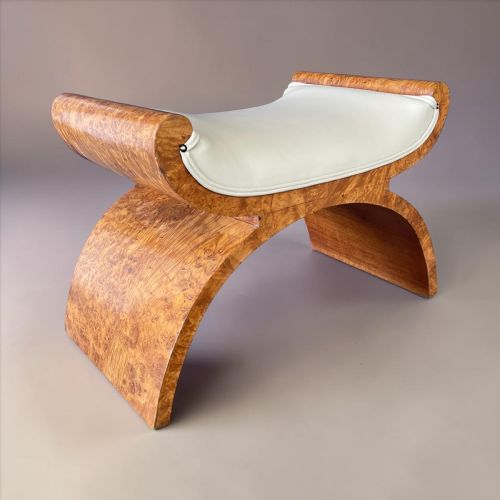
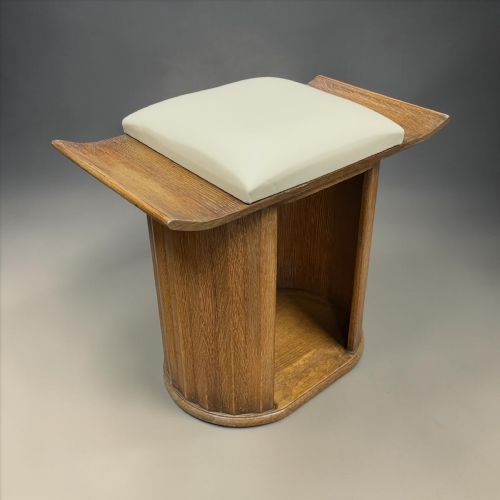
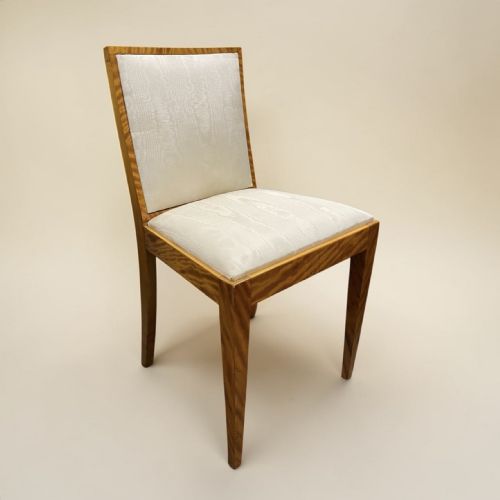
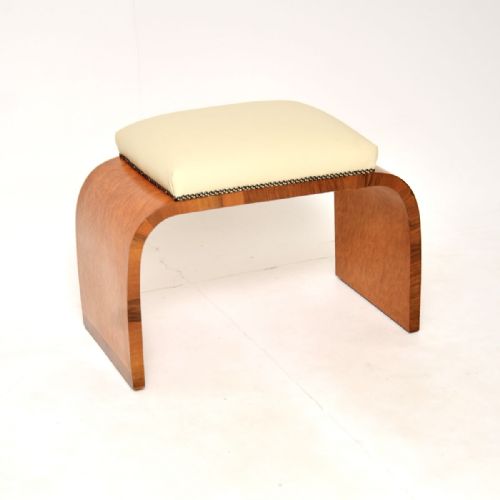
A 1930s vanity seat encompasses dressing table stools, bedroom chairs, and piano stools produced during the period. These seating forms range from simple rectangular stools to drum-shaped designs incorporating internal storage compartments.
The objects stem from English makers and workshops working within the Art Deco style. Buyers meeting these pieces on this page will frequently encounter compact wooden frames paired with upholstered tops.
Forms vary from standard upholstered stools to specialised seating created for specific events, such as coronation stools. Each variant serves the dressing table or bedroom with characteristic interwar proportions.
How they were made
Cabinet makers utilised a selection of native and exotic woods for the frames, including burr walnut, birds eye maple, sycamore, and oak. These timber surfaces display prominent grain patterns typical of interwar cabinet making.
Upholstery materials applied to the seats consist of leather, velvet, and various fabric covers. New top covers frequently replace worn original textiles while retaining the underlying wooden structure.
Object forms span standard dressing stools, drum-shaped storage pieces, and coronation furniture.
What varies in quality
The grade of timber veneer and the complexity of the frame construction set pieces apart. Drum-shaped designs with integrated storage require more intricate carpentry than basic rectangular frames.
Attribution to known workshops or cabinet makers elevates the standing of a piece within the period. The choice of decorative wood veneers, such as burr walnut or birds eye maple, distinguishes standard production from finer work.
Harry and Lou Epstein·Bath Cabinet Makers·B. North and Son
The 1930s Vanity Seat Glossary
- Art Deco
- A design style characterised by sleek lines, geometric forms, and modern materials popular during the interwar years. It dominates the aesthetic of furniture from this decade.
- Burr Walnut
- A figured wood veneer taken from the growth on a walnut tree, prized for its swirling patterns. Cabinet makers applied it to prominent surfaces for visual impact.
- Birds Eye Maple
- A maple timber showing small characteristic dots or swirls resembling tiny eyes. This light-coloured wood appears frequently in interwar bedroom furniture.
- Dressing Table Stool
- A low seat designed specifically to sit comfortably beneath a dressing table. These stools often feature upholstered tops covered in leather or fabric.
1930s Vanity Seat: Frequently Asked Questions
What is a 1930s vanity seat?
A 1930s vanity seat is a small piece of bedroom seating designed to accompany a dressing table. These items include stools and low chairs made during the Art Deco period.
They provide functional seating that fits neatly beneath vanity tables. Many examples incorporate upholstered tops in leather or fabric for comfort.
How do I use a vanity seat?
These seats belong primarily in a bedroom or dressing room placed in front of a dressing table. Certain variants with internal storage also hold small bedroom items.
Their compact proportions allow them to slide completely under table overhangs when not in use. They function equally well as standalone piano stools in living spaces.
How do I clean leather upholstery?
Leather upholstery requires gentle cleaning with a damp cloth and mild soap to preserve the material. Avoid harsh chemical cleaners that strip natural oils from the hide.
Conditioning the leather periodically maintains flexibility and prevents surface cracking. Check whether the leather is original or a modern replacement before applying treatments.
How do I identify Art Deco furniture?
Art Deco furniture displays clean geometric lines, streamlined silhouettes, and striking wood veneers. Pieces from this era often utilise burr walnut, sycamore, or birds eye maple.
Ornate carving gives way to smooth polished surfaces that highlight natural wood grains. Maker marks or stamps underneath wooden frames sometimes confirm attribution.