

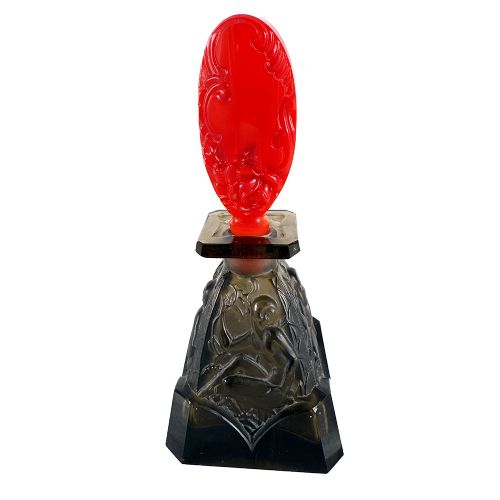


1930s Vanity Scent Bottle
These 1930s vanity scent bottle options bring functional Art Deco elegance to a dressing table.
1930s Vanity Scent Bottle
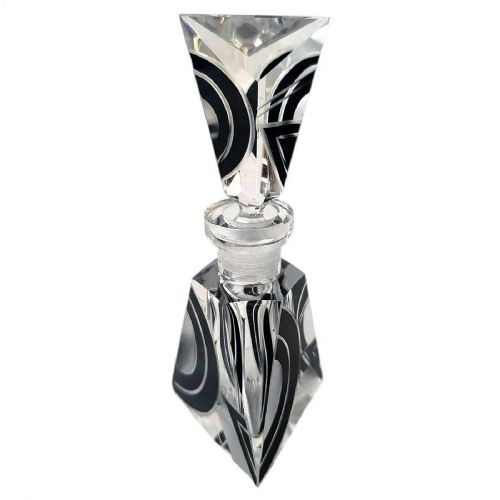
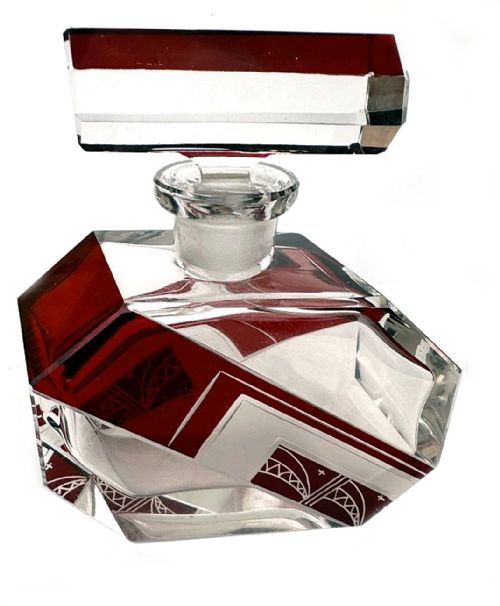
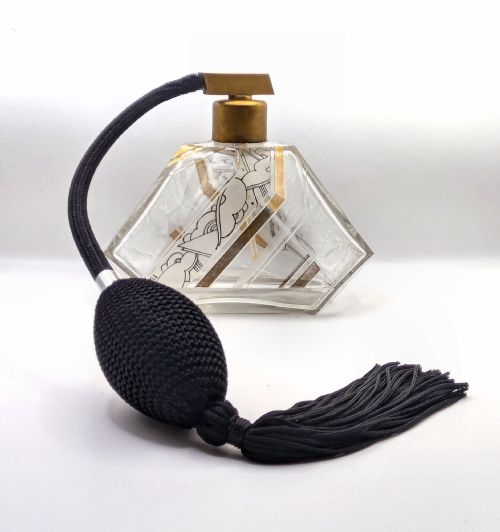
A 1930s vanity scent bottle typically adopts the bold geometric lines of the Art Deco style, originating predominantly from makers in France and Czechoslovakia. These pieces range from simple perfume bottles to complex atomisers equipped with sprays and stands.
Buyers will frequently encounter glass vessels shaped as globes or moulded cylinders, often paired with matching powder boxes or complete vanity sets. The aesthetic relies heavily on symmetry, sharp angles, and stylized motifs characteristic of the period between the wars.
Materials and construction methods
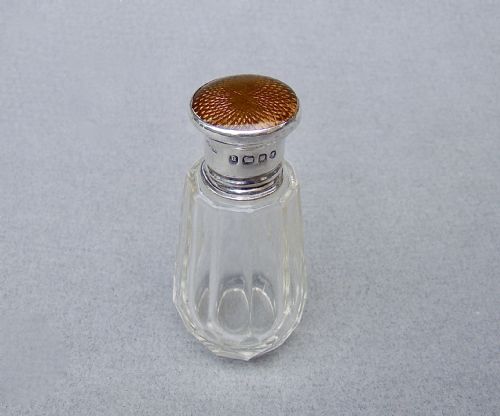
Makers utilised heavy cut crystal, opalescent glass, and moulded glass to form the main bodies of these vessels, sometimes adding fabric elements to atomiser mechanisms. Surface decoration frequently incorporated sterling silver mounts and colourful enamel work.
Chrome plating provides metallic contrast on atomiser hardware and collars, anchoring the glass components within a functional metal framework. Artisans combined precision glass-cutting techniques with hand-applied enamel and metal casting.
Listings feature glass, enamel, chrome, fabric, opalescent glass, cut glass, crystal, and sterling silver across the 1920 and 1930 periods.
Factors influencing execution and grade
The precision of the glass cutting and the clarity of the crystal distinguish standard production pieces from the output of notable designers and workshops. Crisp geometric facets and heavy, substantial glass weight indicate superior craftsmanship.
The integrity of applied enamel and the retention of original sterling silver or chrome hardware affect the overall standard of preservation. Pieces retaining functioning atomiser bulbs and undamaged metal collars demonstrate higher build quality.
Karl Palda·Henry Perkins·Rene Lalique·Rudolf Hlousek·Hermanova·Sabino
The 1930s Vanity Scent Bottle Glossary
- Atomiser
- A perfume bottle fitted with a spray mechanism, typically utilising a rubber bulb and fabric-covered mesh hose to disperse scent in a fine mist.
- Guilloche enamel
- A decorative technique where intricate geometric patterns are mechanically engraved beneath a translucent layer of coloured enamel.
- Opalescent glass
- A milky, semi-translucent glass type that displays shifting colour tones, often catching light with a characteristic blue or amber glow at the edges.
- Vanity set
- A coordinated collection of dressing table accessories, frequently including perfume bottles, powder boxes, and atomisers presented together.
1930s Vanity Scent Bottle: Frequently Asked Questions
What is a 1930s vanity scent bottle?
A 1930s vanity scent bottle is a glass or crystal container designed to hold perfume on a dressing table during the Art Deco period. These items were produced in various forms, including stoppered bottles and atomisers with spray mechanisms.
Many examples incorporate coloured glass, enamel decoration, and sterling silver mounts. They reflect the design trends of the interwar years, prioritising geometric shapes and decorative functionality.
How do perfume atomisers work?
Perfume atomisers use a squeeze bulb connected to a fabric-covered tube to force air across a small internal pipe. This action draws the liquid up from the bottle and disperses it as a fine spray.
In vintage pieces, the rubber components inside the bulb often degrade over time. Many surviving examples serve a primarily decorative purpose unless the internal mechanics have been restored.
How should I clean a vintage scent bottle?
Cleaning requires gentle handling, particularly around silver mounts, painted enamel, and delicate glass surfaces. Warm water and mild soap are generally sufficient for the glass interior, avoiding harsh scrubbing.
Metal components and enamel work should be kept dry to prevent corrosion or lifting. Harsh chemical cleaners can strip the original finish from chrome and silver.