
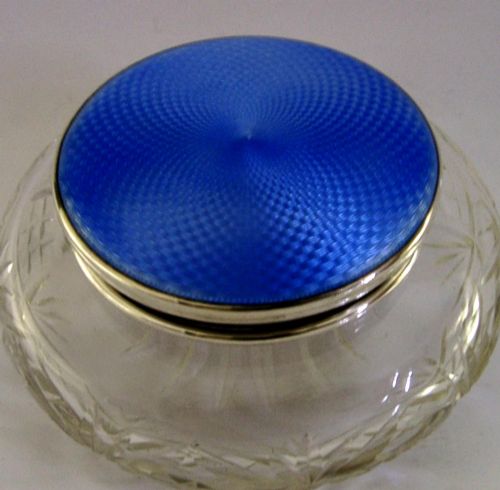


1930s Vanity Powder Jar
A 1930s vanity powder jar brings dressing table elegance into a modern room through bold geometric lines and charming figural lids.
1930s Vanity Powder Jar
A 1930s vanity powder jar combines utility with display, serving as a container for loose cosmetic powder upon a dressing table. When exploring this selection, buyers encounter various forms including trinket boxes, dressing table bowls, and perfume vanity sets.
The dominant style across these pieces is Art Deco, capturing the characteristic geometric precision and modernist flair of the period. Many examples incorporate figural elements on the lid, such as flapper girls, bathing belles, jesters, and pierrots.
Origins span across England, France, Germany, and Austria, reflecting diverse regional ceramic and metalworking traditions. French and German potteries feature prominently alongside English sterling silver and guilloche enamel pieces.
Materials and construction
Ceramic and porcelain form the body of many powder boxes, often shaped into figural half dolls or bowls and finished with glaze. Enamel and sterling silver are frequently applied to lids, creating colourful surfaces paired with cut glass or crystal bases.
Guilloche enamel techniques provide intricate geometric patterns beneath translucent coloured layers on silver mounts. Gilt and gold leaf details highlight ceramic and glass surfaces, completing the decorative effect typical of the era.
Current listings feature porcelain, ceramic, sterling silver, glass, and enamel spanning various European origins.
Evaluating quality and craftsmanship
Quality rests upon the crispness of the mould and the hand-painted or enamelled details upon the ceramic and metal surfaces. Pieces featuring named makers or distinct regional origins display finer modelling in the figural lids.
The integration of materials determines distinction, where heavy cut glass and solid sterling silver mounts exhibit superior weight and durability. The clarity of the enamel work and the preservation of gilt highlights separate standard utilitarian boxes from finer display objects.
Fasold and Stuach·Limoges
The 1930s Vanity Powder Jar Glossary
- Guilloche enamel
- A decorative technique involving precise mechanical engraving beneath translucent enamel. It creates repeating geometric patterns across metal surfaces.
- Half doll
- A porcelain figure modelled from the waist up, traditionally mounted onto powder puffs, brushes, or box lids. These figures often depict stylized flappers or Pierrots.
- Sterling silver
- A silver alloy containing substantial pure metal content, commonly marked on dressing table accessories made in Birmingham. It provides durable structure and polish.
- Flapper girl
- A cultural archetype of the decade representing modern, independent youth, frequently depicted on ceramic powder box lids. The design captures contemporary fashion and hair styling.
- Trinket box
- A small container utilised for storing jewellery or small accessories on a dressing table. These share construction materials with larger powder bowls.
1930s Vanity Powder Jar: Frequently Asked Questions
What is a 1930s vanity powder jar used for?
These jars held loose cosmetic powder for application during daily grooming routines at a dressing table. They functioned as both functional containers and decorative ornaments.
Today, they serve equally well on a modern dressing table for holding small accessories or simply as display objects.
How do I identify an Art Deco powder jar?
Look for geometric motifs, stylized figural lids depicting flappers or bathing belles, and clean lines characteristic of the period. Materials commonly include glazed ceramic, cut glass, and enamelled silver.
Origin marks stamped on the base often indicate manufacture in France, Germany, Austria, or England.
What materials were used for these jars?
Ceramic and porcelain form the primary bodies, often finished with detailed glazes and hand-painted figural elements. Lids and mounts frequently incorporate sterling silver, guilloche enamel, and glass.
Gilt and gold leaf accents are also common across the available selections.
Where were these powder jars made?
Production was widespread across Europe during the interwar period, with distinct contributions from English silversmiths in Birmingham. Continental workshops in France, Germany, and Austria produced the majority of the ceramic figural boxes.
Regional styles often reveal themselves through the specific glazing and moulding techniques employed.