

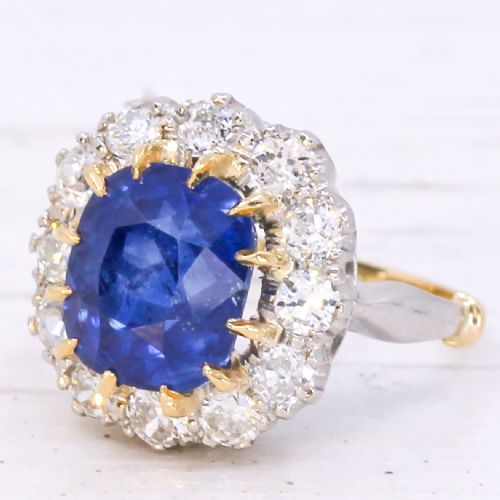
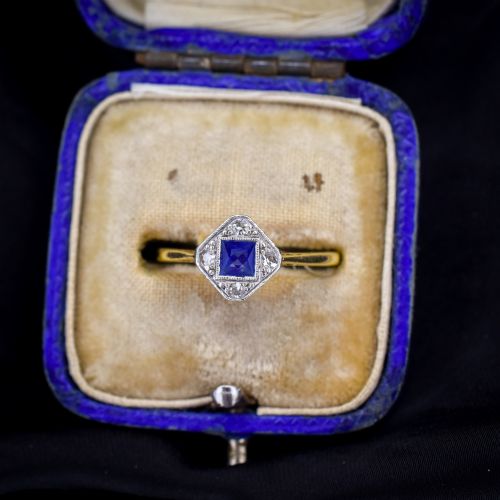
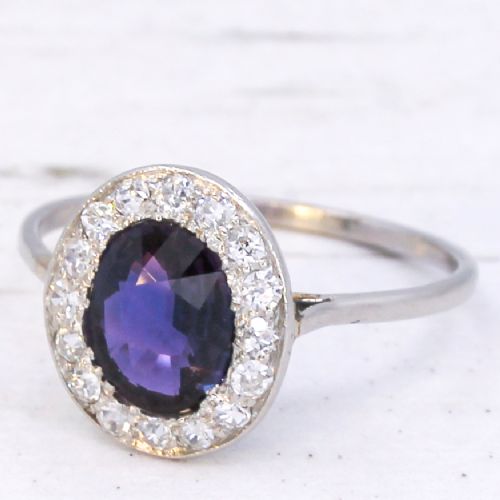


1930s Sapphire Halo Ring
A 1930s sapphire halo ring brings together geometric Art Deco design and striking blue central stones surrounded by brilliant diamonds.
1930s Sapphire Halo Ring
A 1930s sapphire halo ring centres on a vibrant blue sapphire framed by a sparkling border of diamonds, capturing the geometric essence of the Art Deco period. These pieces originate primarily from the 1930 and 1920 decades, presenting classic cluster configurations designed to catch the light.
Most examples encountered here take the form of dress rings or cocktail rings, showcasing substantial central stones with notable carat weights. The overarching style adheres firmly to Art Deco principles, balancing bold centrepieces with precise diamond arrangements.
How they were made
Goldsmiths of this era predominantly utilised platinum and various carats of gold, including 18ct white gold, 18ct yellow gold, and 15ct yellow gold, to construct secure settings. Platinum provided the strength needed for intricate, low-profile mountings that kept heavy stones secure without excess bulk.
Stones were carefully selected for their natural origins, ranging from Ceylon and Burmese sapphires to basaltic varieties, often left unheated or shaped into smooth cabochons. Diamond surrounds were then meticulously bead-set or millegrain-edged to enhance the geometric lines typical of the decade.
1930s Sapphire Halo Ring Retail Price Guide 2026
Typical asking prices for 1930s sapphire halo ring among the pieces listed under this phrase on Sellingantiques today, from the lower quarter to the upper quarter. They describe what is for sale here now, not the wider market.
Current listings feature platinum, 18ct white gold, and yellow gold alongside unheated Ceylon and Burmese sapphires.
What varies in quality
The distinction between tiers rests primarily on the provenance and optical properties of the sapphire, such as unheated stones with specific geographical origins like Ceylon or Burma commanding greater attention. The weight, cut, and clarity of the surrounding diamonds also play a fundamental role in defining the overall impact of the piece.
Metalwork execution determines the finesse of the ring, where crisp millegrain edges and well-balanced proportions elevate the craftsmanship. A cohesive composition between the central blue stone and the diamond border dictates the visual harmony of the finished jewel.
The 1930s Sapphire Halo Ring Glossary
- Halo ring
- A ring design featuring a central gemstone encircled by a concentric border of smaller stones, typically diamonds. This arrangement maximises the perceived size and brilliance of the middle gem.
- Art Deco
- A design style spanning the 1920s and 1930s characterised by symmetry, geometric precision, and stylised motifs. It moved away from organic floral curves toward clean architectural lines.
- Cabochon
- A gemstone shaped and polished with a smooth, rounded domed surface rather than faceted. This cut is frequently chosen to highlight depth and colour in high-carat sapphires.
- Millegrain
- A jewellery technique involving a line of tiny metal beads along the edges of a setting. It imparts a delicate texture and a finished period aesthetic to platinum and gold mounts.
- Cluster ring
- A jewellery configuration where multiple stones are grouped tightly together to form a single visual unit. The sapphire and diamond cluster remains a defining shape of the interwar decades.
1930s Sapphire Halo Ring: Frequently Asked Questions
How do I identify a 1930s sapphire ring?
Look for characteristic Art Deco geometric motifs, millegrain detailing, and platinum or white gold settings that typify the interwar aesthetic.
Examining the stone cuts and the overall construction style will further help distinguish pieces made during this specific era.
What is an unheated sapphire?
An unheated sapphire is a natural gemstone that has not undergone thermal enhancement to improve its colour or clarity. Such stones are valued for their natural geological origins and untreated characteristics.
Many high-end pieces from this decade feature sapphires accompanied by certification confirming their natural status.
Are these rings suitable for daily wear?
Sapphires and diamonds possess high durability on the Mohs scale, making them robust enough for regular use when properly maintained. Platinum and 18ct gold settings offer the structural integrity required for everyday rotation.
Periodic checks by a professional jeweller ensure the claws and settings remain secure around the stones.