




1930s Oak Mirror
A 1930s oak mirror brings honest grain and period geometry to a hall or bedroom, offering practical reflection with interwar character.
1930s Oak Mirror
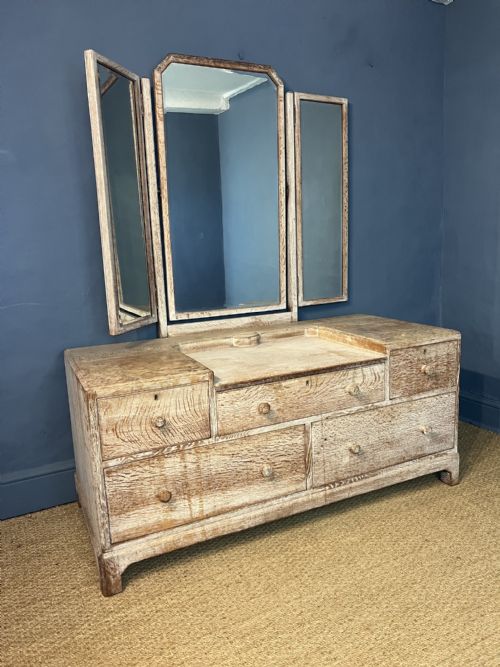
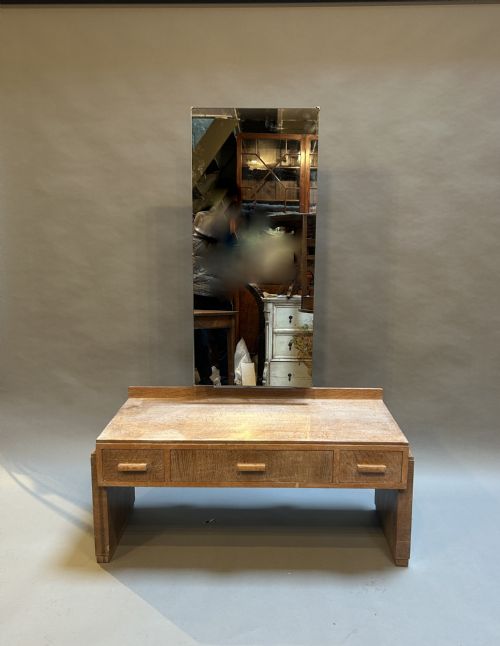
When you search for a 1930s oak mirror, you encounter sturdy timber frames shaped by the design movements of the interwar decades. The evidence shows these pieces appearing both as standalone wall mirrors and as integrated components of larger dressing tables, bedroom suites, and cabinets.
The version you are most likely to meet on this page is a wall-mounted glass plate set within an oak frame, often carrying the geometric lines of the Art Deco style or the honest woodwork of the Cotswold School. Some examples introduce limed oak finishes or incorporate contrasting materials like metal and mirrored glass.
Beyond simple wall hangings, the category extends to larger retail fixtures such as tailors shop mirrors, demonstrating the robust utility expected from the period. Whether plain or panelled, each piece relies on the warm tone of oak to anchor its architectural form.
How they were made
Makers built these frames using solid oak and specialised treatments like liming to alter the natural tone of the timber. Timber selection prioritized strong grain patterns, sometimes paired with walnut or marquetry details on more elaborate cabinetwork.
Reflective surfaces consist of thick glass plates, occasionally bevelled at the edges, secured into rebated wooden frames or held with metal fixings. Construction methods reflect traditional cabinetmaking alongside the industrial demands of shop fittings and larger bedroom suites.
1930s Oak Mirror Retail Price Guide 2026
Typical asking prices for 1930s oak mirror among the pieces listed under this phrase on Sellingantiques today, from the lower quarter to the upper quarter. They describe what is for sale here now, not the wider market.
A tailors shop mirror proves that interwar oak could handle hemlines just as easily as hallway checks.
What varies in quality
Quality in a 1930s oak mirror rests on the architectural ambition of the frame and the integration of secondary timbers or decorative marquetry. Pieces associated with named makers or specific design traditions like the Cotswold School demonstrate superior joinery and thoughtful proportion.
The treatment of the oak itself distinguishes standard production from finer work, particularly where liming finishes or complex geometric Art Deco framing are executed with precision. The clarity of the original glass plate and the weight of the supporting timber structure further define the upper tier of the range.
Heals·Gaylayde·B Cohen and Sons
The 1930s Oak Mirror Glossary
- Limed oak
- Timber treated with a specialised pigment or finish that settles into the grain pores to create a pale, whitened appearance. This technique gained popularity during the interwar period for modern interiors.
- Art Deco
- A design style characterised by streamlined geometric shapes, stylized motifs, and symmetrical layouts. It dominates much of the cabinetwork and framing from this era.
- Cotswold School
- An arts and crafts inspired movement emphasising traditional hand-joinery and visible construction methods. Pieces from this tradition showcase honest craftsmanship and straightforward timber selection.
- Marquetry
- The art of applying small pieces of veneer to a structure to form decorative patterns. It appears on selected bedroom suites to add visual contrast to the primary oak surfaces.
1930s Oak Mirror: Frequently Asked Questions
How do I hang a heavy oak mirror safely?
These timber frames carry significant weight, particularly when paired with thick glass plates and solid oak backing. Secure the piece directly into wall studs using appropriate fixings rated for the load.
Avoid relying solely on plasterboard anchors, as the combination of old wood and heavy glass requires robust mechanical support to prevent movement over time.
Are these mirrors suitable for bathrooms?
Interwar mirrors were constructed primarily for bedrooms, dressing rooms, and hallways rather than humid environments. The traditional backing boards and glues used in the 1930s tolerate ambient moisture poorly.
Placing them in steamy bathrooms risks degrading the silvering behind the glass and raising the grain of the oak frame.
How do I clean limed oak frames?
Limed finishes require gentle maintenance to preserve the pale pigment settled within the grain pores. Use a dry, soft cloth to remove dust without scrubbing the surface.
Harsh chemical sprays or excessive moisture will strip the specialised finish and alter the historic appearance of the timber.
What distinguishes Cotswold School work from Art Deco?
Cotswold School pieces emphasise visible hand-craftsmanship, straightforward joinery, and the natural grain of solid oak. They follow an ethos rooted in arts and crafts traditions.
Art Deco designs focus instead on symmetry, stylized geometry, and sometimes sleek finishes like polished walnut or metal accents to project modernity.