



1930s Mirrored Furniture
1930s mirrored furniture brings striking reflection and bold geometric lines into a room, capturing the glamour of interwar design.
1930s Mirrored Furniture
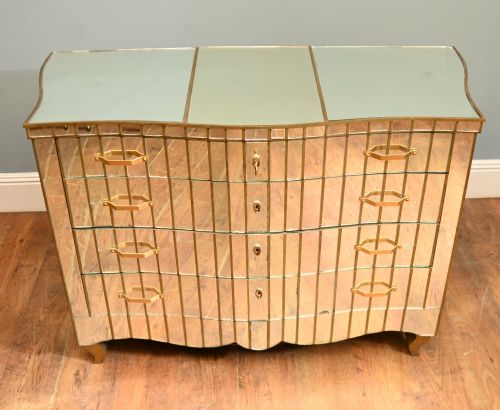
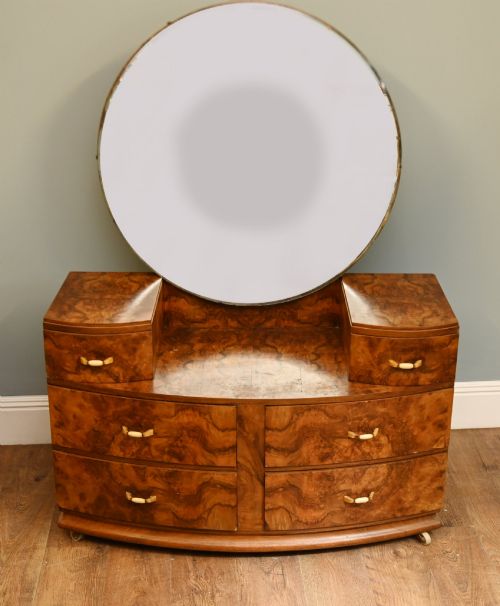
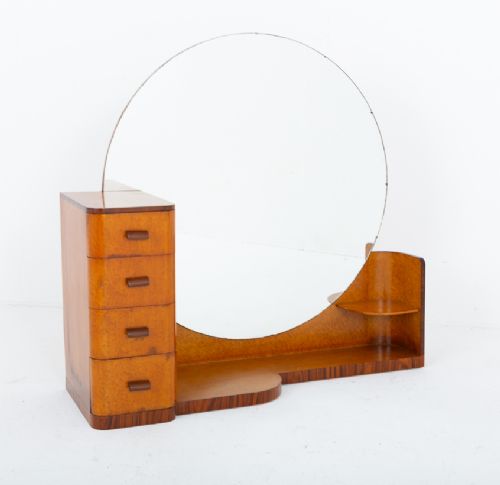
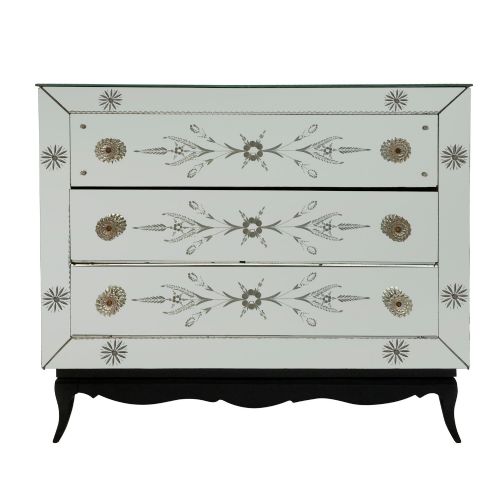
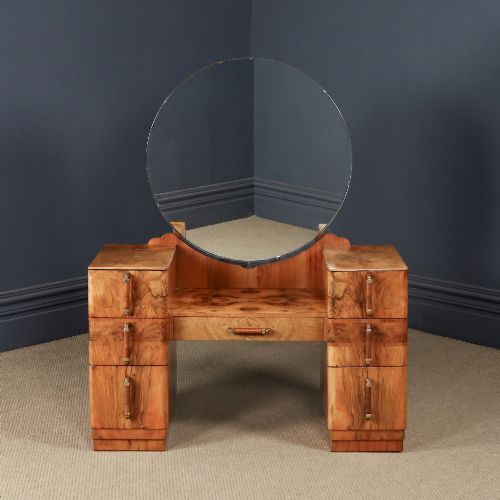
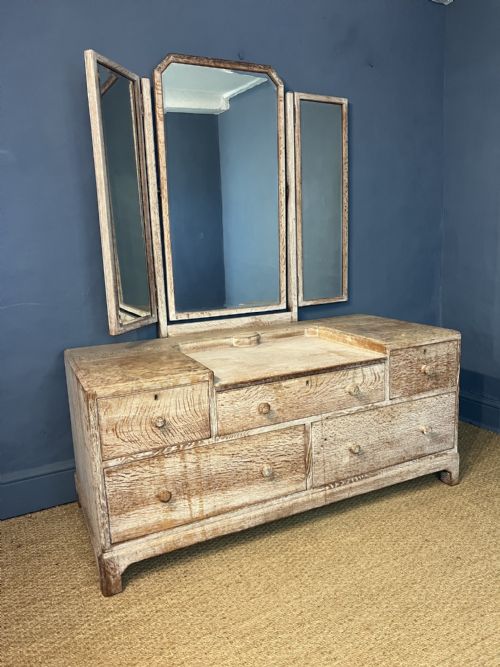
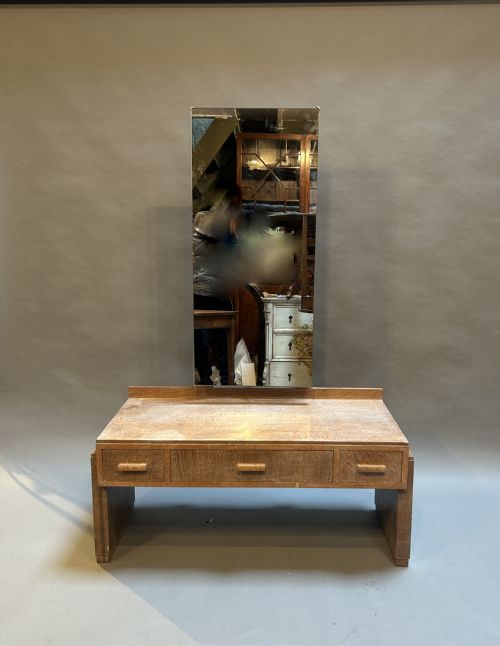
1930s mirrored furniture encompasses dressing tables, chests of drawers, occasional tables, and cocktail cabinets created during the interwar decades. The selection leans heavily towards dressing tables and vanity chests designed with integrated mirrors or glass tops.
Pieces from this era frequently adopt Art Deco, French Art Deco, Cotswold School, and Swedish Grace styles. Forms range from sleek English walnut pedestals to limed oak pieces and Continental designs.
The aesthetic bridges functional domestic utility with high decorative impact. Buyers encounter everything from compact side tables to complete bedroom suites.
How 1930s mirrored furniture was made
Construction relies heavily on walnut, burr walnut, oak, and limed oak frameworks combined with flat and shaped mirror glass. Chrome and metal details appear alongside marquetry inlays to accent the primary timber bodies.
Cabinet makers utilised figured veneers to create symmetrical grain patterns across large drawer fronts and table surfaces. Mirror glass was precision-cut to follow the curved or stepped silhouettes characteristic of the period.
Object forms span dressing tables, chests of drawers, side tables, occasional tables, cocktail cabinets, bedroom suites, and dressing table mirrors.
What varies in quality
The grade of timber veneer and the precision of the grain matching across drawer fronts separate standard items from superior examples. Master workshops selected highly figured burr walnut and applied meticulous marquetry.
Construction methods and the integrity of the silvering on the mirror glass define longevity. Higher quality pieces maintain tight joinery in the pedestals and cabinets alongside securely seated glass panels.
Heals·Maurice Adams·Harry and Lou Epstein·Whytock and Reid·Betty Joel·Rowley Gallery·B Cohen and Sons
The 1930s Mirrored Furniture Glossary
- Art Deco
- A design style of the 1920s and 1930s characterised by sleek geometric shapes, stylised motifs, and modern industrial materials. It dominates the aesthetic of interwar cabinet making.
- Burr walnut
- A prized timber cut from the abnormal growths of walnut trees, yielding intricate, swirling grain patterns. Cabinet makers used it to create decorative focal points on drawer fronts.
- Limed oak
- Timber treated with a white pigment or lime to highlight the open grain, resulting in a pale, scrubbed finish. This treatment was favoured by modernist designers.
- Marquetry
- The art of applying pieces of veneer to a structure to form decorative patterns and pictures. Craftsmen used contrasting woods to create geometric designs.
- Swedish Grace
- A refined neoclassical style popular in Sweden during the 1920s that combined classic proportions with stripped-down modernism. It represents a subtle alternative to bolder Art Deco forms.
1930s Mirrored Furniture: Frequently Asked Questions
How do I clean antique mirrored glass?
Use a soft, lint-free cloth and a mild, ammonia-free glass cleaner sprayed lightly onto the cloth rather than directly onto the mirror. This prevents moisture from seeping behind the silvered backing.
Avoid harsh scrubbing around the bevelled edges where the protective coating may have thinned over the decades.
Are these pieces suitable for everyday use?
Yes, interwar cabinets, dressing tables, and side tables were built to serve practical domestic functions. Their robust timber frames handle normal daily activity reliably.
Care should be taken with moisture on wooden surfaces and heavy impacts near mirrored panels.
How do I identify an Art Deco piece?
Look for symmetrical geometric shapes, stepped outlines, and the combination of mirrored glass with rich walnut or oak veneers. The design prioritises clean lines and streamlined silhouettes over heavy carving.
Hardware is typically minimal, often featuring streamlined chrome or contrasting timber pulls.
Where does Swedish Grace differ from Art Deco?
Swedish Grace leans towards understated elegance and softer classical proportions rather than the high-contrast glamour often associated with French Art Deco. It utilises lighter woods and restrained ornamentation.
This style creates a quieter, more harmonious visual presence in a contemporary interior.