



1930s Mantle Clock
A 1930s mantle clock brings distinct geometric lines and practical timekeeping into a room, offering an authentic piece of period design.
1930s Mantle Clock
A 1930s mantle clock sits on a shelf or sideboard, driven by mechanical movements or early electric technology to keep time for the household. These objects range from compact desk clocks to large chiming pieces designed to anchor a room.
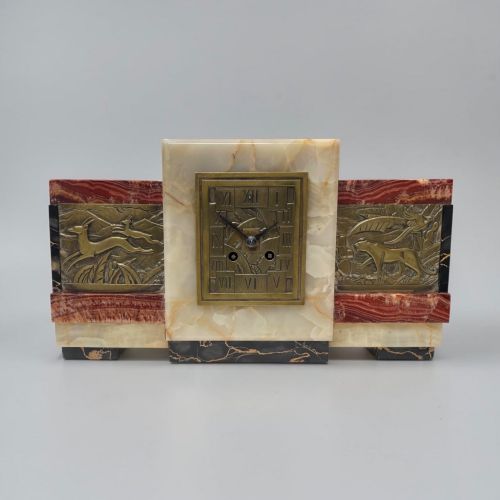
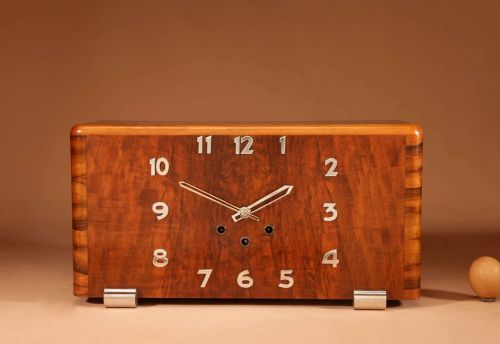
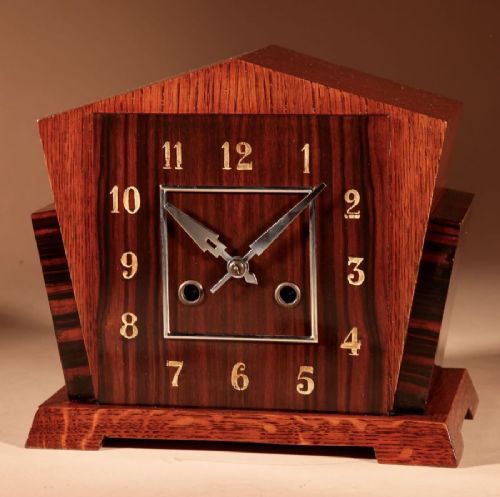
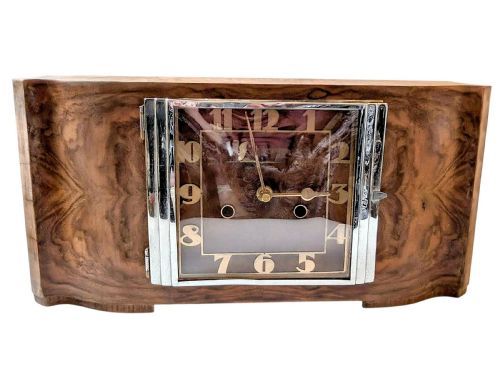
Art Deco and Amsterdam School styles dominate this selection, bringing together bold geometric forms and architectural silhouettes. Walnut, oak, chrome, marble, and mirror glass appear frequently across the pieces on this page.
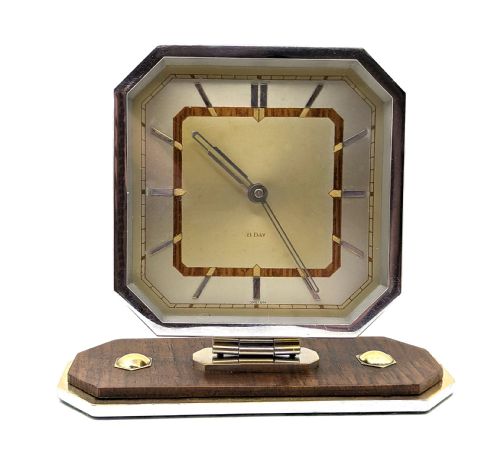
English, French, and German workshops produced these timepieces, resulting in considerable variation in dial layout and casing materials. Mantel clocks share space here with desk clocks, travel alarms, and complete clock garniture sets.
How they were made
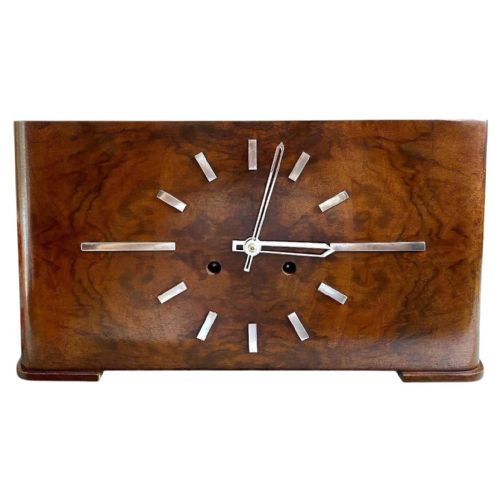
Woodworkers utilised rich timbers such as walnut, macassar ebony, and coromandel, often contrasting different veneers to emphasise sharp angles and stepped outlines. Metal elements in chrome, brass, and plated finishes provide bright highlights against the dark timber surfaces.
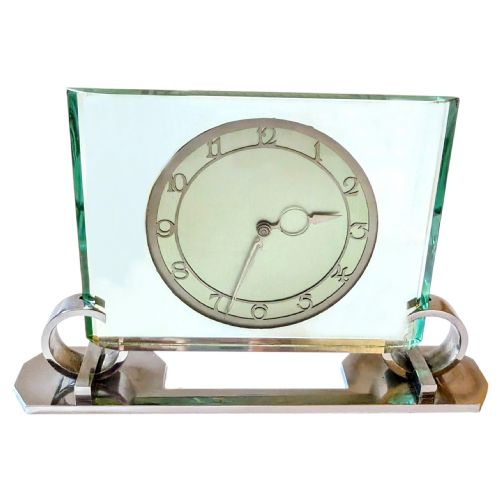
Clockmakers housed reliable eight-day and wind-up movements inside cases constructed from heavy blocks of marble, onyx, or moulded glass. Mirrored glass panels and contrasting metal dials complete the construction, reflecting the industrial optimism of the period.
1930s Mantle Clock Retail Price Guide 2026
Typical asking prices for 1930s mantle clock among the pieces listed under this phrase on Sellingantiques today, from the lower quarter to the upper quarter. They describe what is for sale here now, not the wider market.
Object types span mantel clocks, desk clocks, wall clocks, clock garniture sets, and travel alarms.
What varies in quality
The refinement of the movement determines much of the standing of a piece, with established makers delivering greater precision and more complex chimes. Finely engineered escapements and serviced mechanisms separate everyday timepieces from superior examples.
Materials and assembly dictate the physical presence of the clock, from solid marble and heavy chrome plating down to simpler wooden veneers. The crispness of the geometric cutting and the integrity of the glass and metal surfaces distinguish the better productions.
Smiths Clockmakers·Harrods of London·Asprey·Junghans·GEC
The 1930s Mantle Clock Glossary
- Westminster chime
- A melodic four-part chime pattern played on quarters of the hour. This sound system appears in many larger mantel clocks from the period.
- Garniture set
- A matching group consisting of a central clock flanked by decorative side ornaments. These sets were designed to sit together on a mantelpiece.
- Amsterdam School
- A style of architecture and design originating in the Netherlands, known for expressive brickwork, organic forms, and rich timber use. It influences several wooden clocks listed here.
- Eight-day movement
- A mechanical clock movement that requires winding roughly once every week. This practical mechanism was widely adopted in English and continental timepieces.
- Skyscraper style
- An architectural aesthetic of the interwar period that mimics the stepped vertical lines of modern high-rises. Clock cases often adopted this silhouette.
1930s Mantle Clock: Frequently Asked Questions
How do I wind a mechanical clock?
Insert the winding key into the designated dial holes and turn gently until resistance is felt. Care should be taken not to over-wind the mainspring.
Mechanical movements require a steady hand and regular routine to maintain accurate timekeeping. Most traditional pieces require attention once a week.
Where should I place my clock?
Select a stable, level surface away from direct sunlight, dampness, and severe temperature fluctuations. Mantelpieces and sideboards provide traditional housing.
Ensure the surface does not vibrate excessively, as this can interfere with the pendulum or escapement mechanism. Balance is essential for proper operation.
What is a clock garniture set?
A garniture set comprises a main clock accompanied by matching side ornaments designed to be displayed together. They create a balanced decorative arrangement on a fireplace mantel.
The matching pieces usually share identical marble, metal, or wooden materials. This format was popular for formal reception rooms.