



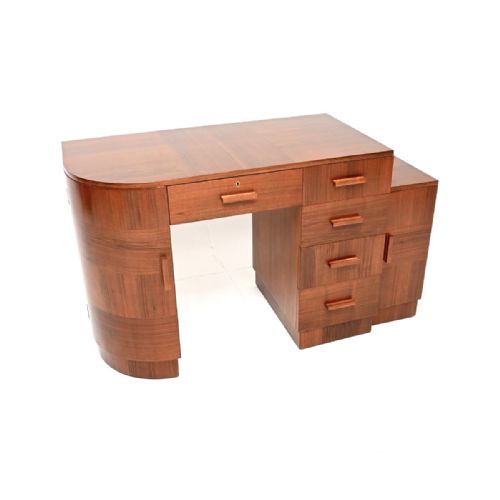


1930s Kneehole Desk
A 1930s kneehole desk brings clean lines and rich woods into a modern workspace, offering practical drawers flanking a central recess.
1930s Kneehole Desk
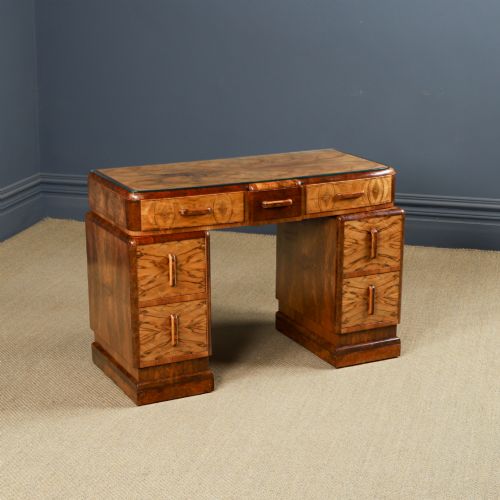
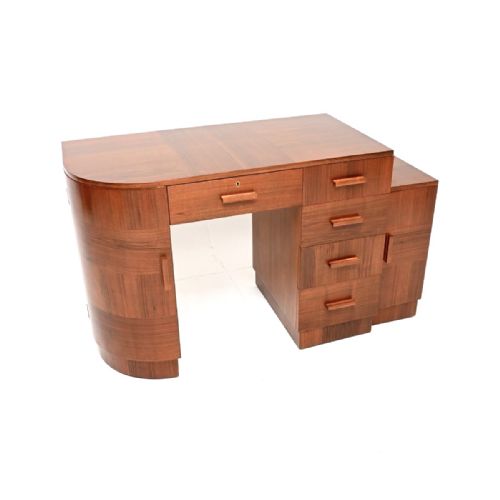
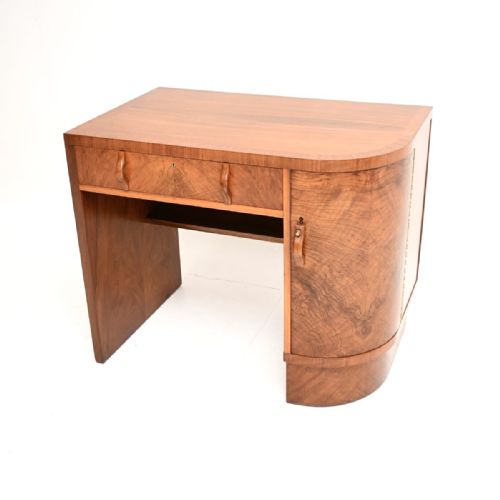
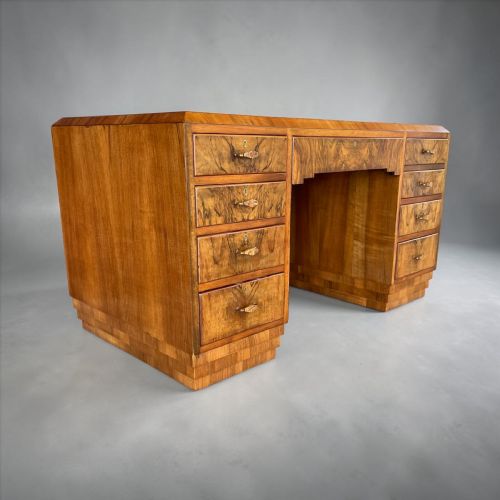
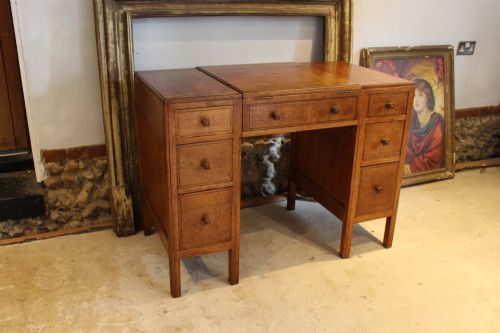
A 1930s kneehole desk is defined by its pedestals of drawers on either side of a central empty space designed for the sitter's knees. These pieces emerge from the Art Deco period, though related dressing tables and writing tables share similar pedestal arrangements.
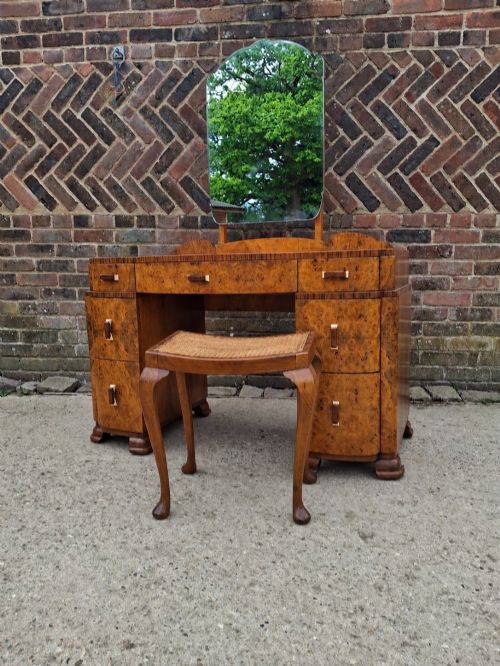
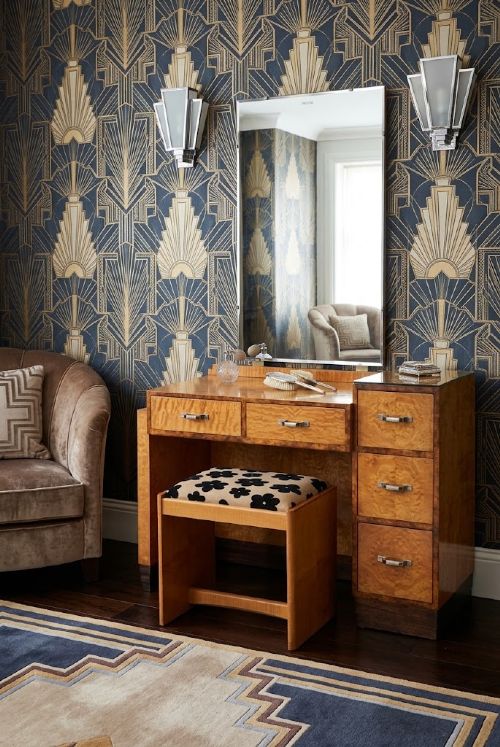
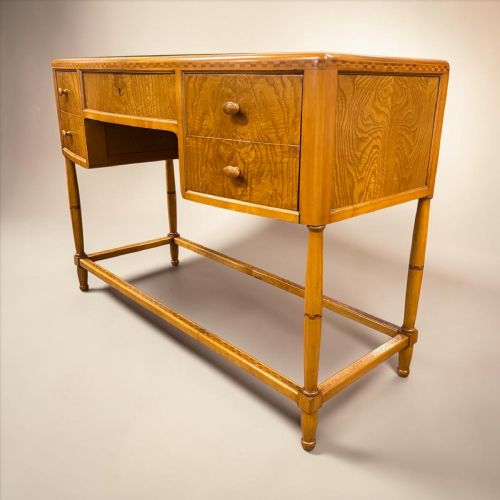
Buyers will encounter striking examples veneered in figured and burr walnut, alongside lighter alternatives in birdseye maple or oak. Some forms cross over into dressing tables with mirrors or console tables, reflecting the versatile domestic furniture design of the decade.
Materials and construction
Cabinetmakers of this era relied heavily on walnut and burr walnut veneers laid over solid timber carcases to create dramatic figured surfaces. Metal and brass hardware added clean industrial accents, whilst glass tops sometimes protected the polished timber.
Construction techniques balanced traditional joinery with the sleek geometric demands of the Art Deco style. Makers utilised contrasting timbers such as elm and birdseye maple to highlight structural edges and drawer fronts.
1930s Kneehole Desk Retail Price Guide 2026
Typical asking prices for 1930s kneehole desk among the pieces listed under this phrase on Sellingantiques today, from the lower quarter to the upper quarter. They describe what is for sale here now, not the wider market.
Current listings demonstrate a strong reliance on walnut, burr walnut veneer, and oak, all shaped by the distinct geometric vocabulary of Art Deco design.
Judging quality and craftsmanship
Quality rests principally in the selection and matching of the wood veneer across the drawer fronts and top. Superior pieces display symmetrical grain patterns that wrap seamlessly around the pedestal corners.
The sophistication of the internal framing and the integrity of the original brass handles distinguish standard production from works by notable makers. Well-executed desks maintain tight joints and smooth drawer action without relying on heavy secondary finishes.
Betty Joel·Heal & Sons·Étienne Kohlmann
The 1930s Kneehole Desk Glossary
- Figured walnut
- Timber exhibiting highly decorative, swirling grain patterns achieved through natural growth variations. This material was prized by period cabinetmakers for its visual impact on flat surfaces.
- Pedestal
- A structural column of drawers supporting one side of the desktop. Two such columns create the characteristic kneehole opening between them.
- Veneer
- A thin layer of superior wood adhered to a stable secondary timber base. This technique allowed makers to display expensive burr walnut across large panels without risking structural warping.
- Art Deco
- A design movement spanning the interwar years characterised by streamlined forms and geometric symmetry. It heavily influences the silhouettes of desks from this decade.
1930s Kneehole Desk: Frequently Asked Questions
What is a 1930s kneehole desk?
A 1930s kneehole desk is a pedestal-style writing table featuring two banks of drawers separated by a central space for the legs. These pieces typically showcase Art Deco styling and rich walnut veneers.
They function as both practical workspaces and decorative focal points in a room. The design prioritises symmetry and clean geometric lines characteristic of the period.
How do I identify Art Deco furniture?
Art Deco furniture is recognised by its streamlined silhouettes, symmetrical forms, and minimal ornamentation. Designers favoured rich veneers like burr walnut and exotic woods over heavy carving.
Hardware is usually sleek and made from brass or chromium-plated metal. The overall aesthetic balances modern industrial influences with luxurious materials.
Are dressing tables similar to desks?
Dressing tables from this era often share the same pedestal and kneehole layout as writing desks. The primary difference lies in the integration of a mirror and slightly shallower drawer arrangements.
Many examples utilise the same figured walnut and birdseye maple materials found on contemporary writing desks. Buyers often repurpose them according to their spatial needs.
How should I care for walnut veneer?
Walnut veneer requires protection from direct sunlight and excessive moisture to prevent fading and lifting. Regular dusting with a soft, dry cloth preserves the polished surface.
Avoid placing hot items or liquids directly onto the wood. Period furniture benefits from occasional treatment with appropriate natural waxes to nourish the timber.