



1930s Headboard
A 1930s headboard brings clean geometry and striking wood grains to a bedroom, offering a distinct focal point rooted in Art Deco design.
1930s Headboard
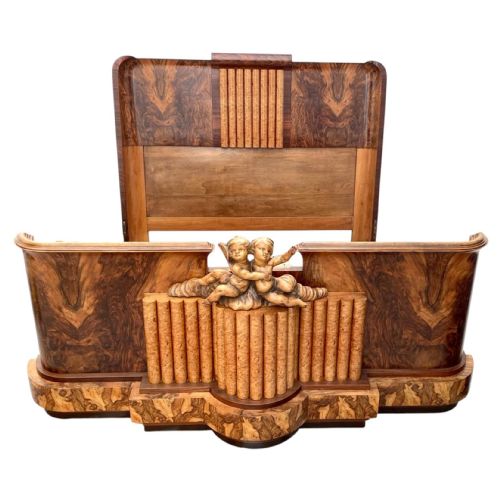
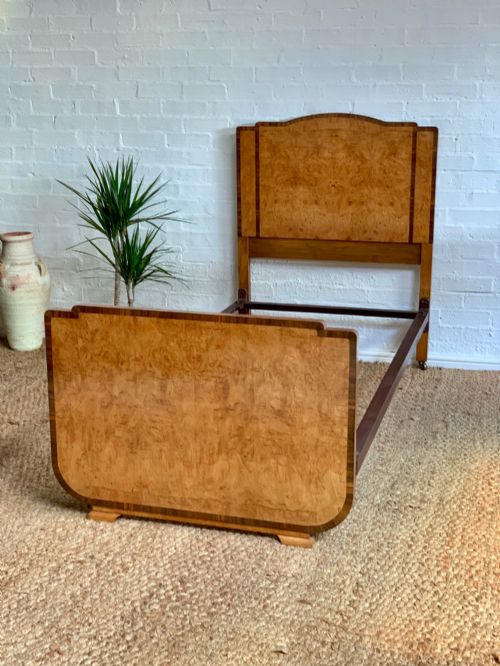
A 1930s headboard anchors the sleeping space with architectural presence, frequently appearing as part of a larger bedstead or integrated with attached bedside tables. These pieces draw heavily on the prevailing Art Deco aesthetic of the period, favouring streamlined silhouettes and symmetrical forms.
While many examples survive as complete double or single bed frames rather than standalone panels, dedicated headboard options with built-in cabinetry demonstrate the era's taste for utilitarian elegance. The selection ranges from French imports to English workshop productions, reflecting varied regional interpretations of modernist curves.
Buyers encountering this search phrase will find that many items share DNA with full bedsteads designed in the same decade, often utilising matching side units. The forms lean towards horizontal emphasis, fan shapes, and stepped skyscraper outlines that define the era.
Materials and construction
Cabinetmakers of the decade relied heavily on walnut and burr walnut veneers, laid over stable timber cores to create mesmerising, highly figured grain patterns across wide surfaces. Exotic woods such as satinwood, maple, and birds-eye maple also appear frequently, often contrasted with darker banding to accentuate geometric motifs.
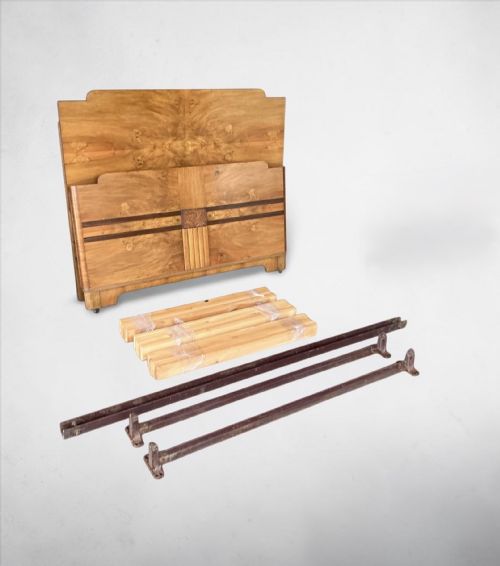
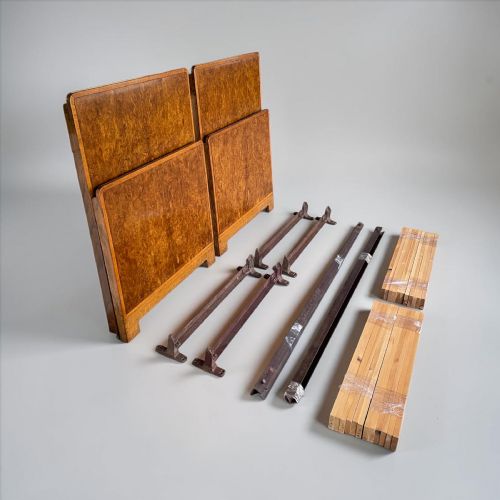
Construction techniques prioritised sleek expanses of polished wood, sometimes augmented by metal or iron structural elements in associated bed bases. Integral cabinetry and attached bedside tables were constructed as cohesive units, demonstrating advanced veneering and joinery skills.
1930s Headboard Retail Price Guide 2026
Typical asking prices for 1930s headboard among the pieces listed under this phrase on Sellingantiques today, from the lower quarter to the upper quarter. They describe what is for sale here now, not the wider market.
Listings show a strong preference for walnut and maple veneers, frequently shaped into curved or fan-like Art Deco silhouettes.
Assessing quality
Quality in these pieces rests primarily on the choice and placement of wood veneers, where book-matched grain creates symmetrical patterns across the face of the board. The skill with which contrasting timbers are inlaid dictates the visual depth of the design.
The integration of built-in elements such as bedside cabinets distinguishes standard production from superior workshop output. Cohesive proportions and clean execution of architectural curves separate standard items from exceptional designer pieces.
Waring and Gillow England·Betty Joel
The 1930s Headboard Glossary
- Art Deco
- A design movement prevalent in the 1920s and 1930s characterised by sleek geometric shapes, streamlined forms, and modern industrial materials.
- Burr Walnut
- A specialised timber cut from the abnormal growth of a walnut tree, yielding a swirling, highly decorative grain pattern prized for veneering.
- Veneer
- A thin layer of superior wood glued to a base timber panel to provide an ornamental surface without warping.
- Satinwood
- A pale, lustrous timber imported from tropical regions, utilised in the period for its bright contrast against darker woods.
- Bedstead
- A complete framework of a bed, upon which a mattress and base are supported, frequently incorporating the headboard.
1930s Headboard: Frequently Asked Questions
How do I attach a 1930s headboard?
Many examples from this era are integrated directly with bed frames or feature attached bedside tables, meaning they stand as independent units rather than bolting to modern divan bases. Some freestanding options require bespoke brackets or careful placement against a wall to secure them safely.
Buyers should examine the rear fixing points before purchase to determine whether structural adaptation is necessary for modern bed bases.
Are these headboards suitable for modern beds?
Because many listings comprise complete bed frames or headboards with attached cabinets, fitting them around contemporary standard mattresses may require minor adjustments. Measuring the exact width between integral bedside tables is essential to ensure compatibility with modern mattress sizes.
Consulting the specific dimensions provided in each listing prevents sizing discrepancies upon delivery.
How do I care for walnut veneer?
Walnut and burr walnut surfaces require protection from direct sunlight and excessive moisture to prevent fading and veneer lifting. Regular dusting with a soft, dry cloth maintains the polished finish without chemical buildup.
Occasional application of appropriate furniture wax helps nourish the timber and preserves the depth of the grain.
How do I identify Art Deco style?
Art Deco design is easily recognised by its symmetrical geometry, stepped skyscraper forms, and celebration of smooth, curved lines. The style avoids ornate Victorian carving in favour of unadorned, streamlined elegance.
Contrasting wood veneers arranged in sunburst or waterfall patterns further signal authenticity to the period.