


1930s Glass Chandelier
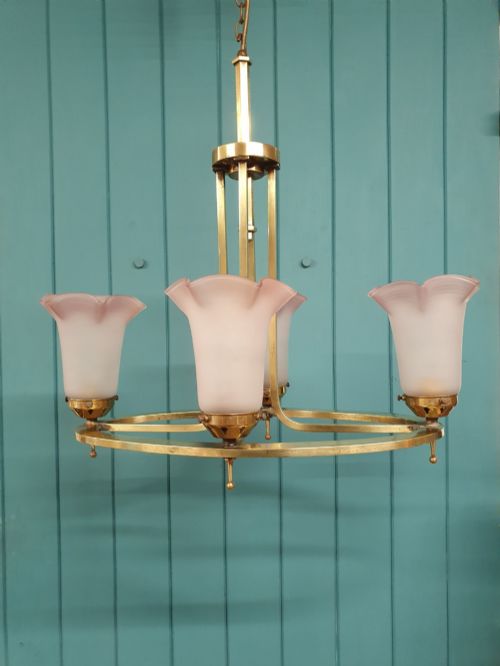
A 1930s glass chandelier brings geometric elegance and period illumination to a room, offering genuine interwar style through moulded or frosted shades.
1930s Glass Chandelier
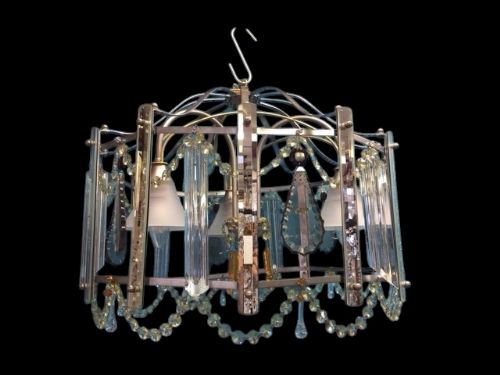
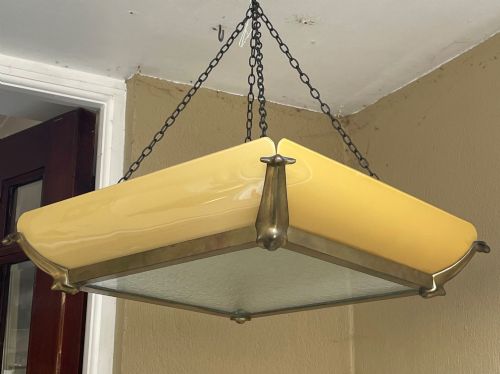
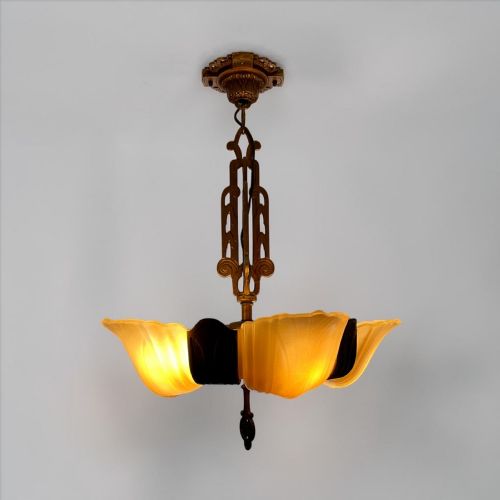
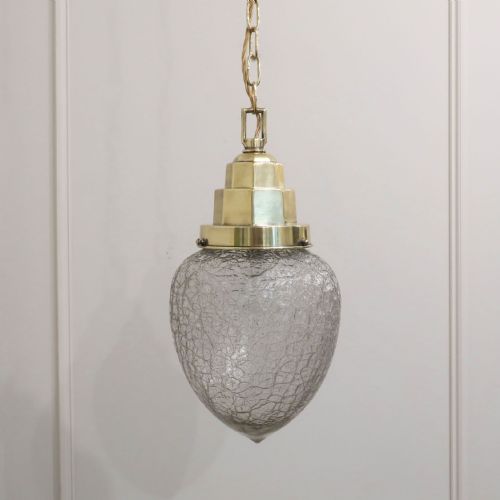
A 1930s glass chandelier encompasses ceiling lights, pendant lamps, and multi-light fixtures created primarily during the Art Deco period. The inventory includes slip shade designs, frosted glass bowls, and cut glass bag chandeliers originating from the 1920s and 1930s. Buyers will frequently encounter French and American examples alongside distinct variations such as the Highland Lodge style.
Formations range from single ceiling lamps to monumental multi-tier chandeliers sourced from notable buildings. These fittings utilise suspended glass elements combined with metal frameworks to distribute ambient interior light effectively.
How they were made
Maker construction combines moulded, frosted, or crackle glass components mounted to metal chassis formed from brass, chrome, nickel plated metal, copper, or wrought iron. Glass shades are frequently press-moulded to achieve decorative geometric or floral motifs characteristic of the era. Cast metal and spun brass provide structural support for heavy glass bowls and slip shade configurations.
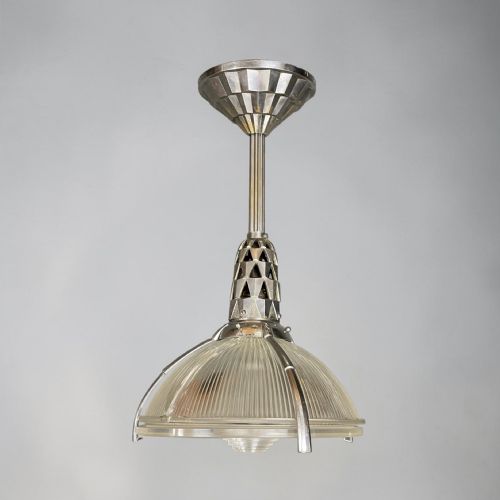
Metal plating techniques such as nickel and chrome application deliver the reflective finishes standard on interwar light fittings. Cut glass elements in bag chandeliers require precise facet cutting and wire binding to secure individual crystal drops.
Red and roe deer antlers make an unexpected appearance alongside urban chrome, proving 1930s lighting designers embraced highland lodges as readily as Parisian salons.
What varies in quality
Quality separates through the purity and thickness of the glass, the complexity of the mould work, and the calibre of the underlying metal hardware. Heavier gauge brass, intricate wrought ironwork, and thick frosted glass shades indicate superior production standards compared to simpler commercial alternatives.
The sophistication of the design, such as signed French glass or architectural provenance, elevates a fixture above standard domestic lighting. Original matching suites and intact slip shade sets represent higher manufacturing ambition.
Émile-Jacques Ruhlmann·Jean Gauthier
The 1930s Glass Chandelier Glossary
- Slip Shade
- A moulded glass shade designed to slot directly into a metal frame or arms on a ceiling light. These components are frequently found on American Art Deco fixtures.
- Plafonnier
- A ceiling-mounted dome light or shallow bowl fixture fitted flush or close to the ceiling. This French term describes enclosed glass ceiling lighting from the period.
- Bag Chandelier
- A light fixture featuring a flattened or rounded base composed of numerous small cut glass crystals strung together in a mesh pattern. They project scattered illumination across a room.
- Clam Shell
- A specific moulded glass shade shape resembling a bivalve shell utilised in pairs or suites. These forms direct light outwards and downwards.
- Frosted Glass
- Glass treated to impart a milky, opaque surface appearance that diffuses harsh light bulbs into a soft glow. It is a signature material of interwar lighting design.
1930s Glass Chandelier: Frequently Asked Questions
How do I wire a vintage chandelier?
Vintage chandeliers require modern electrical rewiring to meet current safety standards before installation in a domestic property. A qualified electrician should handle the internal rewiring and ceiling attachment to support the weight.
Original metal frames and suspension points are retained while the electrical cord and lamp holders are safely updated.
Are replacement shades available?
Finding exact replacement glass shades for specific slip shade or moulded fixtures can prove challenging due to their age and distinct designs. Most pieces rely on their original matching glass components.
Buyers should examine listings to ensure all individual shades are present within multi-light suites.
What rooms suit these chandeliers?
These ceiling lights suit dining rooms, hallways, and principal reception spaces where period character is desired. Lower profile plafonniers fit rooms with restricted ceiling heights.
Larger multi-light and monumental chandeliers require substantial ceiling clearance and structural support.
How do I identify a 1930s piece?
Identification relies on material combinations such as chrome, frosted glass, and brass alongside characteristic geometric Art Deco motifs. Production dates align with interwar manufacturing techniques and stylistic forms.
Documentation or maker signatures on the glass provide definitive attribution.