


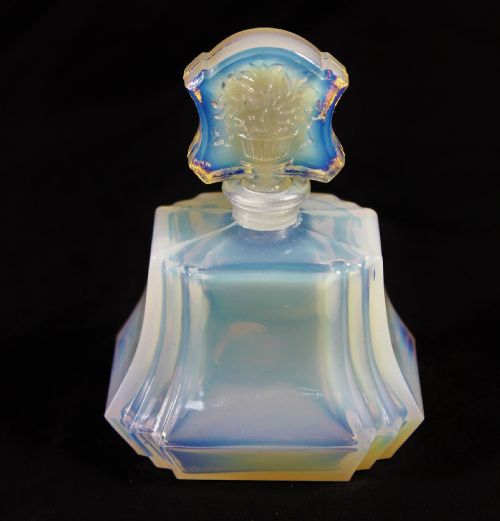


1930s Dressing Table Accessory
A 1930s dressing table accessory brings undeniable geometric glamour to a room through bright enamel, cut glass, and gleaming chrome.
1930s Dressing Table Accessory
A 1930s dressing table accessory is a vanity item created during the Art Deco period, designed to sit upon a bedroom surface for daily grooming or display. These pieces range from perfume bottles and atomizers to powder boxes, hand mirrors, and clothes brushes.
The version you are most likely to meet on this page is a glass or crystal perfume bottle, often accented with enamel or silver. Many examples showcase the distinctive geometric lines and stylised motifs typical of the 1930 era.
Alongside glass vessels, the selection includes ceramic bathing belle trinket boxes and porcelain hatpin holders. Each object reflects the personal vanity culture of the interwar decades, combining decorative appeal with practical function.
How They Were Made
Makers shaped glass and crystal through heavy cutting and moulding, producing faceted atomizers and globular perfume bottles. Enamel was applied to metal surfaces, particularly silver and chrome, to add vibrant colour and pattern.
Sterling silver mounts and brush backs were worked with engine-turned guilloche decoration. Ceramic and porcelain pieces, such as powder boxes and hatpin holders, were glazed and hand-painted to depict figures like flappers and bathing belles.
The object types span practical vanity tools like clothes brushes alongside decorative powder boxes and figurative hatpin holders.
What Varies in Quality
The standard of glass cutting and the clarity of crystal form the foundation of a piece's visual impact. Crisp facets and heavy, substantial weight distinguish superior glasswork from simpler moulded alternatives.
In enamelled and silver items, the preservation of the guilloche pattern and the integrity of the enamel surface dictate the grade. Intricate metalwork by established silversmiths carries a distinct refinement compared to unmarked or mass-produced wares.
Karl Palda·Asprey & Co.·Fasold & Stuach·Sabino
The 1930s Dressing Table Accessory Glossary
- Guilloche
- An intricate decorative engine-turning technique engraved into metal before a translucent enamel layer is applied. This method creates repeating geometric patterns that catch the light.
- Atomizer
- A spray bottle mechanism fitted to a perfume vessel, usually featuring a rubber bulb and fabric mesh. It allows liquid scent to be misted rather than dabbed.
- Bathing Belle
- A ceramic figurine popular in the Art Deco era depicting a woman in period swimwear. These figures frequently adorn powder boxes and trinket dishes.
- Flapper
- A cultural archetype of the 1920s and 1930s representing modern, independent young women. Their distinctive bobbed hair and stylish hats appear on porcelain doll stands and hatpin holders.
- Hallmark
- An official stamp struck into precious metals like sterling silver indicating the assay office, standard of purity, and year of manufacture. It provides precise dating for British-made items.
1930s Dressing Table Accessory: Frequently Asked Questions
How do I identify Art Deco style?
Art Deco style is characterised by geometric shapes, stylised floral motifs, and symmetrical designs. In dressing table items, you see this through faceted crystal bottles, parallel lines in guilloche enamel, and sleek chrome mounts.
Objects from this era favour bold silhouettes and streamlined forms over the ornate curves of earlier Victorian and Edwardian pieces.
Were these items used daily?
Many of these pieces were intended for everyday grooming routines, holding perfumes, powders, and creams. Brushes and mirrors formed standard matching sets used to maintain hair and attire.
Despite their practical use, the quality of materials like sterling silver and hand-painted porcelain suggests they were also meant to be displayed as interior ornaments.
How should I clean silver and enamel?
Sterling silver components require a gentle polish with a soft cloth to remove tarnish while avoiding the surrounding enamel areas. Enamel is sensitive to harsh abrasives and chemical dips, which can cause scratching or lifting.
Glass vessels and crystal bodies can be washed in warm, soapy water, taking care to protect any vintage atomiser hardware from excess moisture.