

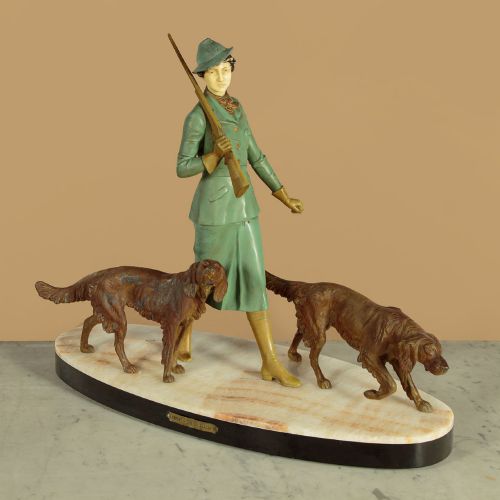


1930s Dog Sculpture
These 1930s dog sculpture examples capture the sleek geometry of the interwar period, offering collectors stylish hounds and figures mounted on stone bases.
1930s Dog Sculpture
A 1930s dog sculpture typically embodies the Art Deco aesthetic through streamlined depictions of greyhounds, borzois, poodles, and hounds. Many of these pieces integrate functional elements such as table lamps, night lights, or car mascots alongside standalone figures.
The objects frequently pair animal figures with contrasting stone bases like marble or onyx. Figure groups also appear, pairing the dogs with human subjects or multiple animals.
Most items on this page originate from the 1930 period, with occasional examples drawing on the broader styles of the 1920s and 1940s.
Materials and construction
Foundry techniques of the era utilised bronze, spelter, and silvered bronze to cast animal forms with clean contours. Patinated metal finishes also provide surface texture.
Sculptors mounted their metal casts onto heavy bases of marble, onyx, or alabaster. These stone plinths often serve as structural components for night lights and lamp fixtures.
1930s Dog Sculpture Retail Price Guide 2026
Typical asking prices for 1930s dog sculpture among the pieces listed under this phrase on Sellingantiques today, from the lower quarter to the upper quarter. They describe what is for sale here now, not the wider market.
Some dogs share their plinths with young girls and teddy bears, proving that even interwar greyhounds needed human and ursine companions.
Distinguishing quality
The integration of the metal figure with its marble or onyx base shows the maker's care. Harmonious proportions between the sculpture and the stone plinth elevate the piece.
Karl Hagenauer·Alexandre Kelety·Geo Maxim
The 1930s Dog Sculpture Glossary
- Art Deco
- A design style characterised by sleek lines, geometric shapes, and stylised representations of figures and animals. It dominated decorative arts during the interwar decades.
- Spelter
- A zinc alloy commonly used as a cost-effective alternative to bronze for casting figures. It often received a patinated finish to resemble heavier metals.
- Car Mascot
- A decorative ornament fitted to the radiator cap of a motor car. In this period, these small sculptures were cast in bronze or other metals.
- Patinated Metal
- Metal treated with chemicals or heat to produce a specific surface colour or finish. This process highlights the sculptural contours and protects the metal.
1930s Dog Sculpture: Frequently Asked Questions
What animals appear most often?
Greyhounds and borzois dominate the sculptural work of this decade. Their elongated shapes suited the prevailing aesthetic.
Other breeds such as poodles and alsatians also appear, often paired with human figures or architectural bases.
How were night lights made?
Makers combined metal dog figures with illuminated glass panels mounted on stone bases. These pieces functioned as decorative lamps for interiors.
The glow emanated from beneath or behind the figures, highlighting the metallic silhouettes.
Where should I place these?
These sculptures suit tabletops, sideboards, and mantelpieces where their geometric lines can be appreciated. Night lights and lamps require access to a power source.
Keep them away from direct sunlight to protect the stone and patinated metal surfaces.
Are car mascots different?
Car mascots are smaller castings designed to mount on vehicle radiator caps. They share the same stylistic traits as larger salon sculptures.
Collectors often display them on custom mounts rather than vehicles today.