



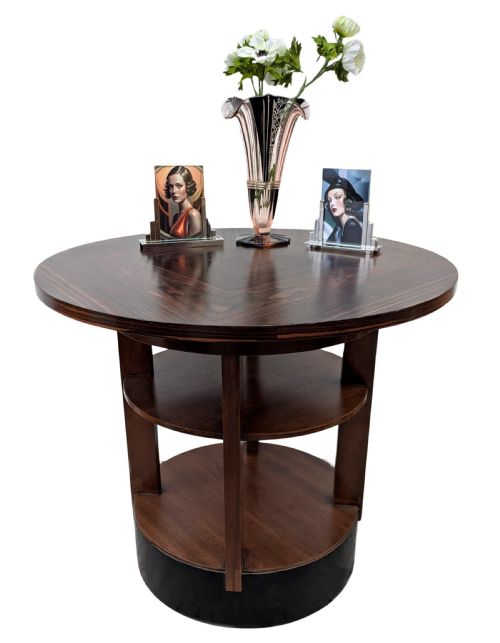


1930s Display Table
A 1930s display table brings period charm and geometric elegance to a room, offering a functional surface designed to showcase special objects.
1930s Display Table
A 1930s display table encompasses occasional pieces, centre tables, and side tables shaped by the Art Deco movement and commercial styles of the period. Buyers exploring this category encounter tiered structures, octagonal forms, and shop display tables originating from around nineteen-thirty.
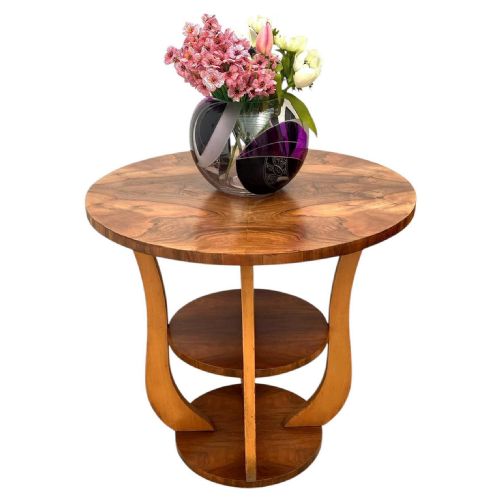
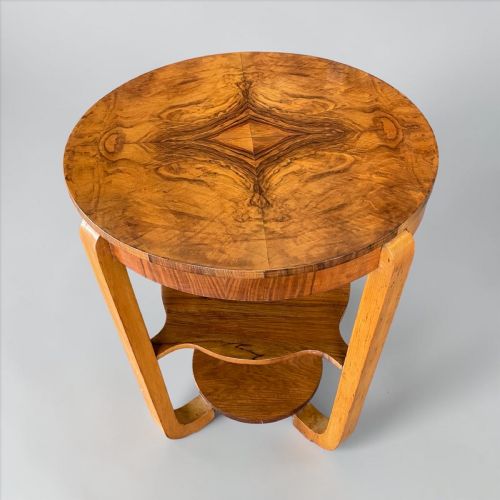
The selection frequently includes walnut, oak, and rosewood constructions, often featuring wood veneer or burr walnut surfaces alongside glass elements. These forms reflect the design sensibilities of French and English workshops from the era.
While the search centres on display tables, the material evidence also reveals related occasional and side tables with similar period characteristics. Selecting the right piece involves understanding these specific timber and tier configurations.
Materials and construction
These tables rely heavily on walnut, oak, and rosewood timbers, often enhanced by decorative wood veneers and burr walnut to create striking surface patterns. Workshops utilised glass and metal elements alongside solid timber to achieve the characteristic modernist lines.
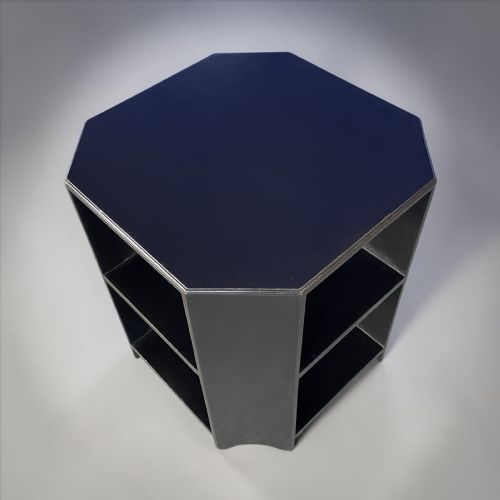
Construction techniques from the period focused on multi-tiered arrangements and geometric shapes, seen in three-tier centre tables and octagonal side tables. French and English makers applied ebonised finishes and precise joinery to define the distinct Art Deco aesthetic.
1930s Display Table Retail Price Guide 2026
Typical asking prices for 1930s display table among the pieces listed under this phrase on Sellingantiques today, from the lower quarter to the upper quarter. They describe what is for sale here now, not the wider market.
Listings feature items from the nineteen-twenties and nineteen-thirties, predominantly showcasing walnut, oak, and rosewood alongside glass and metal.
Judging the quality
The standard of a 1930s display table depends on the choice of timber veneer, particularly the grain definition in burr walnut or rosewood surfaces. Superior examples display careful matching of wood grains across multiple tiers and tabletops.
Construction integrity distinguishes finer pieces, seen in the clean execution of geometric tiers and the stable integration of glass or metal components. Attribution to notable makers or distinct regional workshops elevates the standing of an individual table.
Hille·Charlotte Rhead
The 1930s Display Table Glossary
- Art Deco
- A design style characterised by sleek geometric shapes, stylised motifs, and modern materials popular during the interwar period. This aesthetic defined the architecture, furniture, and decorative arts of the era.
- Burr Walnut
- A timber prized for its swirling, intricate grain patterns caused by tree growths, frequently utilised in high-end veneers. Cabinet makers selected these sections to create dramatic decorative surfaces on tabletops.
- Occasional Table
- A small, versatile table designed for specific, intermittent use rather than primary seating or dining. These pieces include side tables and small centre tables found in domestic interiors.
- Tiered Table
- A piece of furniture featuring multiple horizontal surfaces arranged vertically to provide additional display or storage space. Three-tier configurations are particularly common in modernist designs from the period.
1930s Display Table: Frequently Asked Questions
What is a 1930s display table?
A 1930s display table is an occasional or centre table designed during the interwar period to exhibit decorative objects while serving a functional purpose in a room. These pieces typically incorporate Art Deco or modernist design elements.
Examples range from multi-tiered walnut structures to commercial shop display tables, reflecting the diverse manufacturing styles of England and France around nineteen-thirty.
How do I identify Art Deco furniture?
Art Deco furniture is recognised by its clean geometric lines, symmetrical arrangements, and an emphasis on modern styling. Common indicators include stepped tiers and rounded corners.
Makers frequently utilised exotic timbers like rosewood and walnut, often enhanced with contrasting veneers or ebonised details to accentuate the architectural silhouette.
Where were these tables placed?
These tables functioned primarily as centre pieces in principal rooms or as occasional side tables positioned against walls and beside seating. Multi-tiered versions allowed for the arrangement of decorative items across several levels.
Commercial variants served in retail settings to showcase goods, while domestic editions organised smaller ornaments and everyday objects within a living space.
Which woods are most common?
Walnut and oak appear most frequently in the construction of these tables, supplemented by rosewood in specific decorative pieces. Cabinet makers often applied walnut veneer or burr walnut to visible surfaces.
Metal and glass components also feature in the construction, providing contrast to the solid timber frames and reinforcing the modernist aesthetic.