

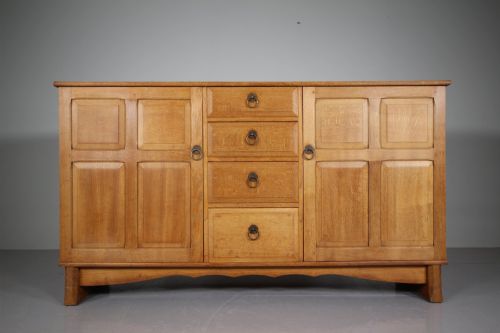
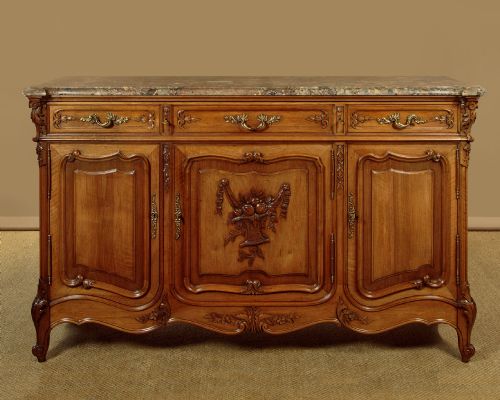
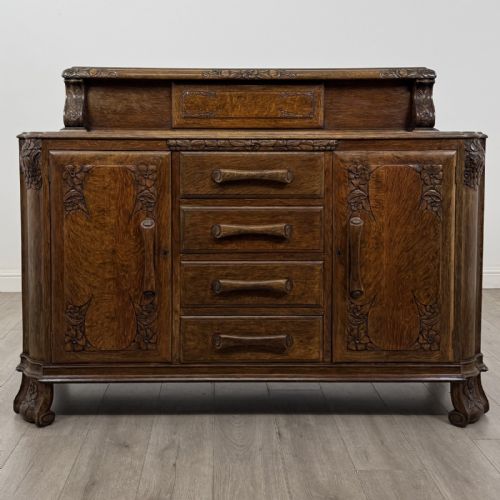
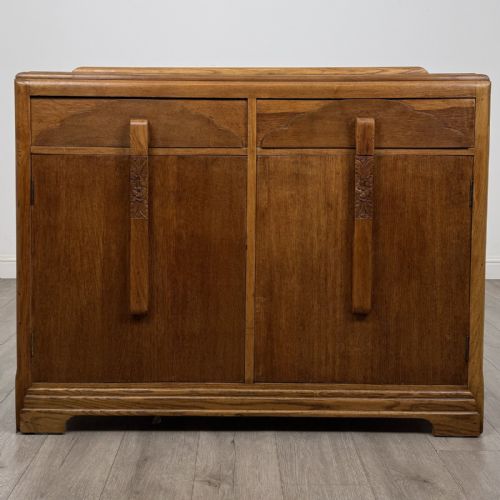
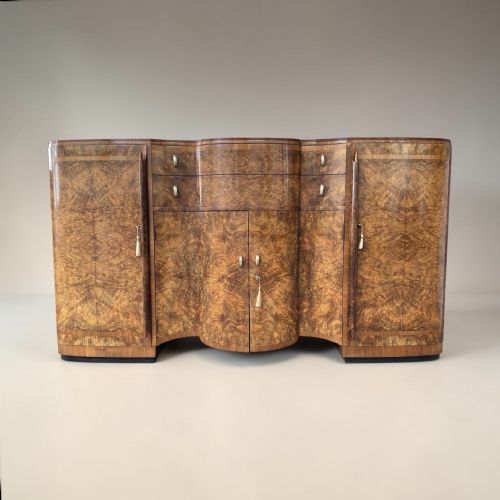
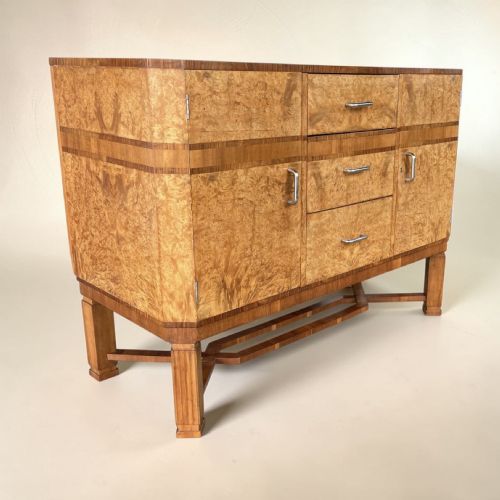
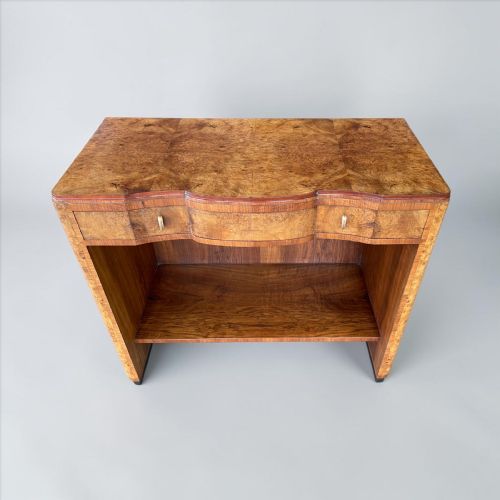
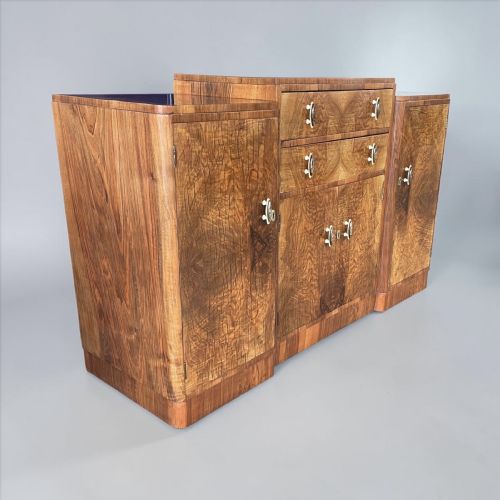

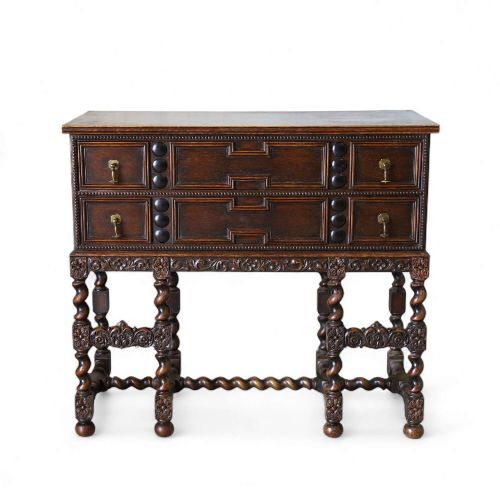


1930s Dining Buffet
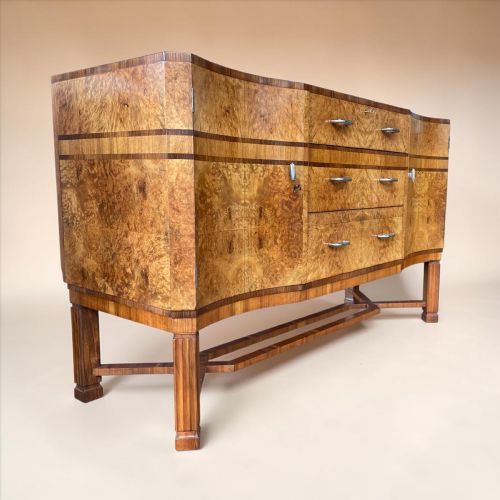
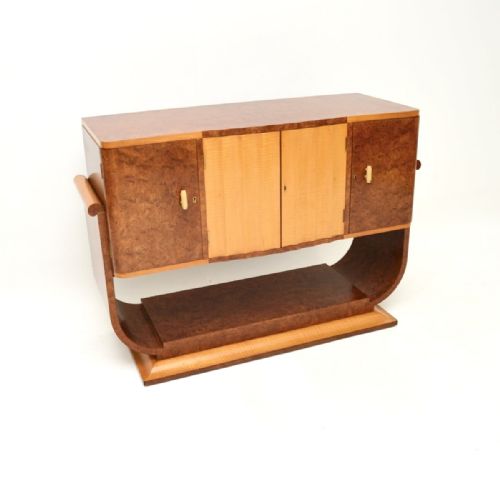
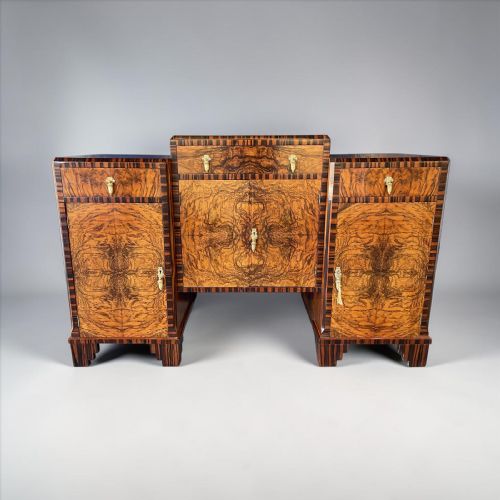
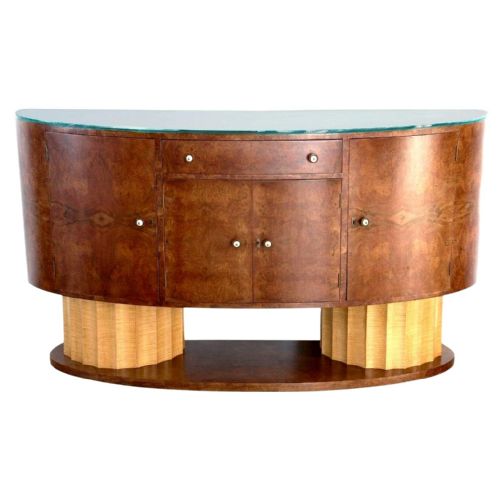
A 1930s dining buffet brings serious storage and bold geometric presence to a room, offering the classic sideboard form that collectors prize.
1930s Dining Buffet
A 1930s dining buffet encompasses substantial sideboards, serving tables and credenzas designed for formal entertaining. These items provide deep cupboards and drawers for glassware, linens and silver.
The pieces on this page are heavily rooted in the Art Deco movement, alongside occasional revival styles like Carolean Revival, Queen Anne Revival and Louis XV Style. Walnut, oak and burr walnut dominate the forms.
Originating predominantly from English and French workshops, these items range from streamlined geometric cabinets to carved oak pieces with barley-twist supports. Buyers encounter everything from compact serving tables to large multi-door sideboards.
How they were made
Craftsmen utilised solid timbers alongside figured veneers such as burr walnut, sycamore, mahogany and maple to create striking patterned surfaces. Walnut veneer allowed makers to construct sweeping curved fronts and symmetrical grain patterns.
Metal components, including brass handles and hardware, accent the woodwork, while select cabinets incorporate glass doors or display shelves. Parquetry tops and carved details demonstrate traditional woodworking techniques adapted for the period.
1930s Dining Buffet Retail Price Guide 2026
Typical asking prices for 1930s dining buffet among the pieces listed under this phrase on Sellingantiques today, from the lower quarter to the upper quarter. They describe what is for sale here now, not the wider market.
Bakelite handles on a walnut cabinet remind us that early 20th-century plastic was once treated with the same reverence as brass.
What varies in quality
The standard of veneer work and timber selection dictates the level of refinement in these cabinets. Pieces utilising book-matched burr walnut or exotic woods demonstrate superior craftsmanship compared to simpler domestic oak builds.
Attribution to notable cabinetmakers or specific retail houses elevates the standing of a sideboard. Workshop execution, from the precision of the parquetry to the integration of brass hardware and Bakelite details, separates standard production from high-end commissions.
Maurice Adams·Gomme·Hille·Epstein·Harry and Lou Epstein·Hamptons of Pall Mall London
The 1930s Dining Buffet Glossary
- Art Deco
- A design style characterised by streamlined forms, geometric patterns and modern materials popular during the interwar period. It rejects Victorian clutter in favour of sleek, unified silhouettes.
- Burr Walnut
- A specialised timber cut from the abnormal growths on walnut trees, yielding highly figured, swirling grain patterns. Cabinetmakers prize this wood for creating decorative veneered panels.
- Veneer
- A thin layer of superior wood applied over a secondary timber base to provide a decorative surface without structural instability. This technique allowed makers to utilise expensive grain patterns efficiently.
- Barley-Twist
- A traditional turning technique resembling a twisted rope, commonly found on the wooden supports of revival furniture. It adds vertical texture and traditional weight to a piece.
- Parquetry
- A geometric mosaic of wood pieces used for decorative surfaces, frequently seen on table and cabinet tops. Artisans arrange contrasting timbers to form repeating patterns.
1930s Dining Buffet: Frequently Asked Questions
How do I clean burr walnut?
Dust regularly with a soft, dry cloth to protect the delicate veneer surface from abrasive particles. Apply a quality beeswax periodically to nourish the wood and maintain its natural sheen.
Avoid placing these cabinets in direct sunlight or near heat sources to prevent the walnut veneer from drying and lifting over time.
Can I use a buffet in a hallway?
These large sideboards function effectively in spacious hallways or reception rooms to provide generous storage for household items and table linens. Their decorative walnut or oak exteriors create a strong focal point upon entering a home.
Measure your hallway clearance carefully before positioning one, as the deep cupboards and protruding serving surfaces require adequate walking space.
What is Carolean Revival furniture?
Carolean Revival pieces draw inspiration from the 17th-century Restoration period, incorporating heavier oak construction and deep hand carvings. Items in this style often feature prominent structural elements like barley-twist supports.
These cabinets offer a more traditional, rustic aesthetic compared to the sleek geometric lines of standard Art Deco dining furniture.