



1930s Curved Armchair
These 1930s curved armchair pieces bring distinctive period silhouette and comfort into a room.
1930s Curved Armchair
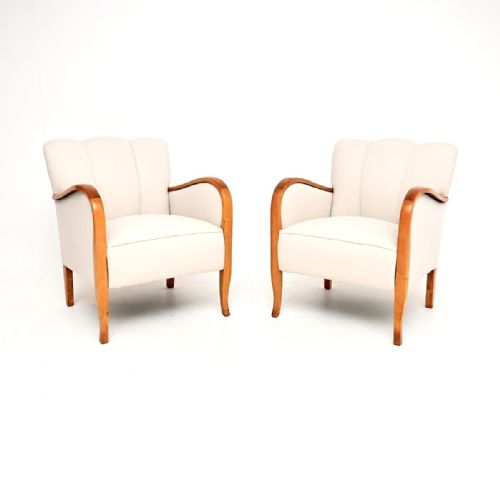
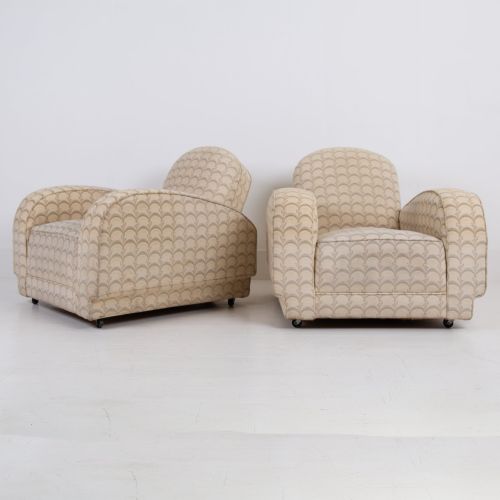
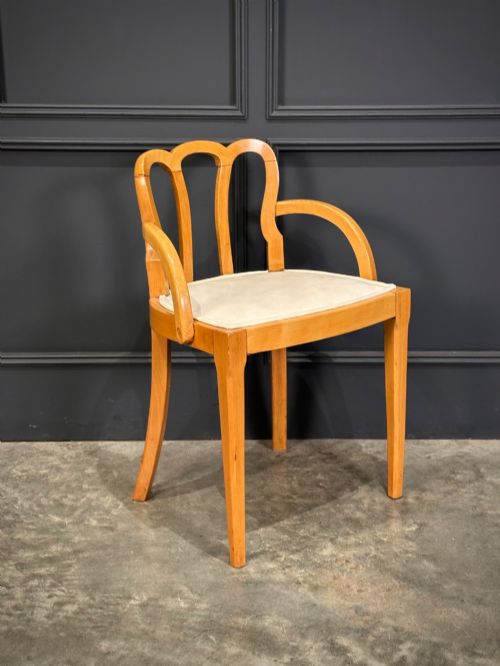
When you search for a 1930s curved armchair, you encounter seating shaped by the dominant design movements of the interwar period. The examples on this page span the 1920s through to the 1940s, taking the form of low lounge chairs, club chairs, and desk chairs.
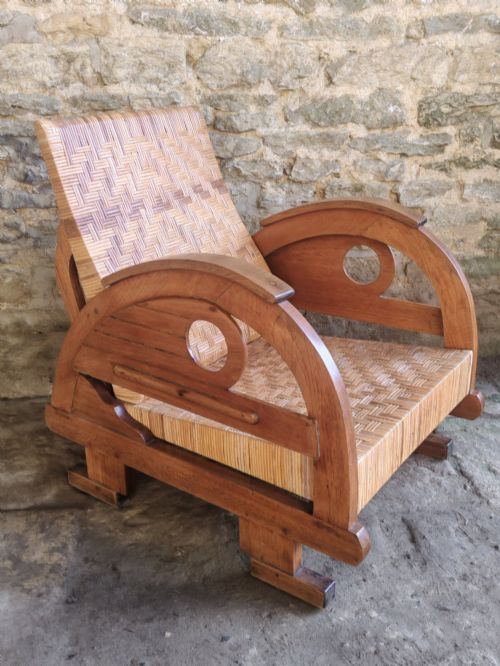
You are most likely to meet pairs designed in the Art Deco style, alongside occasional chairs and robust oak tub armchairs. These pieces utilise sweeping lines and rounded backs to create an inviting silhouette suitable for living spaces and studies.
How they were made
The construction of these armchairs relies on traditional timber framing combined with modern industrial materials of the period. Makers utilised woods such as oak, walnut, satin birch, and elm to form the structural skeletons and exposed wooden details.
Upholstery forms a major part of the construction, utilising leather, textile, fabric, and rattan. Metal elements like brass appear alongside bentwood techniques to achieve the characteristic curved profiles.
The listings on this page span the 1920s, 1930s, and 1940s, featuring materials such as leather, oak, walnut, and satin birch.
What varies in quality
The standard of upholstery and the preservation of original materials also dictate the standing of a piece. Expert execution in shaping the curved silhouette separates standard production items from superior workshop output.
Hille·Harry and Lou Epstein
The 1930s Curved Armchair Glossary
- Art Deco
- A design style characterised by sleek lines, geometric shapes, and modern materials popular during the interwar period.
- Bentwood
- Wood that has been heated and bent into curved forms to create structural components without traditional joinery.
- Satin Birch
- A pale timber with a characteristic reflective sheen utilised extensively in Scandinavian cabinetmaking.
- Tub Armchair
- A deeply upholstered chair where the arms and back form a continuous, enclosed semi-circular rail.
1930s Curved Armchair: Frequently Asked Questions
What defines a 1930s curved armchair?
These chairs are defined by rounded backs, sweeping armrests, and influences from the Art Deco and Arts and Crafts movements. They often feature exposed wooden frames combined with upholstered seats.
Makers of the period utilised materials like leather, fabric, oak, and walnut to build robust yet stylish seating for domestic interiors.
Are these chairs comfortable for daily use?
Many examples are designed specifically for lounging or desk work, offering deep seats and supportive curved backs. Several pieces feature newly restored upholstery to ensure modern sitting standards.
Checking the specific dimensions and padding helps determine how a particular armchair suits your daily seating requirements.
How do I identify Art Deco chairs?
Art Deco chairs typically display streamlined geometric forms, symmetric patterns, and luxurious materials such as satin birch, walnut, or leather. The silhouette prioritises curved lines and smooth, unbroken surfaces.
Makers of the era often incorporated bentwood or contrasting timber veneers to accentuate the modern aesthetic.
Where should I place a club armchair?
Club armchairs work well in living rooms, studies, or libraries where their substantial leather or fabric upholstery provides a focal point. Their low profile makes them suitable for conversational groupings.
Matching a pair of these chairs creates a balanced arrangement around a fireplace or central table.