

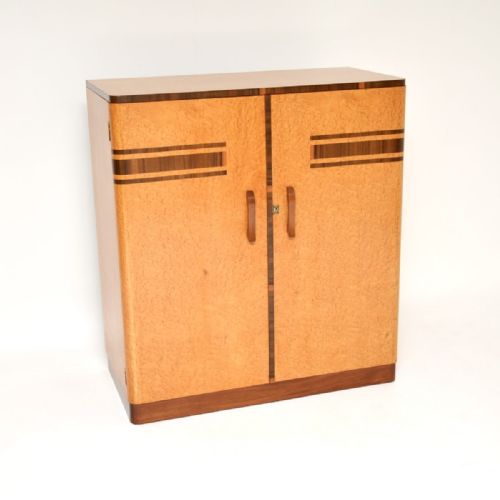


1930s Compactum Wardrobe
A 1930s compactum wardrobe combines hanging space and internal drawers in one piece, offering genuine bedroom storage with distinct period character.
1930s Compactum Wardrobe
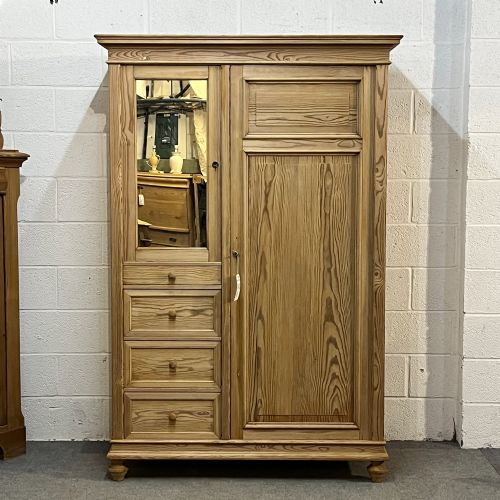
A 1930s compactum wardrobe provides an ingenious solution for compact bedroom storage by uniting full-length hanging compartments with banks of internal drawers. The pieces seen on this page span the 1930 and 1940 periods, predominantly reflecting the strong geometric lines of the Art Deco style alongside occasional country interpretations.
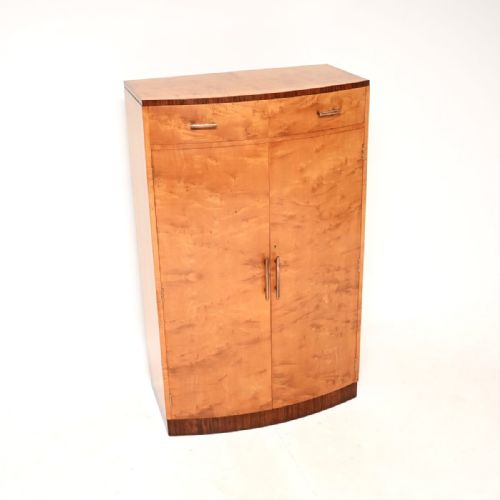
Forms extend beyond traditional wardrobes to include tallboys, cabinets, and split-side compactums designed to maximise internal capacity. Walnut and burr walnut dominate the selection, often contrasted with lighter secondary timbers such as maple, bird's eye maple, and satin birch.
Materials and construction methods
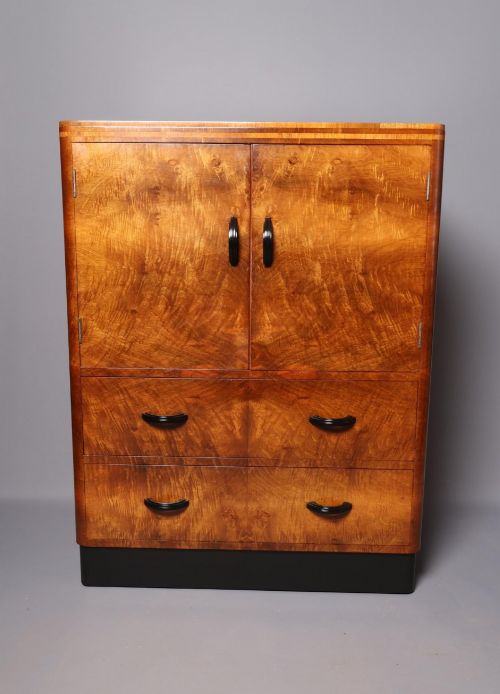
Cabinetmakers of the period utilised figured veneers like burr walnut and bird's eye maple applied over stable carcass timbers to create striking symmetrical grain patterns on the doors and drawer fronts. These decorative wooden surfaces are frequently complemented by original brass hardware and contrasting Bakelite details.
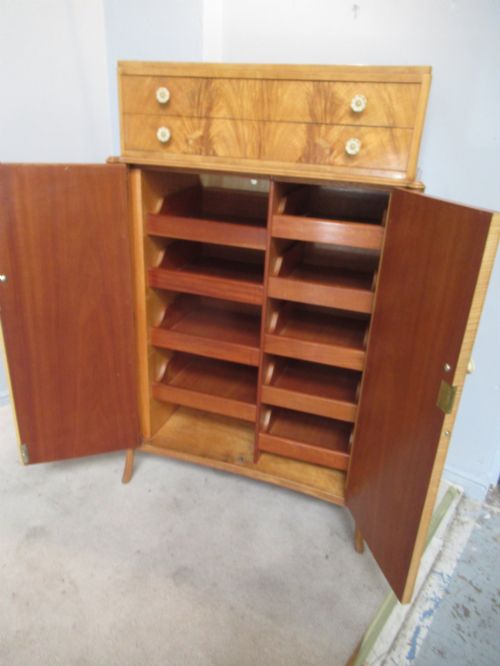
The internal compartments incorporate solid drawer construction and tailored hanging spaces designed to keep attire organised within a single footprint. Pale mahogany and pine also appear in the structural joinery, demonstrating the varied timber selection deployed across the decade.
The furniture spans the Art Deco style alongside 1930s country interpretations.
Distinctions in quality and execution
Superior examples of a 1930s compactum wardrobe display masterclass handling of veneers, where grain patterns mirror symmetrically across multiple door panels and drawer fronts. The crispness of the Art Deco moulding and the integration of internal fittings reveal the hand of a more accomplished cabinetmaker.
Subtle details such as the weight of the brass fittings, the smoothness of internal drawer action, and the choice of secondary timbers distinguish standard production pieces from higher-tier commissions. The cohesion between contrasting woods like walnut and maple ultimately determines the visual impact of the piece.
Heal's
The 1930s Compactum Wardrobe Glossary
- Compactum
- A multi-functional wardrobe combining hanging space, shelving, and internal drawers within a single unified piece. This layout eliminated the need for separate chests of drawers in smaller bedrooms.
- Burr walnut
- A highly figured timber harvested from the wart-like growths on walnut trees, yielding complex swirling grain patterns. Cabinetmakers sliced this wood into thin veneers for decorative door fronts.
- Art Deco
- A dominant design style of the interwar period characterised by sleek geometric shapes, streamlined forms, and stylised ornamentation. Pieces from this era favour symmetry and clean architectural lines.
- Bird's eye maple
- A figured variety of maple timber featuring small, circular disruptions in the grain resembling tiny eyes. It provides a pale, luminous contrast to darker woods like walnut.
- Tallboy
- A case piece standing taller than a traditional chest of drawers, often combining upper cupboard storage with lower drawers. It shares functional similarities with the compactum.
1930s Compactum Wardrobe: Frequently Asked Questions
What is a 1930s compactum wardrobe?
A 1930s compactum wardrobe is a tall storage unit that combines hanging space with built-in drawers and shelves inside a single cabinet. This design was created to organise clothing efficiently without requiring additional bedroom furniture.
Pieces from this era frequently showcase Art Deco styling, utilising figured walnut veneers and contrasting lighter timbers to create a striking focal point in a bedroom.
How do I date a compactum wardrobe?
Dating these pieces involves examining the combination of timber veneers, hardware materials, and overall architectural style. The presence of geometric Art Deco lines alongside burr walnut or bird's eye maple typically points to the 1930 or 1940 periods.
Construction methods also provide clues, as internal drawer dovetails and the use of materials like Bakelite align specifically with manufacturing standards of the interwar decades.
Where should I place a compactum?
A compactum works best against a substantial bedroom wall where its height and dual storage functions can be fully utilised. Because these units combine wardrobes and chests of drawers, they eliminate the need for extra bulky furniture in the room.
Ensure the space allows the doors to open fully so that the internal drawers and hanging compartments remain accessible during daily use.
How do I care for walnut veneer?
Maintaining walnut veneer requires keeping the wood away from direct sunlight and consistent heat sources, which can dry out and split the delicate surface. Regular dusting with a soft, dry cloth preserves the natural lustre of the polished wood.
Occasional application of appropriate wax polish helps nourish the grain without building up heavy residues that dull the distinct patterning of the burr walnut.