


1930s Clock
When you choose a 1930s clock, you bring home a piece of interwar design that combines precise mechanical utility with striking geometric form.
1930s Clock
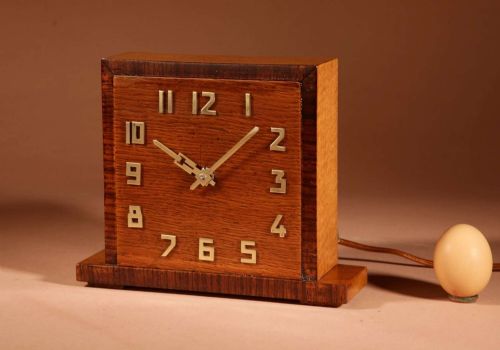
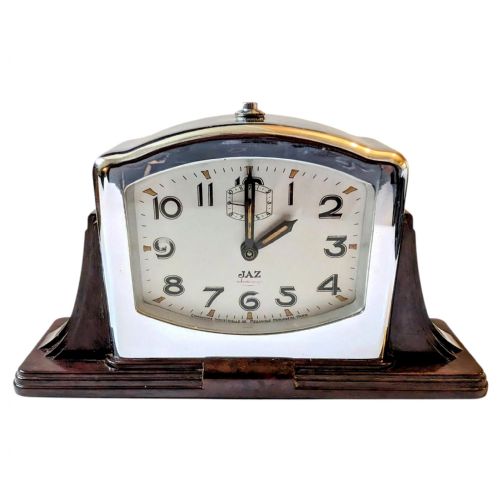
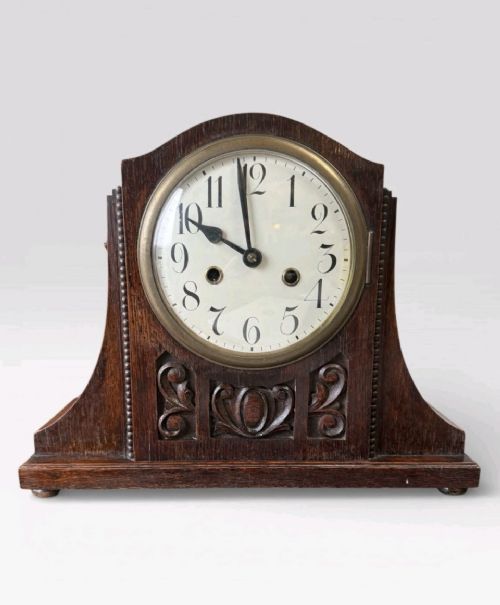
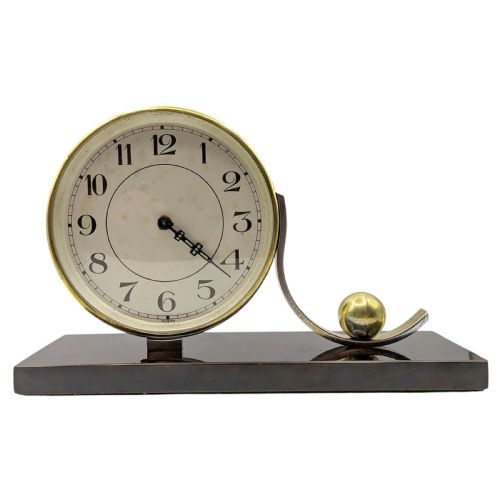
A 1930s clock encompasses a broad range of domestic and office timepieces, with mantel clocks, desk clocks, and wall clocks appearing most frequently on this page. These objects capture the transition from ornate early twentieth-century decoration to the clean lines of the interwar period.
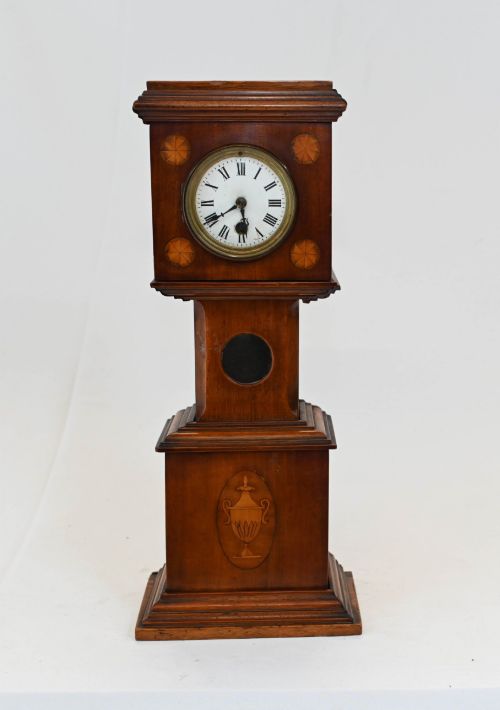
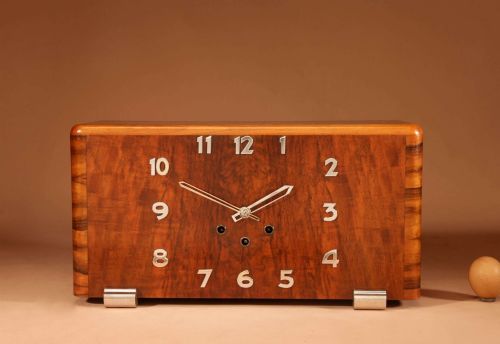
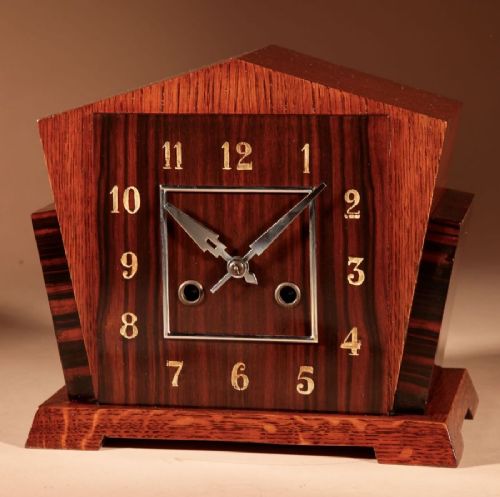
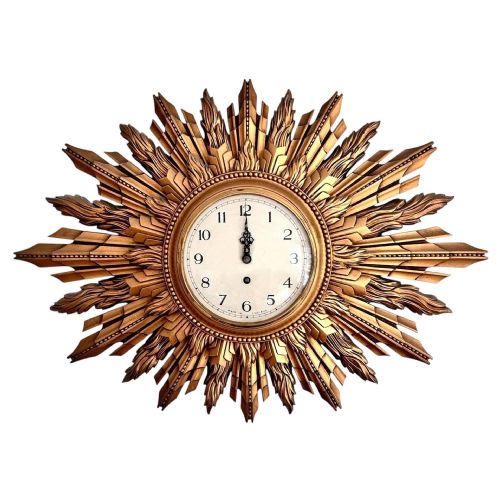
The dominant stylistic force among these items is Art Deco, expressed through symmetrical massing, sunburst motifs, and streamlined geometry. Alongside these, buyers encounter variations such as Amsterdam School pieces, Georgian Revival forms, and industrial designs.
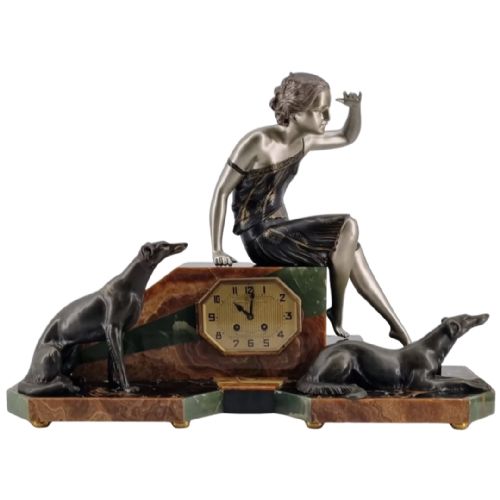
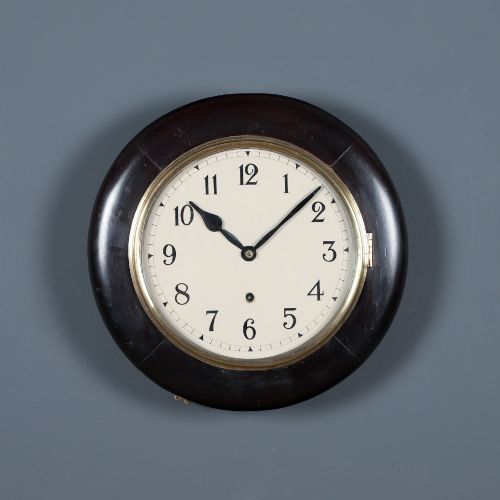
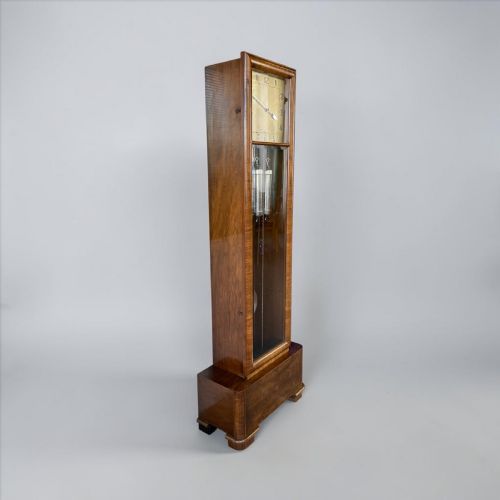
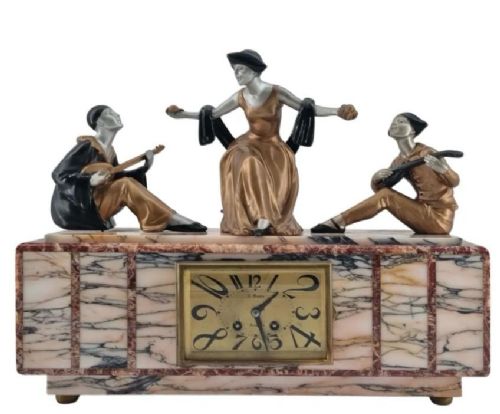
Forms extend from compact desk models and travel clocks to large grandfather clocks and wall dials suitable for station or school environments. Certain examples incorporate figural sculptures or matching garnitures to form complete mantel sets.
Materials and Construction
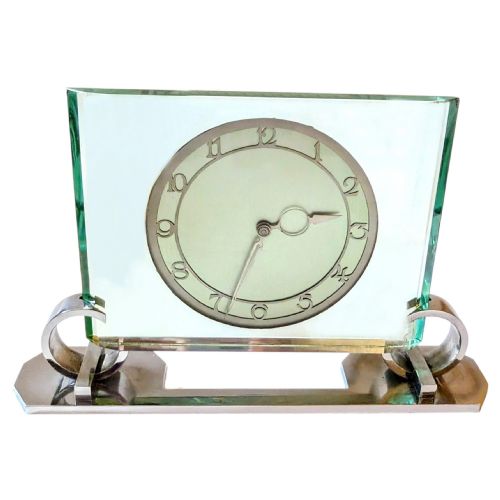
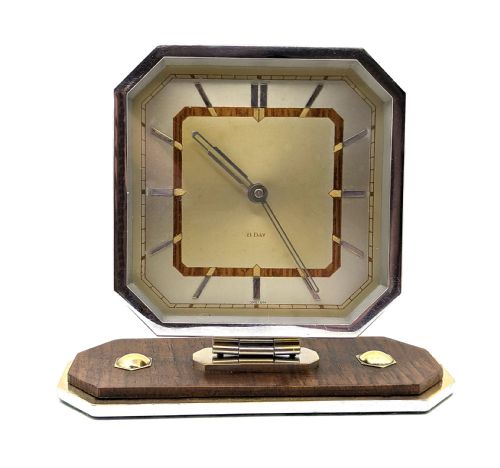
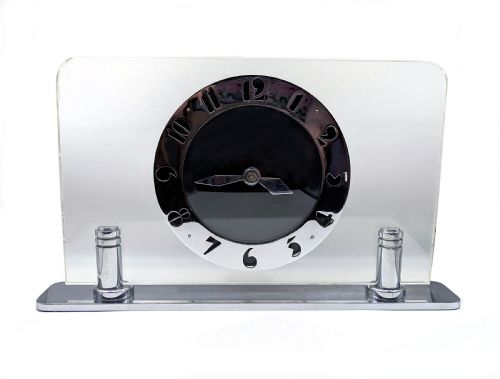
Makers utilised a diverse palette of natural and industrial materials, pairing traditional cabinet timbers like walnut, oak, and mahogany with modern substances including chrome, brass, bakelite, and glass. Wood-cased models often display contrasting veneers like rosewood, macassar ebony, or coromandel.
Metal components appear in chrome-plated brass and solid silver casings, while stone elements utilise green onyx, marble, and mirror glass surfaces. Movements vary from mechanical wind-up and eight-day calibres to early electrical and Bulle systems.
1930s Clock Retail Price Guide 2026
Typical asking prices for 1930s clock among the pieces listed under this phrase on Sellingantiques today, from the lower quarter to the upper quarter. They describe what is for sale here now, not the wider market.
Listings feature oak, walnut, chrome, glass, and onyx across mantel, desk, and wall clocks spanning the 1920s to the 1940s.
Evaluating Quality and Execution
Quality in these timepieces rests upon the precision of the movement and the integrity of the housing. Superior examples feature signed movements from established makers, housed in cabinetry with carefully matched wood veneers or heavy, unblemished cast metal mounts.
Finer pieces demonstrate harmonious proportions and uncompromised structural stability, whether executed in polished chrome, solid silver, or figured walnut. The crispness of geometric detailing and the original condition of glass dials or mirror panels further distinguish standard production from exceptional examples.
Smiths Clockmakers·Mappin and Webb·Harrods of London·Haller
The 1930s Clock Glossary
- Mantel clock
- A domestic timepiece designed to sit upon the shelf above a fireplace. These portable clocks are frequently cased in wood, marble, or onyx.
- Garniture
- A matching set of ornamental objects, typically comprising a central clock flanked by two decorative vases or matching figures.
- Bakelite
- An early synthetic plastic utilised for durable, moulded clock casings and bases during the interwar period.
- Westminster chime
- A melodic sequence of quarter-hourly chimes played by mechanical clock movements. This acoustic feature appears in larger mantel and desk models.
1930s Clock: Frequently Asked Questions
How do I wind a mechanical desk clock?
Mechanical interwar desk and mantel clocks require a key or built-in winding key to tension the mainspring inside the movement.
Turn the key gently until you feel resistance, taking care not to over-wind the mechanism.
Where should I place a heavy marble mantel clock?
Heavy stone and wood mantel clocks need a stable, level surface that can support considerable weight without shifting.
Ensure the furniture piece is sturdy and positioned away from direct heat sources and dampness.
Are electrical clocks from this era difficult to run?
Early electrical and Bulle systems operate through electromagnetic impulses rather than traditional mainsprings.
Consult a specialist horologist to verify the electrical components and wiring before attempting operation.
How do I distinguish an Art Deco wall clock from earlier styles?
Art Deco wall clocks discard Victorian ornamentation in favour of bold geometric shapes, contrasting veneers, and symmetrical sunburst or octagonal designs.
Look for streamlined numerals, chrome bezels, and clean architectural silhouettes typical of the interwar decades.