





1930s Circular Cabinet
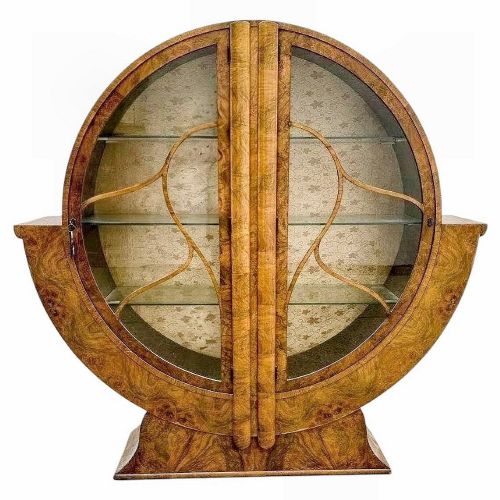
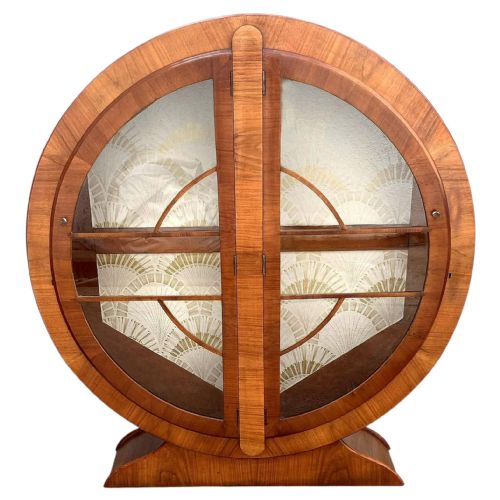
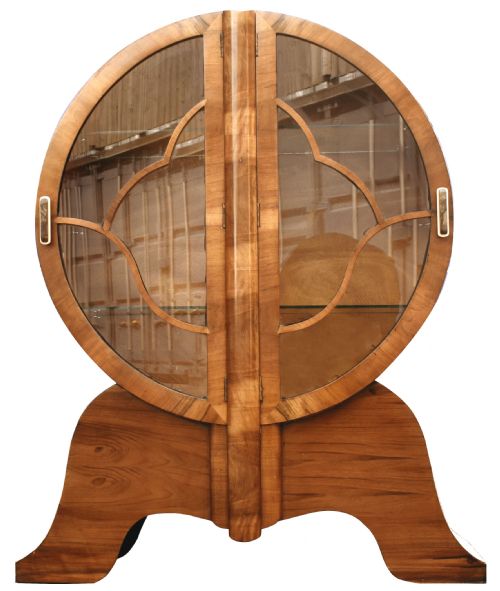
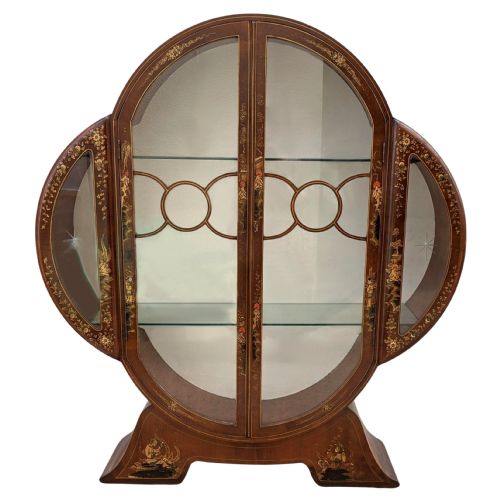
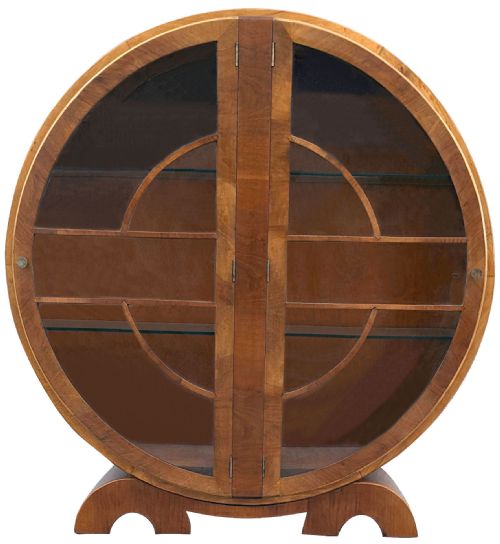
A 1930s circular cabinet brings geometric symmetry and distinctive Art Deco storage into a room.
1930s Circular Cabinet
When you search for a 1930s circular cabinet, you enter the domain of striking Art Deco design where curved forms dominate furniture architecture. These pieces serve primarily as display cabinets, vitrines, and specialised cocktail bars or bedside tables.
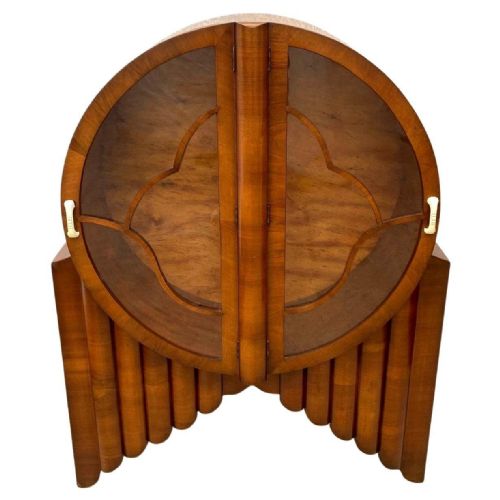
The version you are most likely to meet on this page is an English display cabinet shaped in drum, rocket, or clove silhouettes. Walnut is the defining wood, often paired with glass and subtle brass details to catch the eye.
Beyond the standard display piece, the selection stretches to include matching drum-shaped bedside tables and ingenious pop-up cocktail tables. Each form utilises the rounded footprint to soften room corners while providing functional storage.
How they were made
Cabinet makers of the period relied heavily on figured walnut and burr walnut veneer laid over solid timbers to create rich, swirling grain patterns across curved surfaces. Ebonised wood and golden oak also appear, sometimes accented with maple.
1930s Circular Cabinet Retail Price Guide 2026
Typical asking prices for 1930s circular cabinet among the pieces listed under this phrase on Sellingantiques today, from the lower quarter to the upper quarter. They describe what is for sale here now, not the wider market.
Walnut is the predominant material across these listings, appearing alongside glass, brass, ebonised wood, and burr walnut veneer within an Art Deco aesthetic.
What varies in quality
The grade of veneer selection dictates the visual impact, with highly figured burr walnut surfaces sitting at the upper end of the scale compared to plain timbers. The complexity of the silhouette also matters, distinguishing straightforward drum shapes from more intricate rocket or clove forms.
Construction fidelity in the curved doors and the smoothness of operating mechanisms, such as pop-up cocktail compartments, separate standard cabinet work from superior craftsmanship.
The 1930s Circular Cabinet Glossary
- Art Deco
- A design style of the 1930s characterised by sleek geometric shapes, streamlined forms, and stylised ornamentation. It replaced the ornate curves of earlier periods with modern industrial lines.
- Vitrine
- A glass-fronted cabinet specifically designed for the display of fine porcelain, glassware, or curiosities. These pieces use glass on multiple sides to maximise interior light.
- Burr Walnut Veneer
- Thin slices of walnut timber taken from the growth excrescences on the tree, showing intricate, swirling grain patterns. It provides a highly decorative surface on curved cabinet doors.
- Leaded Glass
- Small panes of glass held together by strips of lead, known as cames, forming geometric patterns across cabinet doors. This technique adds structural rigidity and decorative detail to viewing windows.
1930s Circular Cabinet: Frequently Asked Questions
Where should a circular cabinet go?
The curved footprint of a 1930s circular cabinet allows it to soften an awkward corner or stand proudly as a freestanding room focal point. Placing it away from direct sunlight protects the delicate walnut veneers.
Ensure adequate clearance around the piece so the rounded doors or specialised opening mechanisms function without obstruction.
How do I clean walnut veneer?
Dust the cabinet regularly with a soft, dry cloth to prevent particulate buildup on the polished wood surface. Avoid commercial silicones or harsh chemical sprays that can degrade the historic finish.
Feed the timber periodically with appropriate furniture wax to maintain the depth and lustre of the walnut grain.
Can I store heavy books inside?
Most of these pieces are designed as display cabinets, vitrines, or cocktail bars rather than heavy bookcases. The internal shelving is generally proportioned for glassware, china, or decorative objects.
Distribute weight evenly across the shelves to protect the internal fittings and the curved structure of the cabinet.
How do I identify Art Deco pieces?
Look for clean geometric lines, symmetrical forms, and the prominent use of figured walnut veneers characteristic of the 1930s. The absence of traditional Victorian or Edwardian carving marks the transition to modernism.
Signature silhouettes like drum shapes, rocket forms, and integrated metal hardware further confirm the period style.