

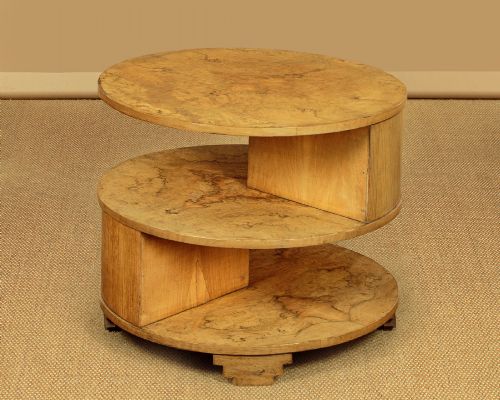
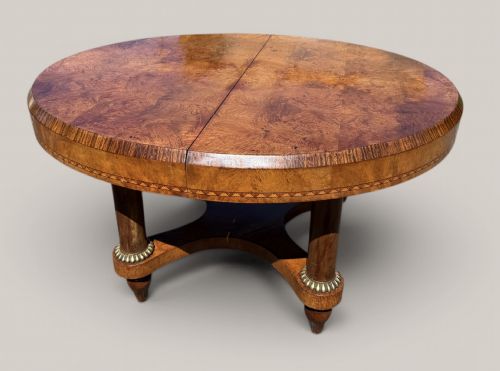


1930s Burr Wood Tables
These 1930s burr wood tables bring unmistakable Art Deco grain patterns into a room, offering both striking visual movement and period utility.
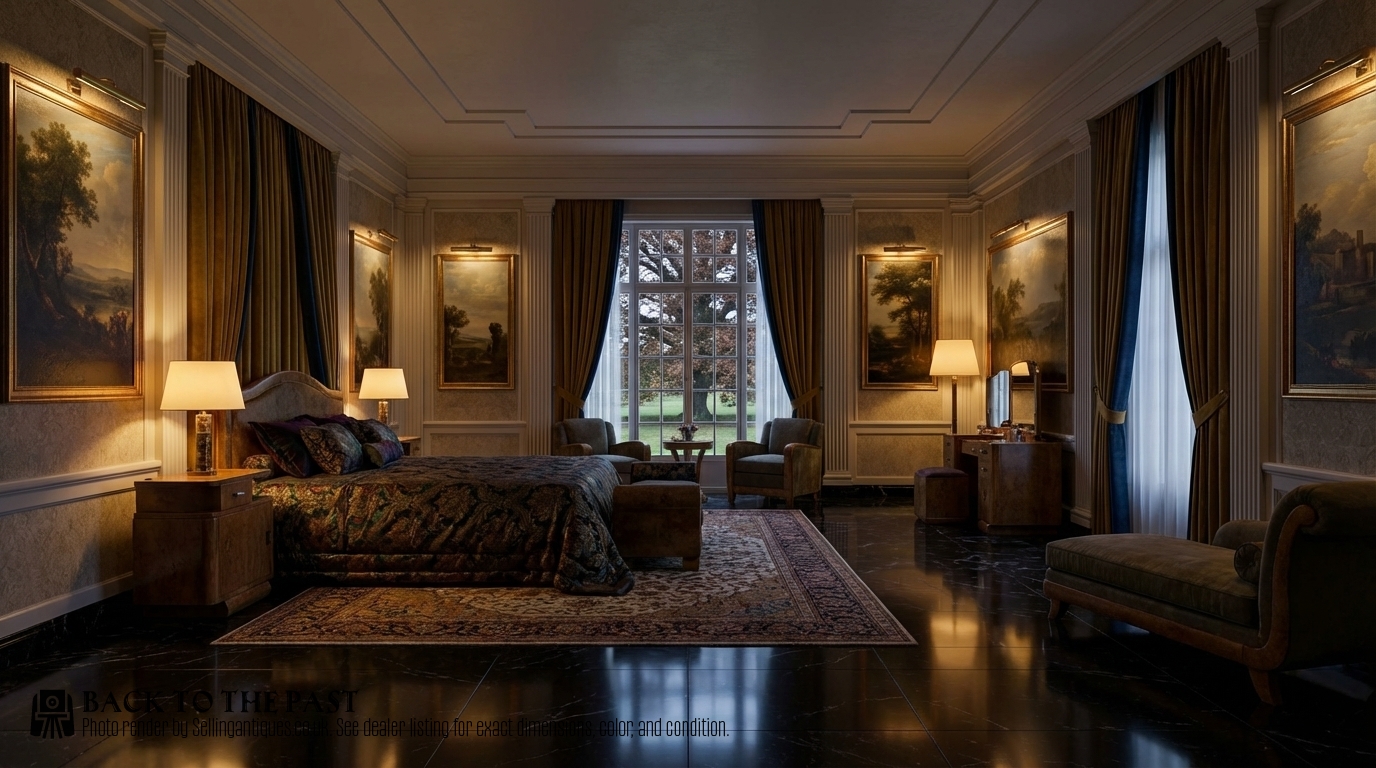
1930s Burr Wood Tables
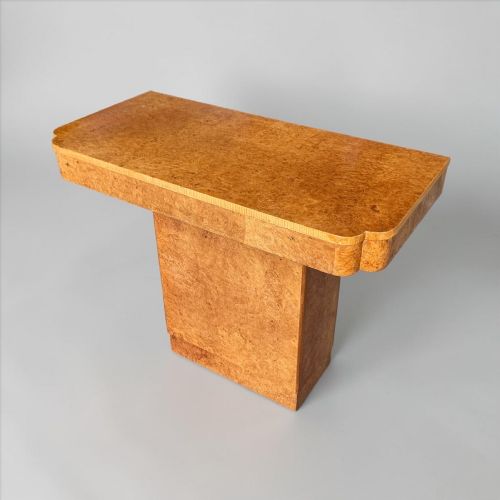
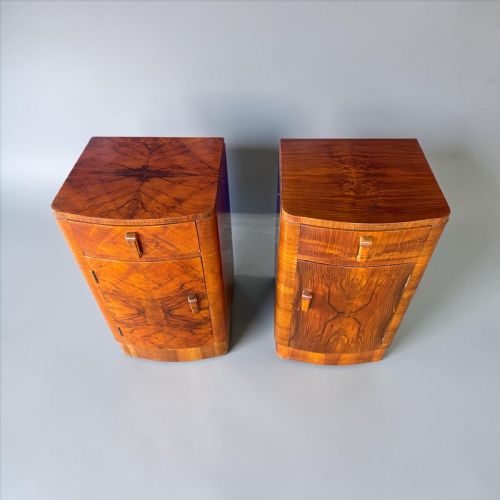
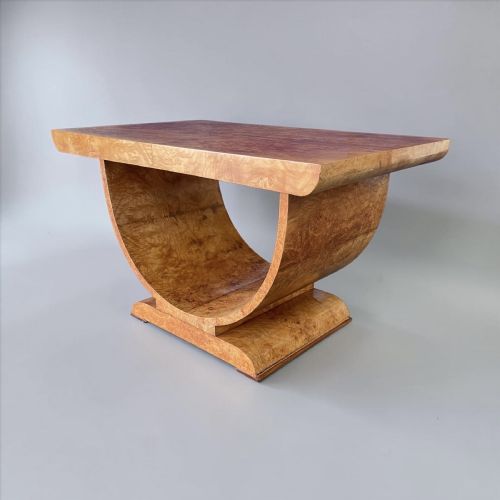
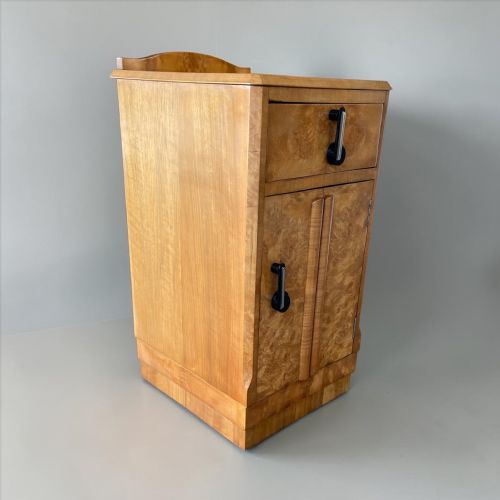
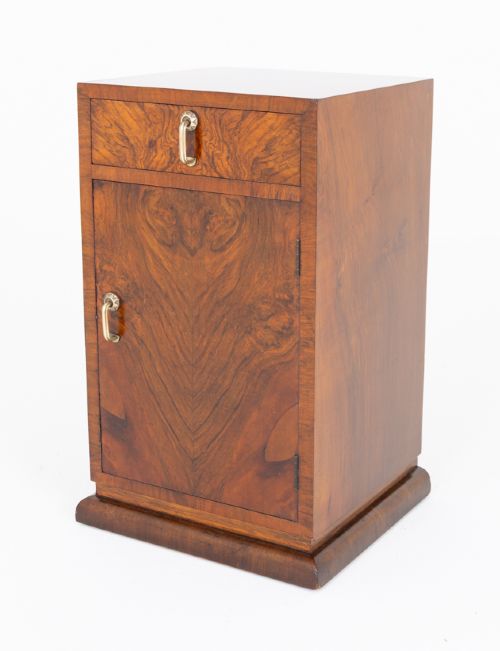
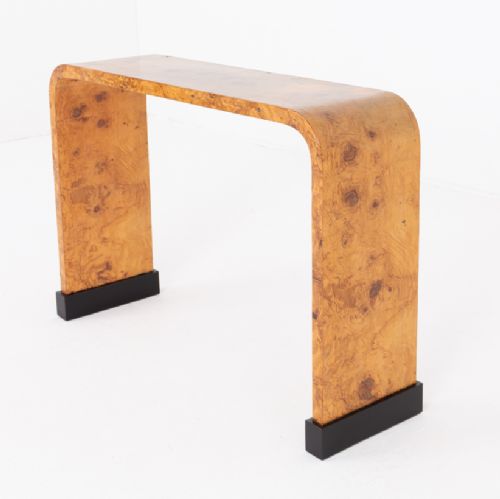
When you search for 1930s burr wood tables, you find utilitarian and decorative furniture defined by the distinct mottled grain of burl timber. These pieces span coffee tables, console tables, bedside cabinets, and dining suites from the Art Deco period.
The most common examples on this page are coffee tables and console tables, frequently constructed during the 1930s. They showcase the characteristic warmth and swirling patterns of walnut, maple, elm, and general burr wood veneers.
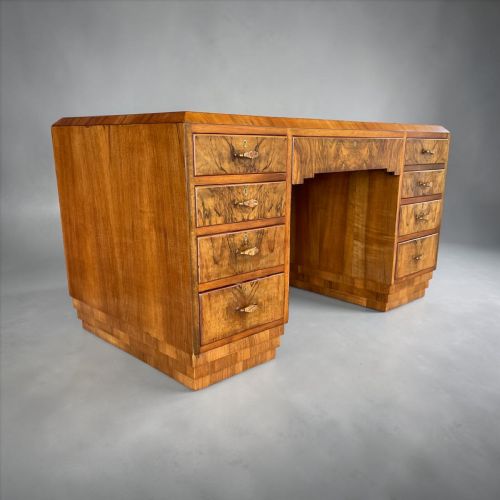
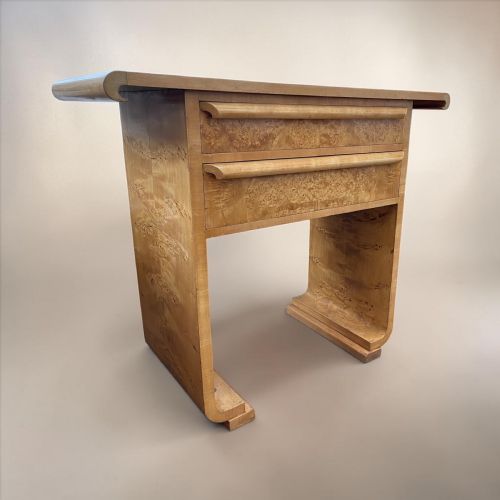
Beyond occasional tables, the selection includes larger dining tables with matching chairs, desks, and tiered modernist tables. Each object relies on the natural irregularities of the timber to create a decorative surface without relying on excessive carving.
How they were made
Cabinetmakers of the period utilised thin slices of burr walnut, burr maple, and burr elm veneer applied over solid timber substrates and frames. This technique allowed workshops to display highly figured, symmetrical grain patterns across large tabletops and console surfaces.
Construction frequently incorporated brass highlights and timber veneers to complement the polished wood finishes, ranging from rich dark tones to bleached walnut. Joinery was built to support clean geometric lines typical of the Art Deco style.
Some tables double as serving stations, proving that 1930s designers took cocktail hour very seriously indeed.
What varies in quality
The choice of burl veneer dictates much of the visual impact, with tighter, more even patterns generally representing higher desirability among collectors. The selection of timber species, such as burr maple versus standard walnut, also alters the overall brightness and tone of the piece.
Execution of the veneer work and the handling of edge banding reveal the skill of the original workshop. Pieces attributed to notable makers demonstrate superior proportion and finish compared to anonymous commercial output.
Fortnum and Mason·Hille·Maurice Adams
The 1930s Burr Wood Tables Glossary
- Burr wood
- A growth on a tree where the grain has grown in a deformed, swirling manner, producing highly decorative veneer when sliced. This figure is prized for tabletops.
- Art Deco
- A design style of the 1920s and 1930s characterised by sleek geometric shapes, streamlined forms, and modern materials. It heavily influenced the furniture of this era.
- Veneer
- A thin layer of superior wood glued to a base panel of lesser quality timber. This method prevents warping while displaying expensive grain patterns.
- Console table
- A table designed to stand against a wall, frequently used in hallways or living rooms. Many examples from this period feature curved or stepped profiles.
- Bleached walnut
- Walnut timber treated to lighten its natural dark colour, popular in modernism and 1930s design for a softer aesthetic.
1930s Burr Wood Tables: Frequently Asked Questions
How do I clean a burr wood table?
Dust regularly with a soft, dry cloth to prevent particles from scratching the polished surface. Avoid commercial silicon sprays or excessive moisture, which can damage old veneer.
Apply a traditional beeswax occasionally to nourish the timber and maintain a soft sheen. Keep the furniture away from direct sunlight and heat sources to prevent the wood from drying out.
Are these tables solid wood?
Most pieces from this era utilise decorative wood veneers applied over a stable timber core. This construction method prevents the valuable burr slices from cracking and warping.
Solid timber was generally reserved for structural elements, frames, and legs. The decorative surfaces rely on expertly matched veneer leaves.
What rooms suit an Art Deco console table?
Console tables fit well in narrow hallways, living room perimeters, or serving areas behind dining spaces. Their shallow depth provides a surface for lamps and decorative objects without blocking movement.
Pair them with neutral walls to let the swirling grain patterns of the wood remain the focal point. They integrate easily into both modern and traditional interiors.
How do I identify Art Deco furniture?
Look for symmetrical designs, geometric shapes, and stepped profiles that reflect the architecture of the interwar period. The use of exotic veneers like burr walnut and maple is also typical.
Hardware is often minimal, allowing the natural figuring of the wood to dominate the aesthetic. Pieces may also carry maker stamps or labels from period retailers.