




1930s Buffet Cabinet
A 1930s buffet cabinet delivers generous storage and striking geometric presence, bringing functional elegance and period character to any dining or living space.
1930s Buffet Cabinet
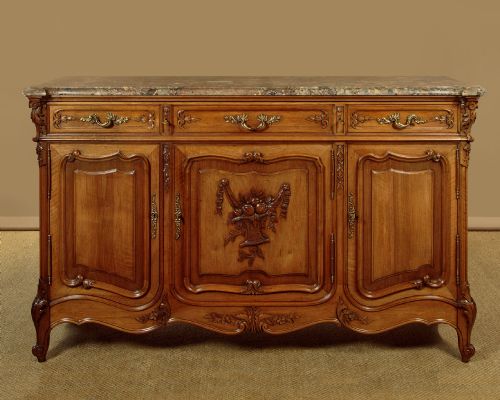
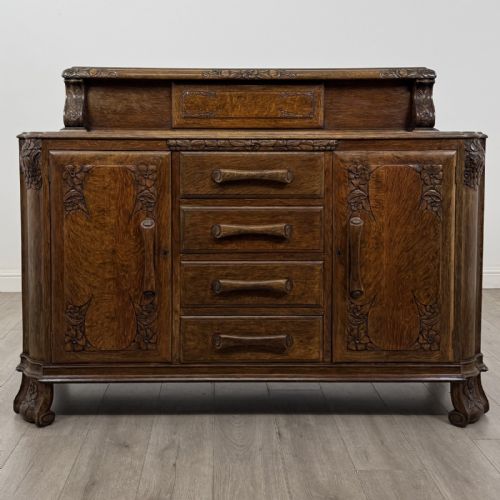
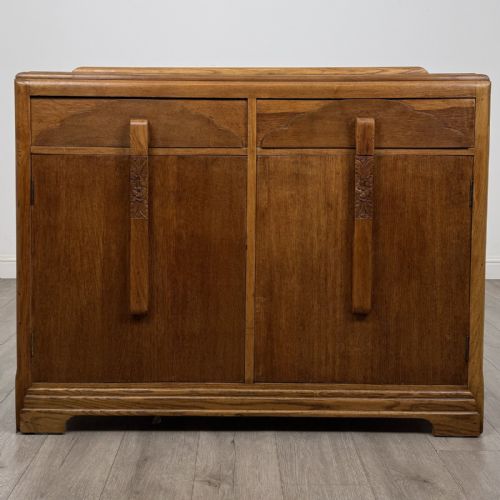
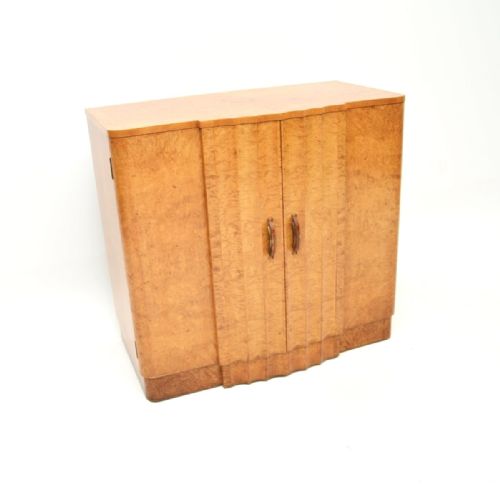
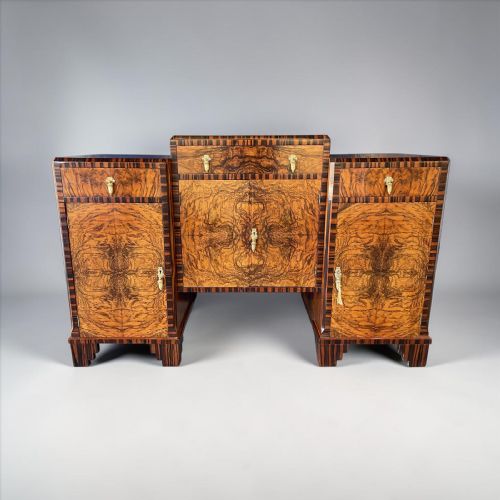
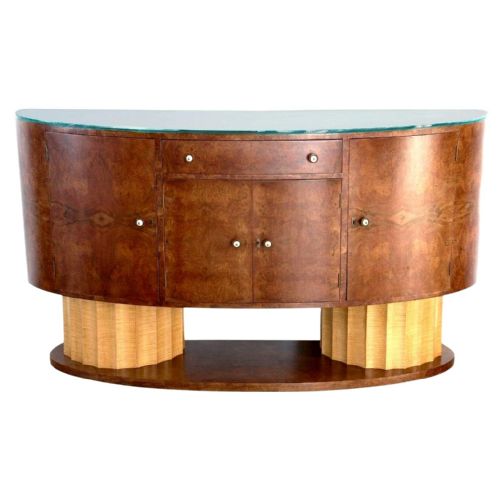
When searching for a 1930s buffet cabinet, collectors encounter a substantial range of sideboards, credenzas, and drinks cabinets designed for domestic storage and entertaining. The selection leans heavily into the Art Deco style, alongside French Provincial, Louis XV Style, and 1930s Country forms.
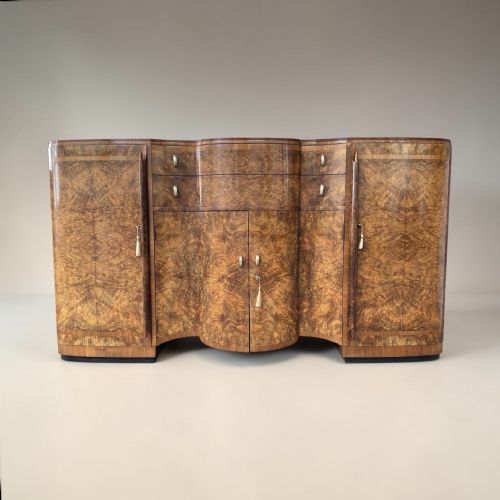
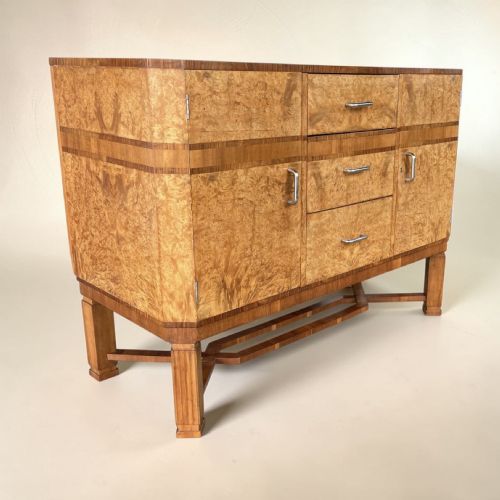
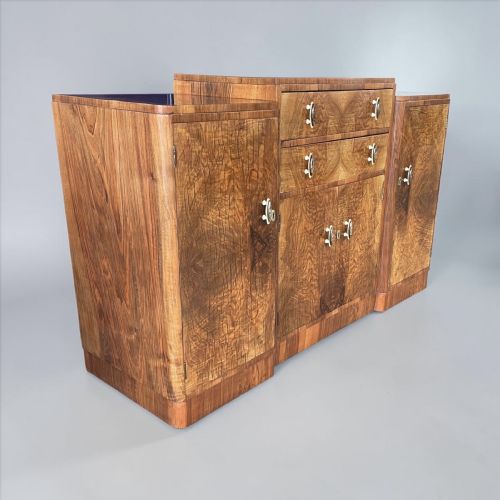
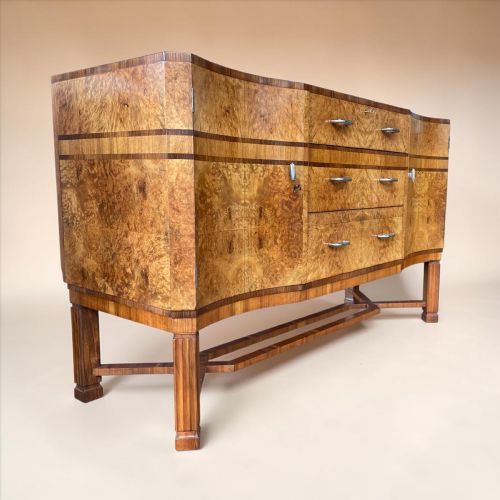
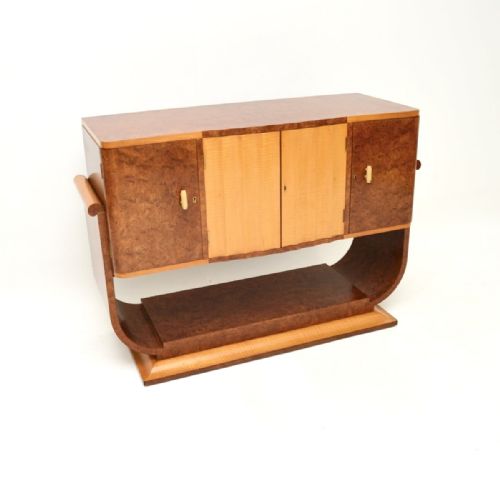
Pieces from this era function primarily as dining room servers or freestanding display cupboards. The most common form met here is the Art Deco sideboard, frequently constructed with substantial proportions and dedicated cupboard space.
How They Were Made
Construction relies upon solid wood frames finished with decorative wood veneers such as burr walnut, walnut, sycamore, macassar, and maple, sometimes incorporating oak or pine. Cabinetmakers utilised wood veneer techniques to display striking grain patterns across large flat doors and drawer fronts.
Metal, brass, glass, and bakelite appear as contrasting hardware and decorative accents. Selected examples incorporate marble tops for durable and decorative horizontal surfaces.
1930s Buffet Cabinet Retail Price Guide 2026
Typical asking prices for 1930s buffet cabinet among the pieces listed under this phrase on Sellingantiques today, from the lower quarter to the upper quarter. They describe what is for sale here now, not the wider market.
The site listings feature walnut, burr walnut, oak, pine, and mahogany timbers alongside marble tops and bakelite details.
What Varies in Quality
Quality depends upon the selection of timber veneers and the intricacy of the cabinetmaker's geometric arrangement. Matched grain figures and harmonious secondary woods elevate a piece significantly above standard production items.
The integration of specialist maker workshops, original hardware such as brass and bakelite fittings, and supplementary materials like marble tops distinguish higher-tier examples within the category.
Maurice Adams·Harry and Lou Epstein·Gomme·Hille·Hamptons of Pall Mall London·Bowman Brothers
The 1930s Buffet Cabinet Glossary
- Art Deco
- A design style characterised by sleek geometric shapes, streamlined forms, and stylised ornamentation popular during the interwar period. It dominates the aesthetic of these cabinets.
- Burr Walnut
- A highly prized wood veneer derived from walnut tree growths, producing swirling, knotty patterns across cabinet doors. It provides rich visual texture.
- Veneer
- A thin layer of superior wood glued to a base timber foundation to create decorative surfaces. Cabinetmakers employ this method to display expensive grains economically.
- Bakelite
- An early synthetic plastic utilised for handles, knobs, and decorative escutcheons. It denotes period authenticity in mid-century hardware.
- Credenza
- A sideboard or buffet cabinet originally used for displaying silverware and serving food. The form overlaps closely with traditional sideboards.
1930s Buffet Cabinet: Frequently Asked Questions
What is a 1930s buffet cabinet?
A 1930s buffet cabinet is a large storage furniture piece designed for dining rooms, typically featuring cupboards and drawers for tableware.
Most examples from this decade showcase Art Deco styling with figured wood veneers and geometric brass or bakelite hardware.
How do I identify Art Deco cabinets?
Art Deco cabinets display symmetrical geometric lines, stepped outlines, and rich contrasting wood veneers like burr walnut and sycamore.
They frequently omit excessive carved ornamentation in favour of sleek surfaces and specialised hardware.
Where were these cabinets made?
These cabinets originate from British workshops and prominent London department stores, alongside Parisian and Italian ateliers.
European examples often incorporate marble tops and exotic veneers like macassar ebony alongside native timbers.
How do I style a buffet cabinet?
Position the cabinet against a prominent wall in a dining room or living space to serve as a focal storage anchor.
Pair the top surface with simple lamps, glassware, or ceramics that complement the dark walnut tones and metallic hardware.