



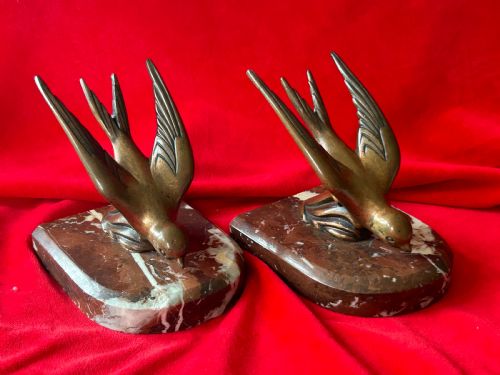


1930s Bronze Birds
These 1930s bronze birds capture the clean lines of Art Deco design, bringing animated avian forms and metalwork into domestic spaces.
1930s Bronze Birds
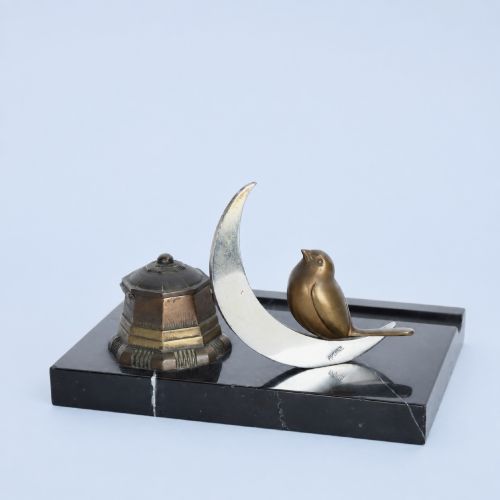
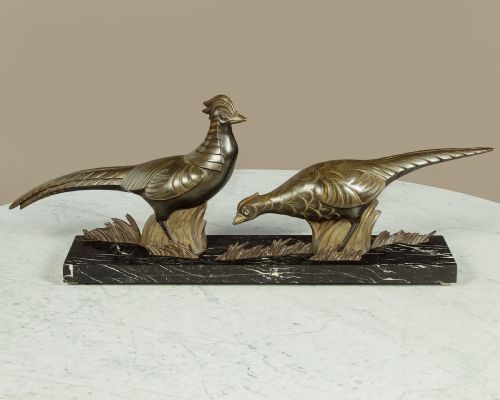
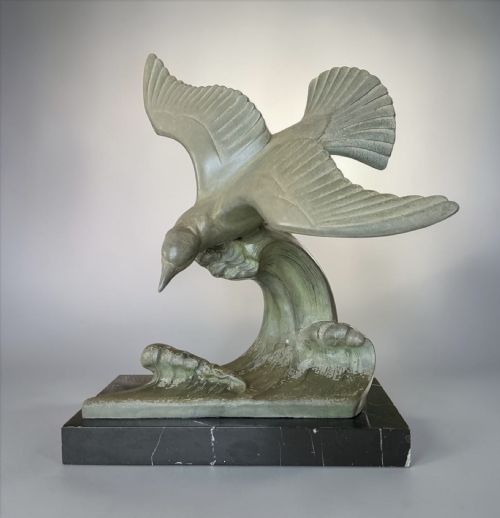
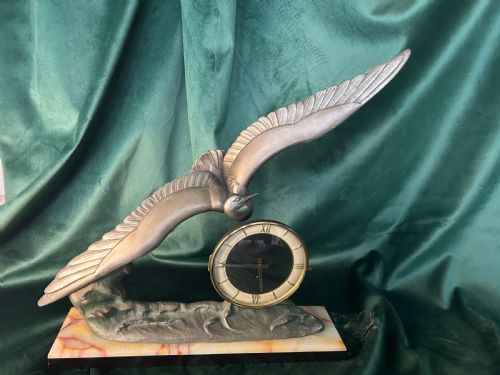
When you search for 1930s bronze birds, you encounter sculptural objects spanning pheasants, seagulls, pelicans, and albatrosses created during the early twentieth century. These pieces often take the form of standalone desk sculptures, bookends, mantel clock garnitures, and night lights designed to celebrate animal subjects in motion.
You are most likely to meet French Art Deco examples on this page, alongside related works incorporating spelter or brass alongside marble bases. The visual language relies on stylised posture, capturing wings in flight or birds resting upon crescent moons and waves.
The selection ranges from singular predatory studies to paired golden pheasants, reflecting the period's fascination with exotic wildlife and coastal birds. Many incorporate contrasting materials like black marble plinths to elevate the metallic figures into functional domestic ornaments.
How they were made
These items rely on metal casting techniques to shape bronze, brass, or spelter into dynamic avian figures. The resulting metal forms are then patinated or gilt to achieve golden or dark metallic surfaces.
Mounting plays an essential role in construction, with heavy metal sculptures secured to bases of black marble, onyx, or glass. Some lighting pieces also integrate glass shades to diffuse illumination around the central bird motif.
Listings feature Art Deco and Japanese Showa styles, uniting marble, bronze, spelter, and glass across functional lamps, clocks, and sculptures.
What varies in quality
The distinction between tiers of work rests upon the crispness of the casting and the naturalism of the bird's anatomy. Superior examples display fine feather detailing and well-proportioned wings, whereas simpler pieces show softer definition in the metal.
The quality of the mounting base dictates the overall balance of the object, with dense black marble and variegated onyx providing a more substantial foundation than lighter substitutes. Signed pieces and integrated works like clock garnitures or fitted desk tidies generally demonstrate higher ambition in design.
Paul Joris·Herzig
The 1930s Bronze Birds Glossary
- Bronze
- An alloy consisting primarily of copper, traditionally used for durable and finely detailed metal sculptures. It takes patination well to produce dark or golden surface finishes.
- Spelter
- A zinc-based alloy utilised as an economical alternative to bronze for decorative figures and lamps. It frequently receives a bronze-coloured coating to mimic more costly metals.
- Garniture
- A set of matching ornamental objects designed for display together, commonly comprising a mantel clock flanked by matching vases or sculptural elements. They anchor fireplace mantels and large sideboards.
- Patina
- The surface coloration and sheen developed naturally over time or applied chemically by the maker to enhance metallic depth. It highlights the contours of feathered plumage.
- Plinth
- A heavy rectangular or stepped base, often fashioned from black marble, supporting the primary sculpture. It provides stability and visual weight to the composition.
1930s Bronze Birds: Frequently Asked Questions
What materials make up 1930s bronze birds?
These decorative objects primarily utilise cast bronze, spelter, and brass for the bird figures themselves. Artisans frequently mounted these metal sculptures onto heavy bases constructed from black marble, onyx, and glass.
Additional elements like brass and mixed metals appear in desk accessories and clocks. The combination of dark stone and gleaming metal defines the visual character of the period.
Where were these bird sculptures displayed originally?
Period interiors featured these figures on mantelpieces, library desks, and reading tables as focal points of decoration. Bookends anchored shelves of literature, while night lights provided functional illumination in bedrooms and hallways.
Larger garniture sets commanded prominent positions atop salon furniture. Their compact scale allowed them to integrate easily into domestic rooms.
How do I distinguish bronze from spelter?
Bronze exhibits greater weight, cooler temperature to the touch, and greater tensile strength in delicate wing details. Spelter feels lighter and can show a more brittle structure beneath surface patination.
Examine the underside or areas of wear where the underlying metal colour becomes visible. Bronze maintains a rich reddish-yellow metallic tone beneath the patina.
How do I care for marble and metal pieces?
Dust the metal surfaces gently with a soft dry cloth to prevent the accumulation of grit in feathered recesses. Avoid abrasive cleaners that can strip the original patination from the bronze or brass.
Keep marble bases away from excessive moisture and acidic substances to protect the polished stone surface. Gentle wiping with a damp cloth suffices for routine maintenance.