

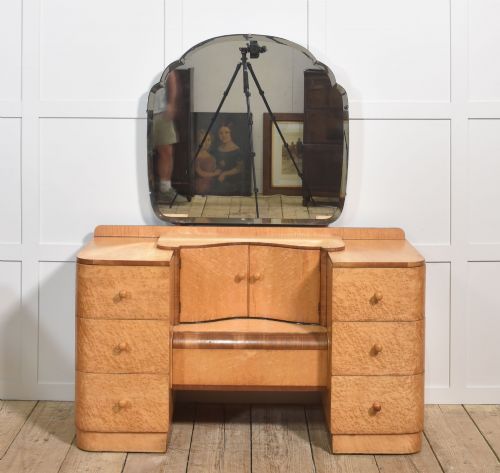


1930s Birds Eye Maple Table
A 1930s birds eye maple table brings the geometric rhythm and striking timber grain of the Art Deco era straight into a modern room.
1930s Birds Eye Maple Table
A 1930s birds eye maple table captures the distinct aesthetic of the interwar period, combining geometric Art Deco forms with the speckled, highly figured grain of native or imported maple. These surfaces are frequently paired with contrasting timbers such as walnut, rosewood, or ebonised elements to accentuate the pale, circular patterning of the wood.
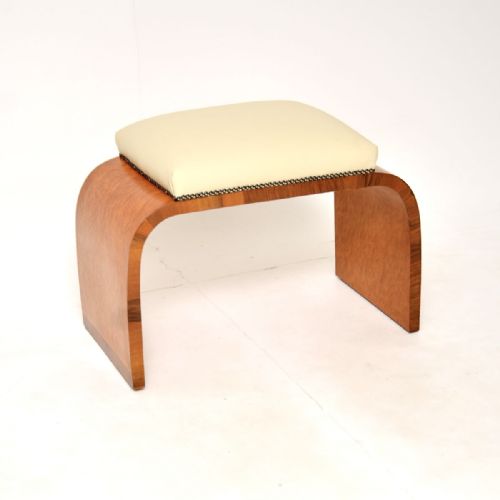
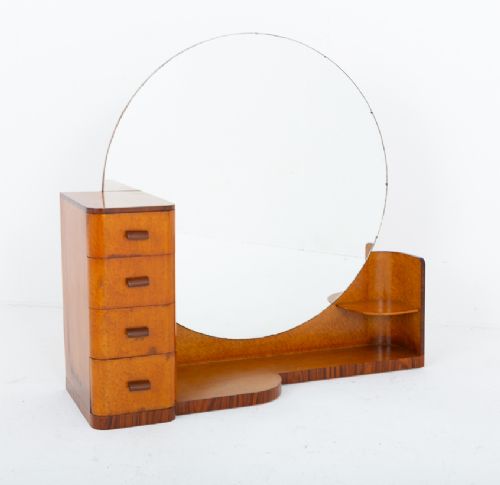
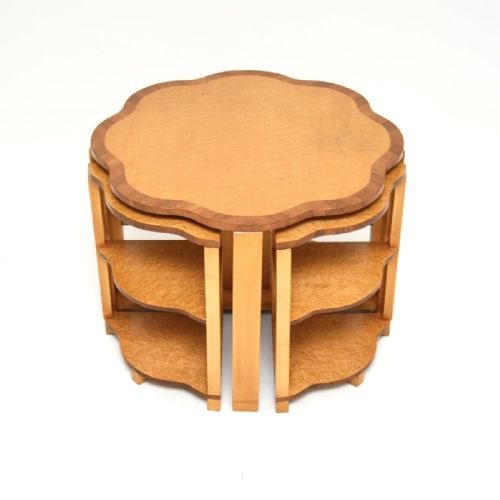
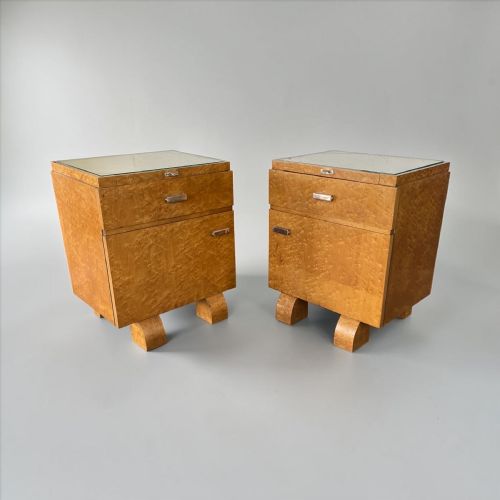
The pieces appearing on this page span several practical forms tailored to domestic life, ranging from nests of coffee tables and side stands to larger dining suites, centre tables, and dressing tables equipped with mirrors. Most examples align closely with the Art Deco style, though occasional pieces cross into related modernist lines or incorporate secondary materials like glass and leather.
While the core of the selection clusters firmly around the 1930 date, the inventory also admits pieces attributed to the 1920s and 1940s, alongside earlier twentieth-century work. Buyers will encounter both standalone occasional tables and matching sets designed to anchor a cohesive room scheme.
Materials and construction methods
Makers of a 1930s birds eye maple table relied on expert veneering techniques, laying thin sheets of highly figured maple over stable secondary woods to showcase the natural pinprick grain without risking the warping common to solid timber of this width. Contrasting borders and inlay work in dark woods like rosewood or walnut frequently frame the primary maple surface.
Structural elements frequently incorporated solid woods alongside metal, glass tops, and leather inserts, particularly on functional forms such as nesting tables, dressing tables, and stools. Cabinetmakers managed curved Deco silhouettes through steam-bending and multi-ply construction, securing smooth, uninterrupted transitions across aprons and legs.
1930s Birds Eye Maple Table Retail Price Guide 2026
Typical asking prices for 1930s birds eye maple table among the pieces listed under this phrase on Sellingantiques today, from the lower quarter to the upper quarter. They describe what is for sale here now, not the wider market.
Those tiny dots in the wood are actually tiny dormant buds trying to grow branches before the tree became a dressing table.
Distinguishing quality in period pieces
The distinction between standard commercial output and superior craftsmanship rests on the density and symmetry of the birds eye figuring across the timber surface. Finer pieces demonstrate careful book-matching, where veneer sheets are mirrored to create balanced, harmonious patterns across a tabletop or dressing table top.
Construction integrity similarly divides the range, distinguishing mass-produced items from pieces built by notable firms. Crisp joinery, thoughtful integration of contrasting secondary woods like rosewood or walnut, and well-executed hardware mark the upper tier of period production.
The Hille Furniture Company·Harry and Lou Epstein
The 1930s Birds Eye Maple Table Glossary
- Birds Eye Maple
- A figure in maple wood where the grain swirls around small knots to resemble tiny bird eyes. This pattern is prized for decorative veneer work on modernist and Art Deco furniture.
- Art Deco
- A design style spanning the 1920s and 1930s characterised by streamlined forms, geometric motifs, and rich materials. It influenced architecture, interior design, and household furnishings.
- Veneer
- A thin layer of choice wood glued to a base of cheaper timber. This technique allowed cabinetmakers to display striking grain patterns economically while preventing heavy warping.
- Ebonised
- Timber treated with a stain or finish to imitate ebony. This dark treatment was frequently used in the period to create stark visual contrast against pale maple.
1930s Birds Eye Maple Table: Frequently Asked Questions
Are these tables sturdy enough for daily use?
Most period tables were built for active domestic spaces, utilising robust internal framing beneath decorative veneers. Nests of tables and side stands handle everyday placement of lamps and cups comfortably.
Care should be taken with moisture and heat, as vintage varnishes and French polishes react to hot mugs or spills. Using coasters and mats preserves the integrity of the original polish.
How do I spot a reproduction?
Genuine period pieces display natural ageing in the timber and finish, such as fine micro-crazing in the lacquer and hand-cut joinery components underneath. Modern reproductions often use synthetic lacquers and machine-printed veneers that lack the depth of real wood figuring.
Examining the underside and interior structural wood reveals construction methods consistent with twentieth-century cabinetmaking rather than modern flat-pack assembly.
What rooms suit an Art Deco table?
The pale, reflective quality of birds eye maple brightens contemporary living rooms, hallways, and bedrooms alike. A small side table or nest works well beside neutral upholstery where the grain can act as a focal point.
Larger dressing tables and dining suites require dedicated space to appreciate their scale and curved silhouettes. They pair naturally with both mid-century modern pieces and minimalist contemporary interiors.