

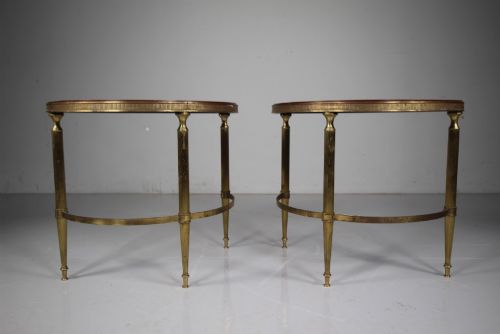


1930s Art Deco Console
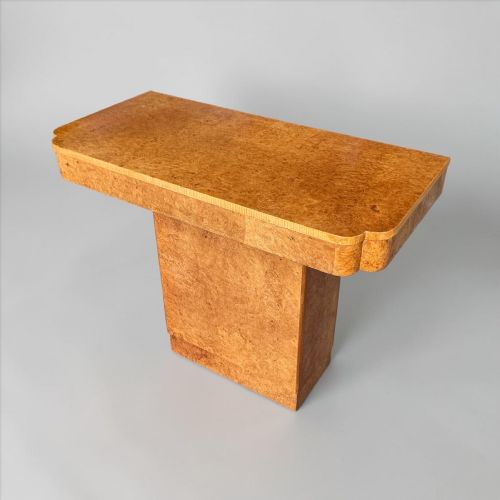
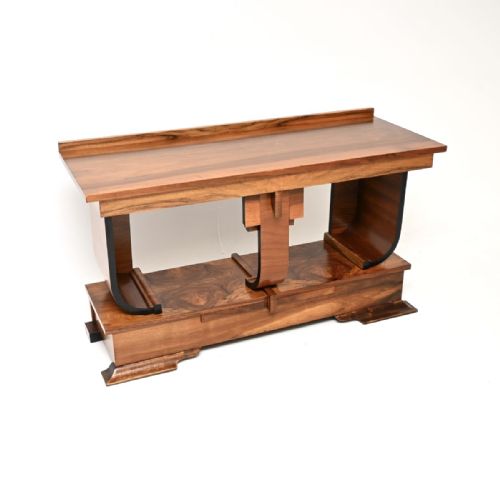
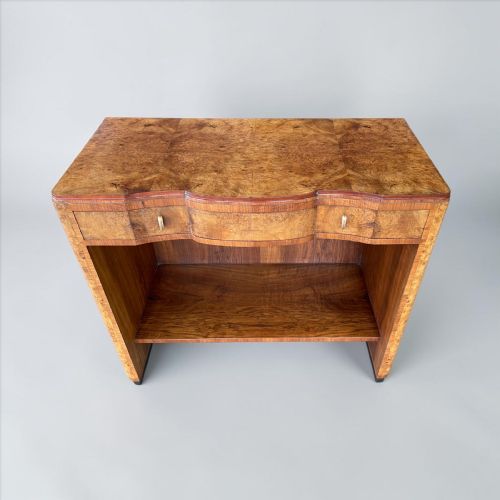
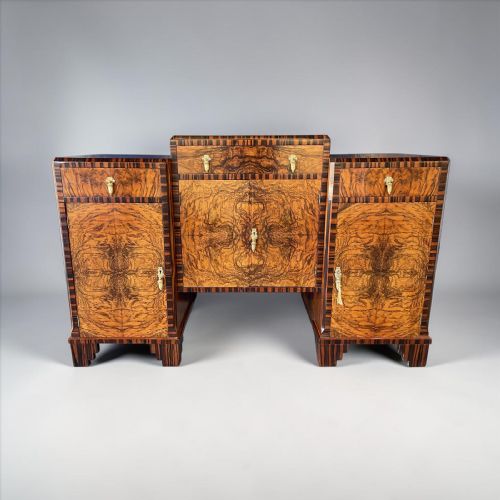
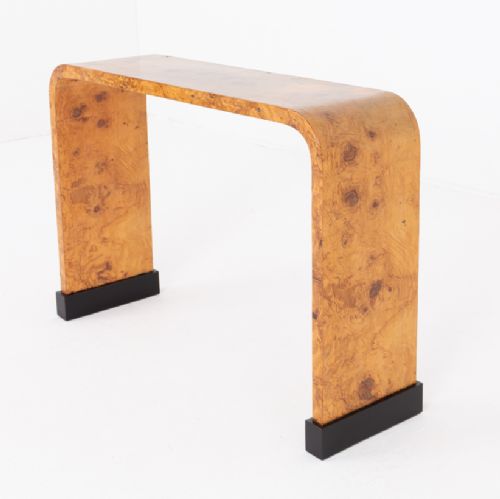
A 1930s art deco console brings strong geometric presence and striking timber figures to an interior, built to anchor a hallway or reception room.
1930s Art Deco Console
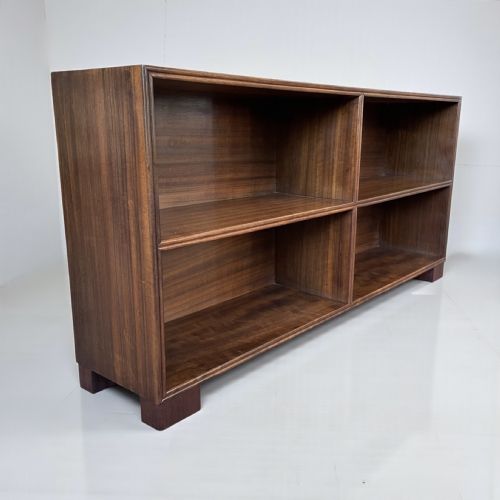
A 1930s art deco console is a decorative side table designed to stand against a wall, frequently appearing alongside matching serving tables and sideboards in walnut or burr walnut. These forms stem primarily from the nineteen-thirties, bringing linear clarity and strong architectural silhouettes into domestic spaces.
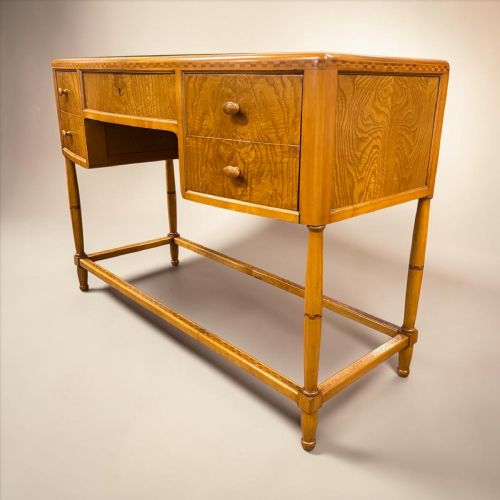
The console tables in this selection range from simple geometric walnut frames to elaborate figured surfaces with brass details. Alongside standard console tables, buyers frequently encounter serving tables, demi lune side tables, and occasional desks originating from British, French, and Scandinavian makers.
How they were made
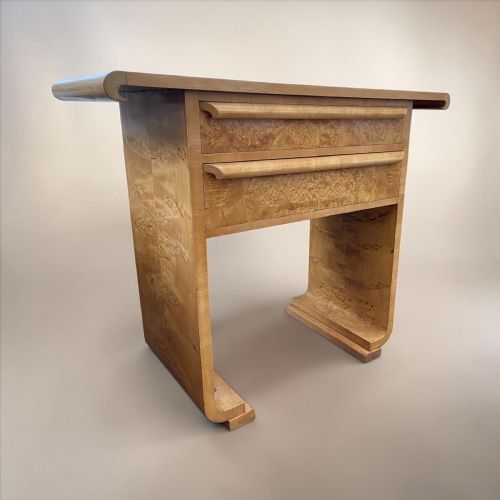
Cabinetmakers constructed these pieces using solid timber frames overlaid with carefully selected decorative veneers, notably burr walnut, walnut veneer, and burr birch. The grain patterns on tabletops were often book-matched to create symmetrical, mirrored designs across the surface.
Contrasting details such as ebonised wood and brass mounts were applied to accentuate the clean horizontal and vertical lines characteristic of the style. Timber was shaped through steam bending and precise joinery to achieve the rounded corners and stepped profiles typical of the period.
1930s Art Deco Console Retail Price Guide 2026
Typical asking prices for 1930s art deco console among the pieces listed under this phrase on Sellingantiques today, from the lower quarter to the upper quarter. They describe what is for sale here now, not the wider market.
The listings show console tables executed in burr walnut, elm, and birds eye maple, spanning production dates from nineteen hundred through nineteen forty.
What varies in quality
Quality rests heavily on the choice and placement of veneer, where richly figured burr walnut or birds eye maple commands greater visual depth than plain timber surfaces. The balance of the proportions and the crispness of the geometric moulding separate standard workshop production from high-end commissions.
Construction methods also define the tier of the piece, visible in the tightness of the drawer dovetails and the integration of solid brass hardware. Pieces carrying documented workshop attributions or retailer stamps show superior joinery execution down to the secondary timbers inside.
Maurice Adams·Hille·Fortnum and Mason·Epstein·Heals of london
The 1930s Art Deco Console Glossary
- Burr walnut
- A prized timber harvested from the abnormal growth of a walnut tree, yielding swirling, knotty grain patterns used extensively for decorative veneering. It forms the defining visual texture on many high-end tables from this era.
- Veneer
- A thin layer of superior wood adhered to a stable secondary timber base to create decorative exterior surfaces without prohibitive weight or cost. Cabinetmakers utilised this technique to display dramatic grain movements across broad tabletops.
- Demi lune
- A half-moon shape applied to small side tables and consoles designed to sit flush against a wall. This format saves floor space while offering a decorative surface.
- Ebonised wood
- Timber treated with a dark stain or chemical finish to imitate ebony, providing sharp monochrome contrast against lighter walnut and birch veneers. It frames structural edges on tables and cabinets.
- Book-matching
- A veneer technique where adjacent slices from the flitch are opened like a book and mirrored, creating symmetrical abstract patterns across the wood surface.
1930s Art Deco Console: Frequently Asked Questions
Where should I place a console table?
These tables fit naturally in entrance halls, living rooms, or behind sofas where surface space is needed without blocking circulation. Their shallow depth allows them to sit neatly against walls while displaying lamps or decorative objects.
Because many examples feature finished backs and polished veneers, they can also stand away from walls in large reception spaces as serving pieces.
How do I clean walnut veneer?
Dust surfaces regularly with a soft, dry cloth to prevent grit accumulation on the polished finish. Avoid using silicone sprays, abrasive polishes, or excessive water.
Condition the wood periodically with traditional beeswax to maintain the moisture and natural lustre of the vintage walnut.
Are these tables sturdy enough for daily use?
Period console tables were built to support lamps, books, and decorative items, utilising solid timber internal framing beneath the decorative veneers. Their sturdy construction suits standard everyday living environments.
Placing heavy items or leaning body weight onto the edges should be avoided to protect the delicate veneer joints and leg structures.
How do I identify the wood type?
Burr walnut displays dense, swirling knot patterns and rich brown tones, whereas birds eye maple presents small, circular dot formations across a pale golden background. Elm shows a coarser, interlocking grain texture.
Examining the grain under good natural light helps distinguish natural figured timbers from simpler plain walnut and standard timber surfaces.